

 Thistle Britches
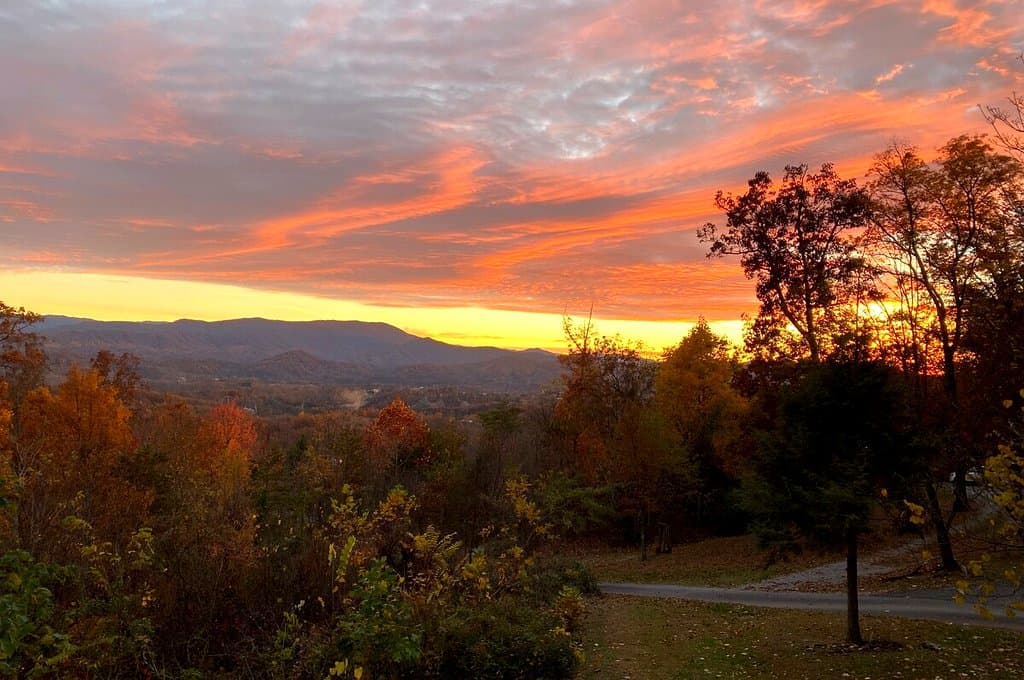
Mid-October mornings around here have a particular smell. Wet leaf litter, cold creek water off the Little Pigeon River, and woodsmoke from somebody's fire pit a ridge over. The sun comes up late and slow behind the treeline, fog sits in the low spots until nine or ten, and the maples along the Spur look like someone turned the saturation dial too far. If you are staring at a calendar right now asking the very reasonable question, would Oct 19 be a good time to visit Smoky for fall foliage, you have landed on one of the better guesses a visitor can make.
The honest answer has a wrinkle, though, and the wrinkle is elevation. The Great Smoky Mountains span roughly 875 feet up to 6,643 feet at Kuwohi, which means fall does not arrive all at once. It arrives in layers, sliding downhill for about six weeks. Around October 19 you are usually catching the middle of that slide, and that is genuinely a sweet spot. Whether you actually see it depends less on luck than on where you stand, what time you leave the driveway, and how far your cabin sits from the park entrance.
Key Takeaways
- October 19 typically lands near peak for mid elevations (roughly 2,500 to 4,500 feet) and just before peak in the valleys, so you get color at two different altitudes in one trip.
- High country like Kuwohi and Newfound Gap usually turns first and may be past its best by the 19th, with bare birch and beech up top.
- Traffic, not color, is what ruins most mid-October trips. Be at the park gate before 8 a.m. or plan an afternoon that avoids Parkway crawl.
- Book a basecamp close to the attractions you actually want, then use early mornings for the park and evenings for town.
- Weather swings hard in late October. Valley mornings in the 40s and summit temperatures 15 to 20 degrees colder are normal.
Would Oct 19 Be a Good Time to Visit Smoky for Fall Foliage? The Short Answer
Yes, with one caveat: point yourself at the middle and lower elevations rather than the summits. The National Park Service notes that fall color in the Smokies begins at the highest elevations in late September and works its way down through late October and into early November. You can read their own seasonal breakdown on the Great Smoky Mountains fall colors page.
Translated into a real itinerary, October 19 usually means sugar maple, sourwood, hickory, and scarlet oak firing off between about 2,500 and 4,500 feet. Roaring Fork Motor Nature Trail, the Chimney Tops picnic area, Metcalf Bottoms, and the middle stretches of Newfound Gap Road tend to be at or near their loudest. Down at cabin level, around 1,000 to 1,600 feet, the dogwoods and maples are turning while the oaks are still holding green, which gives you that mixed red-orange-green look photographers actually prefer over uniform gold.
Up high, expect a different scene. Above 5,000 feet the yellow birch and American beech usually finished weeks earlier, so Kuwohi (the peak formerly signed as Clingmans Dome, described in more detail on Wikipedia) often reads gray and stark by then. That is not a loss. Cold clear mornings up there deliver the layered blue-ridge views that sell postcards, and the color is happening below you instead of around you.
So when someone asks me would Oct 19 be a good time to visit Smoky for fall foliage, my follow up question is always the same: are you willing to get up early? Because the date is not the variable that decides your trip.
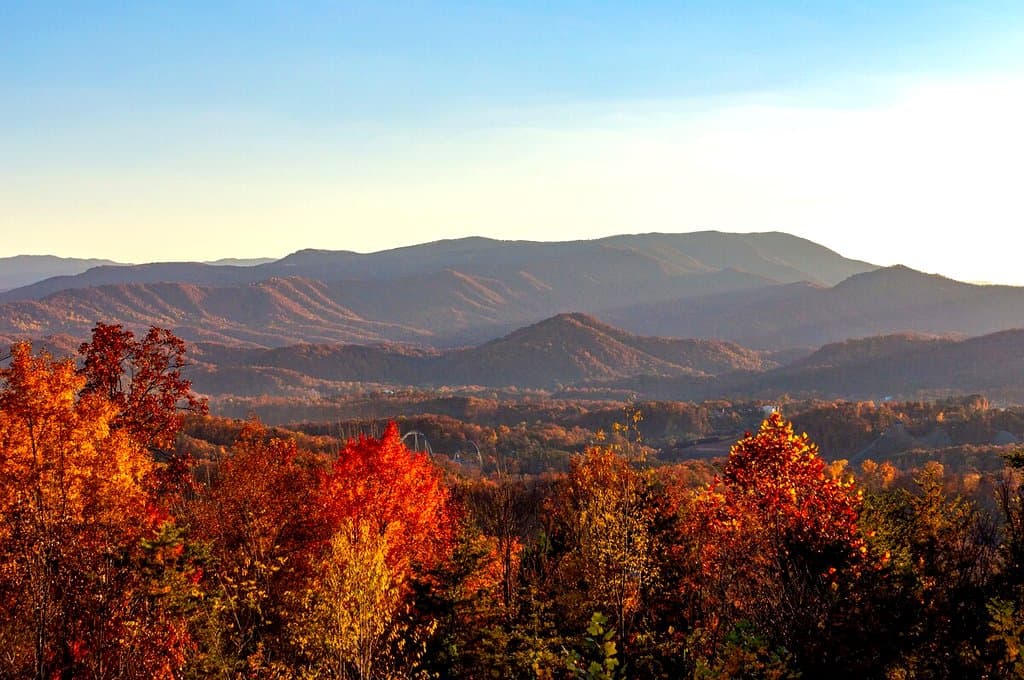
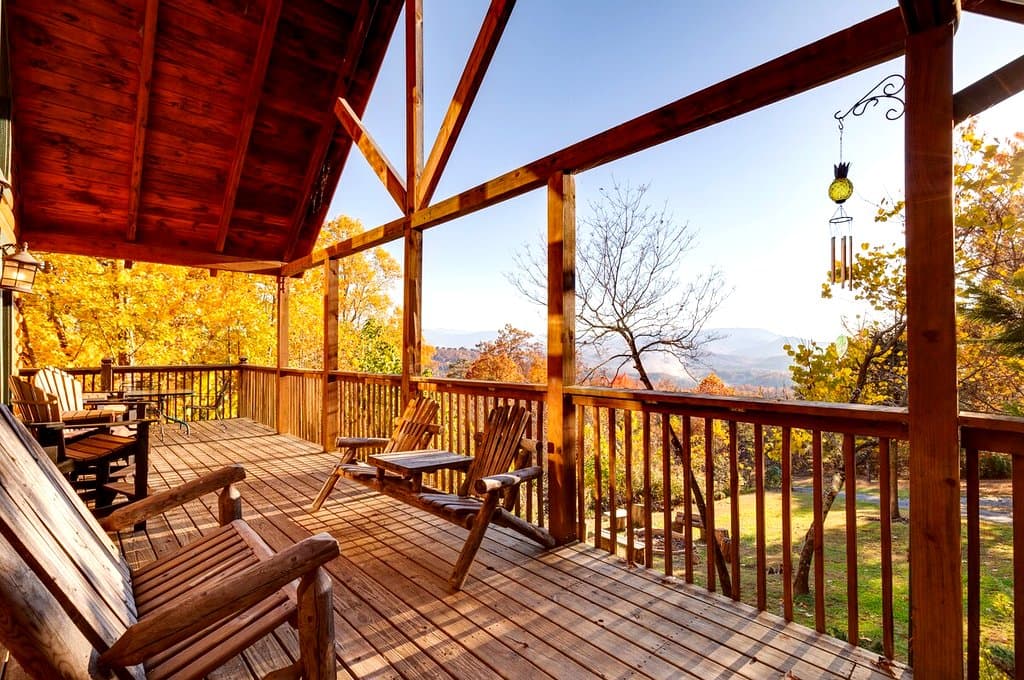
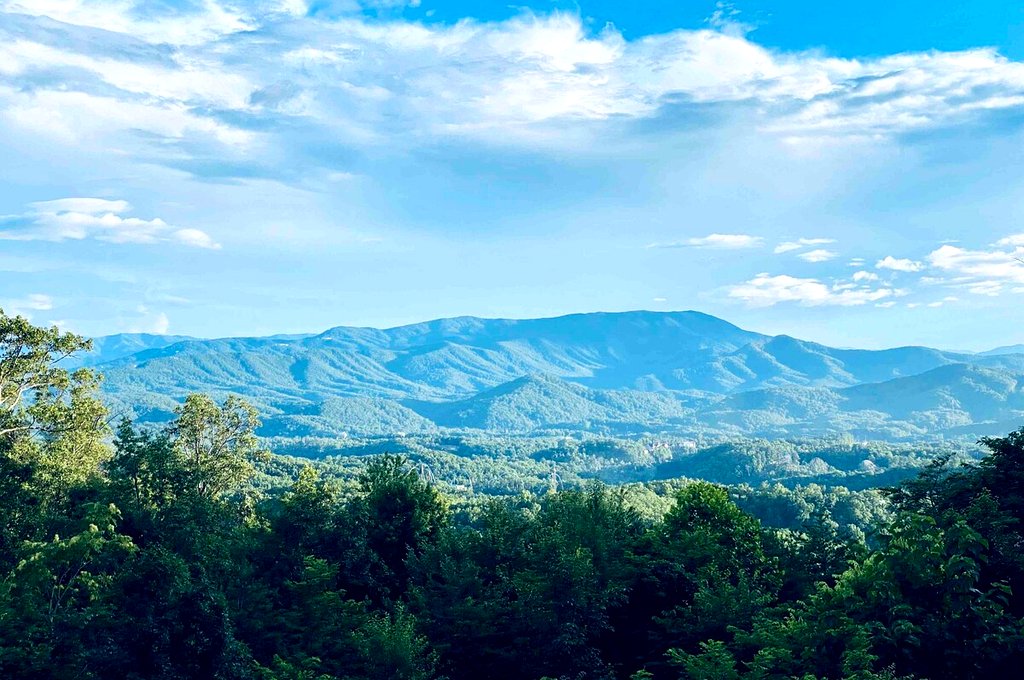
Actual mountain view from Thistle Britches with autumn foliage.
What Oct 19 Looks Like at Each Elevation
Think of it as three floors of the same building.
High country, 4,500 feet and up
Newfound Gap and Kuwohi. Usually past peak by the 19th, with bare hardwoods and dark spruce-fir. Wind is real up there, and the parking area at Newfound Gap fills by mid-morning on October weekends. Worth doing for the long-distance views and the drive itself, which climbs through every color zone on the way up.
Mid elevations, 2,500 to 4,500 feet
This is your target on October 19. Roaring Fork, the Alum Cave trailhead area, Laurel Falls, the upper Little River Road curves, and Foothills Parkway pull-offs. Reds and oranges tend to be at their most intense here, and the mid-slope forest holds a wider mix of species, which is why the color reads busier and richer than the uniform yellow you get higher up.
Valleys and foothills, under 2,500 feet
Cades Cove, Pittman Center, Metcalf Bottoms, and the ridges you see from a cabin deck. Around the 19th these are usually a week or so shy of full peak, which is honestly a nice place to be. You get pockets of brilliant maple against green pasture, plus deer in the Cades Cove fields in the cool early morning. If you want a longer view of the timing curve, I broke it down in more detail in this elevation-by-elevation foliage timing guide.
Every autumn runs a little different. A dry September or an early cold snap can pull the whole schedule forward, and a warm wet stretch pushes it back. For real-time reads before you drive, I keep an informal running note on whether the leaves are actually changing yet rather than relying on generic predictor maps that model the entire southeast at once.
The Mistake That Wrecks Most Mid-October Foliage Trips
Here is the part nobody puts on a foliage map. The third week of October is one of the busiest stretches of the entire year in Sevier County. Dollywood's Harvest Festival is running, leaf-peepers are arriving from four states, and the Parkway through Pigeon Forge can turn into a parking lot from lunchtime until dark.
The mistake is booking a cabin deep up a mountain road twenty or thirty minutes from anything, then discovering that every single outing costs you ninety minutes of round-trip driving. Families do this constantly. They plan a 9 a.m. Cades Cove loop, leave the cabin at 8:15, hit stoplight traffic on the way through town, arrive at the loop at 10:30 behind four hundred other cars, and spend three hours going eleven miles. By day two, nobody wants to leave the couch.
The second version of the same mistake is booking too short a stay. A two-night mid-October trip means one usable morning, because you arrive in the afternoon and leave in the morning. Foliage rewards early light, and early light rewards people with more than one shot at it. Our default here is a three-night minimum for exactly that reason, and mid-October is the week it pays off most obviously.
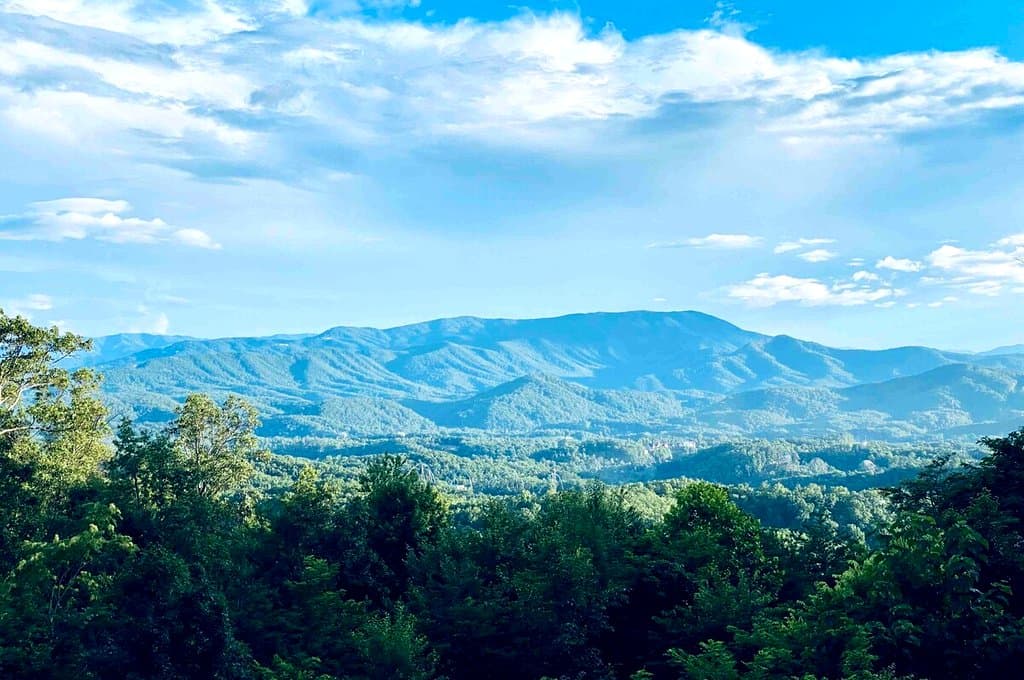
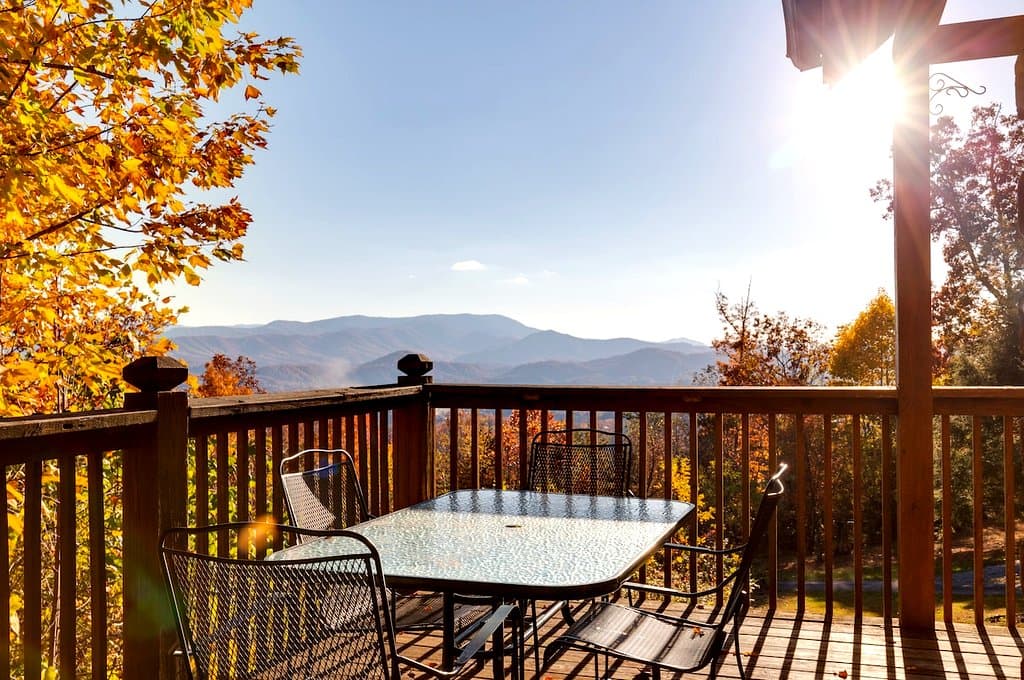
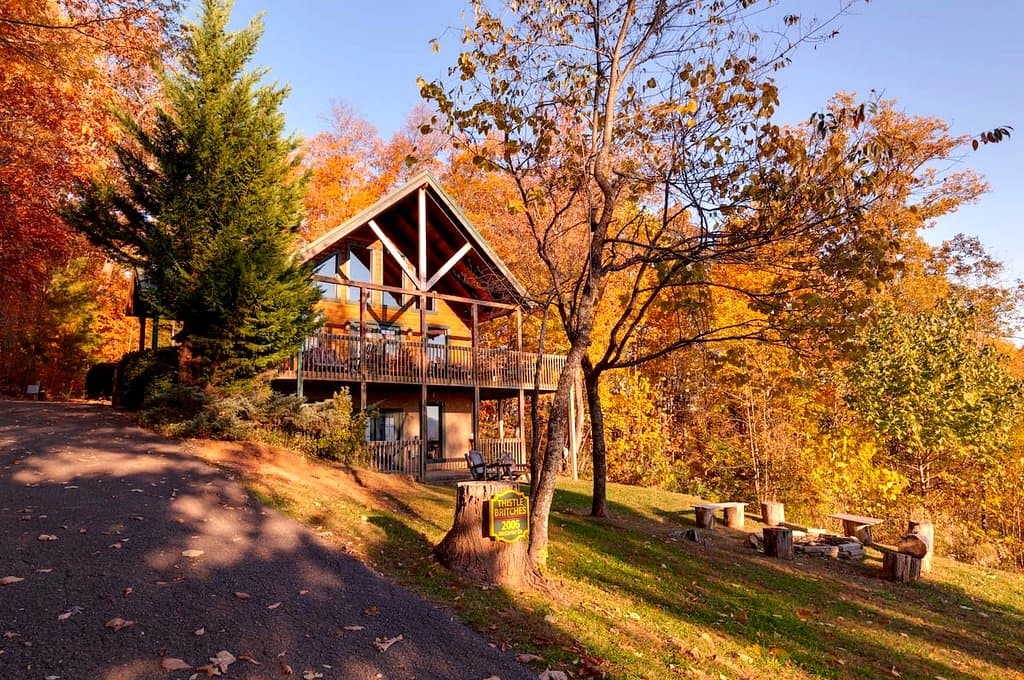
What to look for instead: a basecamp close enough to the attractions that a 7 a.m. departure is realistic, on enough land that you are not listening to a neighbor's hot tub, with a deck oriented toward the view you came for. Our cabin sits on a secluded acre with no neighbors on three sides, 0.8 miles from Dollywood and Splash Country, about four minutes by car. The deck faces south toward Dollywood, which in late October means you are watching color on the ridges by day and, on evenings when the park has a show scheduled, catching some of it from your own chair. Those fireworks and drone shows are seasonal and scheduled, not a nightly guarantee, so treat them as a bonus rather than a plan.
Practically, closeness buys you mornings. Leave at 7, be at the Sugarlands Visitor Center by 7:30, drive Newfound Gap while the fog is still sitting in the drainages, and be back at the cabin for a late breakfast before the crowds have finished their coffee. That is the whole trick. I laid out the traffic-dodging version of this in the fall weekend cabin plan.
Mid-October dates go fast, and the mornings are the whole reason to come. Lock in a three-night window while the calendar still has room.
Book Your StayA Three-Day Foliage Plan Built Around October 19
Day one, arrival afternoon. Stop for groceries on the way in so you are not fighting Parkway traffic later. Fire up the propane grill, eat on the deck, and watch the light drop behind the ridgeline. Two king beds and three queen fold-out couches means a group of up to six can settle in without anybody drawing the short straw.
Day two, the park day. Out the door by 7. Newfound Gap Road first, all the way to the state line pull-off, then back down with stops at the Chimney Tops picnic area and Alum Cave trailhead. Home by noon. Rest, grill lunch, then head into Pigeon Forge late afternoon for the Old Mill area or an early dinner before the dinner rush stacks up.
Day three, the slow one. Cades Cove at sunrise if you have the discipline, or Roaring Fork Motor Nature Trail if you want the same payoff in half the driving. Afternoon at Dollywood during Harvest Festival, since you are four minutes away and can walk out whenever the group is done rather than committing to a full day.
Two extra logistics that matter in the third week of October. First, the internet here runs 321 Mbps over T-Mobile 5G home internet, which is enough for anyone stealing a half day of remote work to stretch a leaf trip into a long weekend. Second, if you are bringing dogs, up to two are welcome, and the outdoor dog area is unfenced, so plan on leashes. Trails inside the national park do not allow dogs, which surprises a lot of first-timers, so build that into your schedule.
Weather and Packing for Late October in the Smokies
Valley mornings in the 40s, afternoons that can climb into the 60s or low 70s, and summit temperatures that run meaningfully colder with wind on top. A jacket that felt silly at the cabin will feel essential at Newfound Gap. Layers, a knit hat, and real shoes are the whole packing list.
Rain happens. The Smokies are a temperate rainforest at higher elevations, and an October front can sit on the mountains for a day. That is not a wasted day. Overcast light saturates fall color beautifully, wet bark goes near-black against orange leaves, and the waterfalls run harder. Bring a rain shell and go anyway.
Fog is the other constant. Low fog in the valleys before nine, and cloud sitting on the ridges at midday. It is where the range got its name, and it is the reason the layered-ridge photographs look the way they do.
Frequently Asked Questions
 56-Jet Luxury SpaBluetooth, subwoofer, LED waterfall.
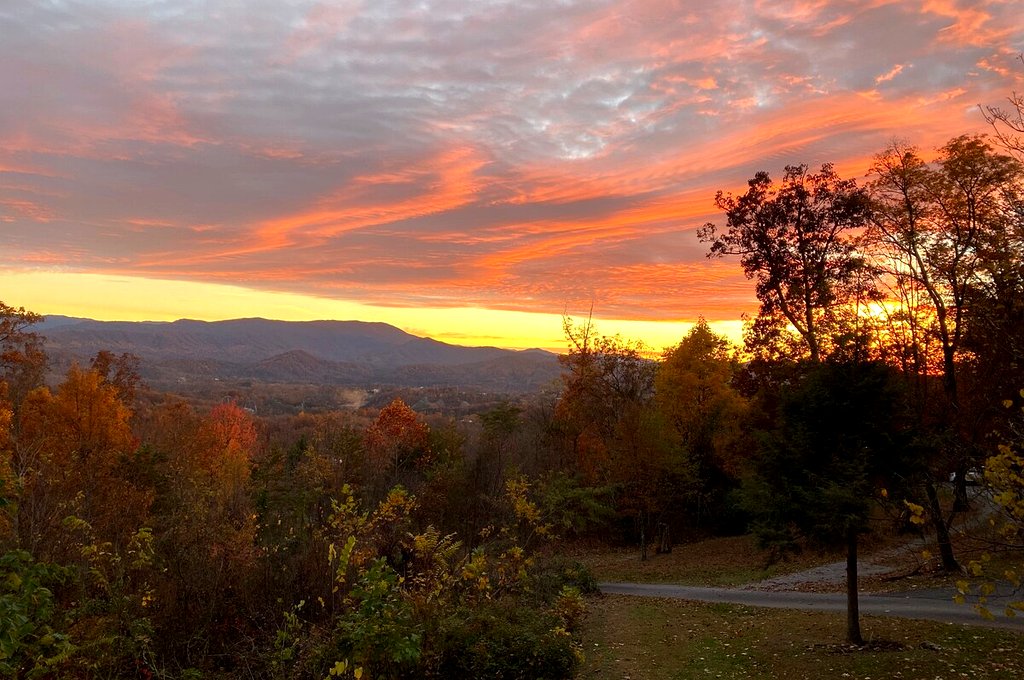 Mountain-View EveningsWatch the evening light change over the mountain ridges.
 Game RoomPool table, arcade, darts, Xbox.
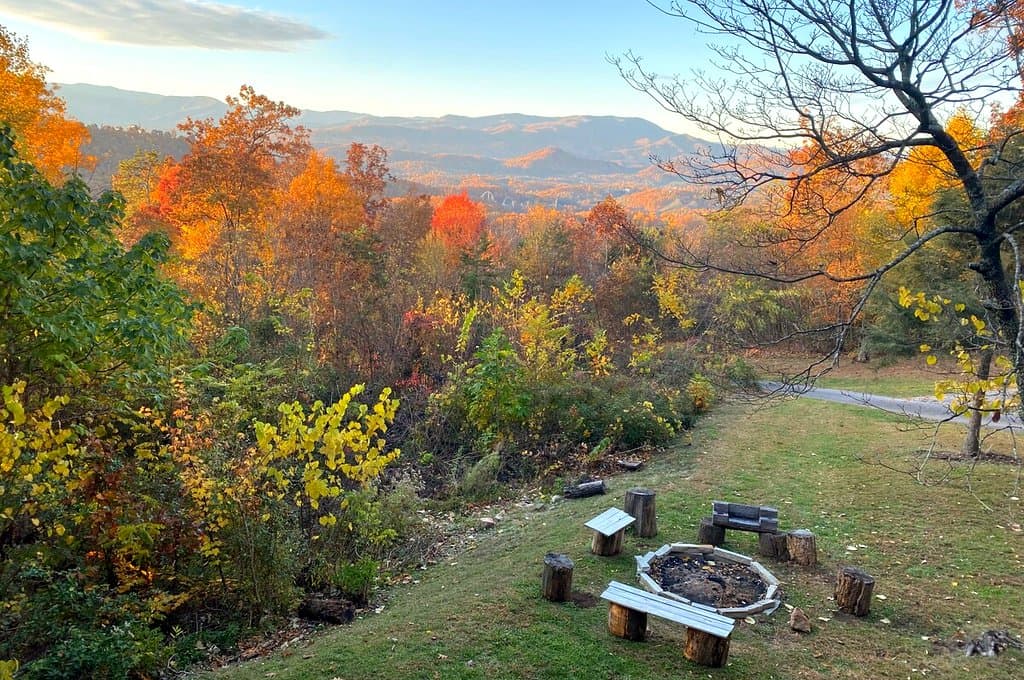
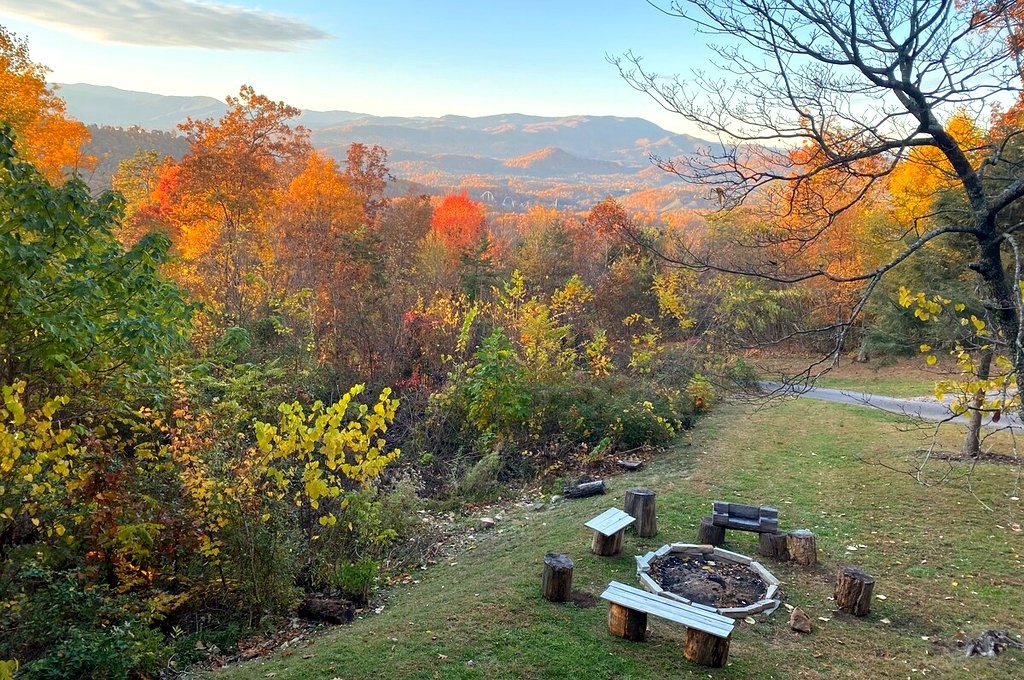 Mountain-View Fire PitS'mores with a ridgeline backdrop.
 One Private AcreNo neighbors on three sides, 800 forest acres around you.
Would Oct 19 be a good time to visit Smoky for fall foliage with kids?
It is one of the better weeks for it, because you can pair a short scenic drive with Dollywood's Harvest Festival instead of asking children to hike all day. Keep park outings to the morning, cap them at three hours, and use the afternoon for town. Staying close to the attractions is what keeps the day from turning into car time.
Is October 19 too late for peak color in the Smoky Mountains?
Not for the mid and low elevations. It can be late for the high country above about 5,000 feet, where peak often passes in early October. If summit color is your priority, the first ten days of the month are the safer bet. For everything below Newfound Gap, the 19th typically sits right in the good window.
How crowded is the third week of October in Pigeon Forge?
Busy. It ranks with peak summer for traffic volume, and weekends are heavier than weekdays. Arriving on a Sunday or Monday instead of a Friday changes the feel of the whole trip, and early-morning departures let you see the park before the day-trippers arrive.
Can I see fall color without hiking?
Absolutely. Newfound Gap Road, Roaring Fork Motor Nature Trail, the Foothills Parkway pull-offs, and the Gatlinburg Bypass overlooks all deliver serious color from the car or a short walk to a railing. Cades Cove Loop Road adds open pasture and wildlife with no elevation gain.
How many nights should I book for a foliage trip?
Three at minimum. Two nights gives you a single morning, and mornings are when the fog, the light, and the empty roads all line up. Three nights means two real park mornings plus an afternoon in town, which is the shape of a trip people actually enjoy.
Booking the Third Week of October
So, would Oct 19 be a good time to visit Smoky for fall foliage? Yes, provided you build the trip around early mornings at mid elevation and stay close enough that getting out the door before sunrise is not a heroic act. That single decision, proximity, separates the people who come home with photographs from the people who come home with traffic stories.
If you want color on the ridges, a south-facing deck pointed toward Dollywood, and a secluded acre to come back to when the Parkway gets loud, the third week of October is worth claiming early. It is the week the whole calendar bends around here.
Want peak-season color without spending your vacation in traffic? Check availability for your October dates and set up four minutes from Dollywood on a quiet acre.
Start Planning Your Trip