

 Thistle Britches
Early November mornings around here have a particular smell to them. Woodsmoke, wet oak leaves, and that cold mineral air that rolls down off the ridges before the sun clears the trees. Sit on a south-facing deck with coffee around 7 a.m. and you can watch fog unspool across the lower slopes while the hardwoods behind you are still dropping color one leaf at a time. So the question lands in my inbox constantly: are the leaves still changing in November in Gatlinburg, Tennessee, or did everyone miss it in October?
Short version from someone who watches these trees from a deck less than a mile from Dollywood: yes, in the first half of the month especially, and the color you get is different from October's. The high country has usually gone bare by then, but the oaks, hickories, maples, and sweetgums down at town elevation are often doing their best work. November color is slower, deeper, more bronze and rust than neon orange. It also comes with thinner crowds, cheaper midweek nights, and clearer long-range views once the leaves thin out. Here is the honest timeline, elevation by elevation.
Key Takeaways
- Yes, the leaves are often still changing in November in Gatlinburg, Tennessee, mostly below about 3,000 feet, with the first two weeks the strongest window.
- High elevations like Newfound Gap and Kuwohi usually peak in early to mid October and are typically bare by November.
- Late November color is hit or miss and depends heavily on wind, rain, and the first hard freeze.
- November trades peak color for breathing room: fewer cars on the Parkway, easier parking, better cabin rates midweek.
- Book a base with real separation from traffic and plan drives for sunrise, not noon.
Are the Leaves Still Changing in November in Gatlinburg, Tennessee? The Honest Read
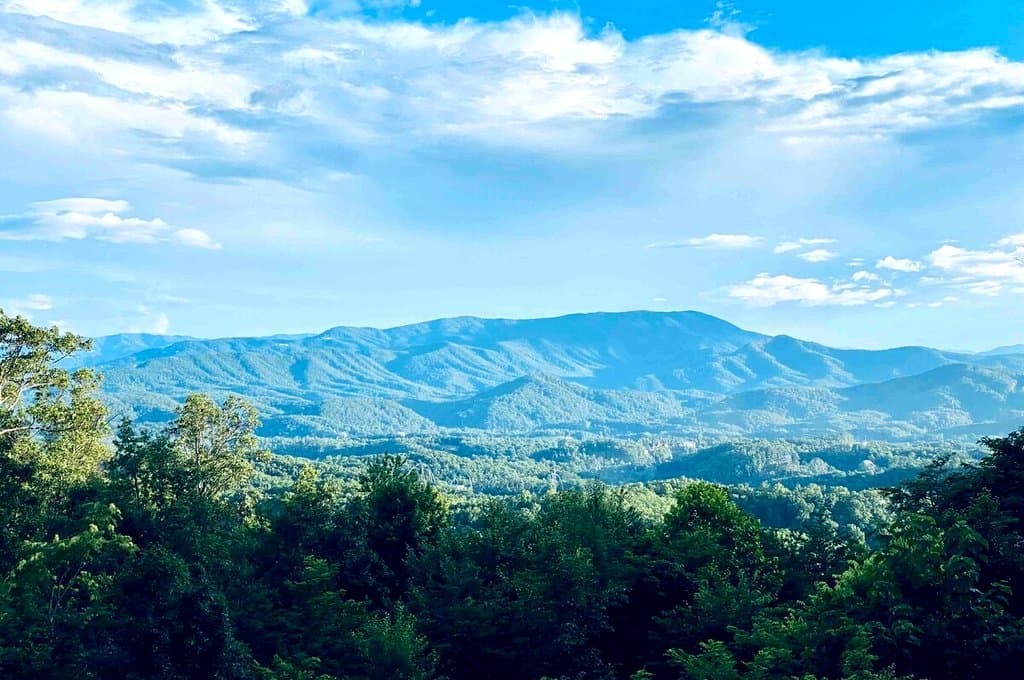
Fall in the Smokies does not happen all at once. It happens in waves, from the top of the mountains down, and that staggered timing is exactly why November is not a lost cause. The Great Smoky Mountains National Park spans a huge vertical range, from roughly 1,300 feet in Gatlinburg to 6,643 feet at Kuwohi, formerly called Clingmans Dome. That spread creates something like a slow-motion autumn that drifts downhill over six or seven weeks.
By the first week of November, the spruce-fir zone up top is done. Newfound Gap at 5,046 feet is usually bare or close to it, with gray trunks and the occasional stubborn beech holding tan leaves. Drop to the mid elevations, roughly 2,500 to 3,500 feet, and you often find late maples and birches still turning or at full color. Then come down into town, and the oaks and hickories that anchor the lower forest are frequently just getting going. Oaks are the procrastinators of this range. They hold russet and deep burgundy well into the month.
So when someone asks me whether the leaves are still changing in November in Gatlinburg, Tennessee, my answer depends on where they plan to point the car. Drive up to the high gaps in mid November and you will see bare branches and big open views. Stay low along the river corridors, the Roaring Fork area, Greenbrier, Metcalf Bottoms, or the lower stretches of the Little River Road, and you are very likely still driving under color.
The National Park Service fall colors page is the most reliable place to sanity check conditions before you load the car, and the park's live webcams give you an unfiltered look at what the ridges actually look like today rather than what a forecast map guessed in August.
Elevation Is the Whole Story
Here is the mental model I give guests, and it has held up year after year. Picture autumn as a line that starts at the summit in early October and walks downhill at roughly a thousand feet every week to ten days. Weather speeds it up or slows it down, but the direction never changes.
- Above 5,000 feet: early to mid October. By November, expect bare limbs and excellent unobstructed ridge views.
- 3,000 to 5,000 feet: mid to late October. Early November can still hold pockets, especially on north-facing slopes.
- 2,000 to 3,000 feet: late October into the first week or two of November. This is the sweet spot for early-month visitors.
- Below 2,000 feet (Gatlinburg, Pigeon Forge, Sevierville): early to mid November is frequently the local peak, with oaks and hickories carrying the show.
That last line surprises people. Visitors assume the valley floor peaks first because it feels like the warmest, most "fall" part of the trip. It is actually last in line. I have had guests arrive on November 8 convinced they had missed the whole thing, then spend the afternoon on a short loop near the national park entrance under a canopy that was fully lit up.
Two variables decide how long that lower-elevation show lasts. Wind is the first. A single hard storm front can strip a ridge in an afternoon. The second is the first real freeze. A sharp overnight drop into the 20s tends to accelerate leaf drop across the board. Mild, dry autumns stretch color deep into the month. Wet, windy ones end it early. Neither is predictable more than about a week out, which is why I distrust any foliage map that claims to know peak dates months ahead.
If you want a deeper breakdown of how peak timing actually moves across the area, I went elevation by elevation in my host's read on peak color timing near Pigeon Forge, and the same logic applies on the Gatlinburg side of the ridge.
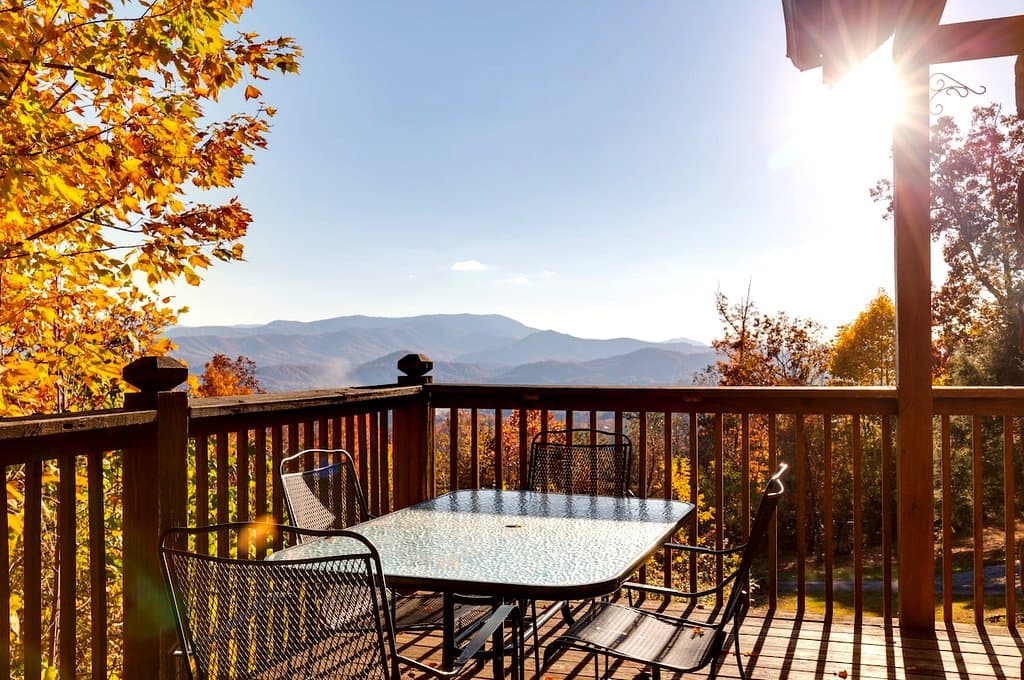
November midweek nights are the quiet secret of Smoky Mountain travel. Fewer cars, open trailheads, and a deck that faces south toward Dollywood while the hardwoods behind you turn bronze.
Book Your StayThe Mistake That Wrecks Most November Leaf Trips
It is almost never the leaves that disappoint people. It is the driving.
The classic November error looks like this: a family books a room right off the main strip because it seemed convenient, then tries to make a 10 a.m. run up to the high overlooks on a Saturday. They spend the morning in stop-and-go traffic on the Parkway, circle a full overlook lot twice, and finally get out of the car at 1 p.m. under flat midday light with a hundred other people at the same railing. The color was fine. The experience was a parking lot.
The second mistake is chasing the wrong elevation. People drive up looking for October color in November and come back convinced fall is over, when the best-lit trees of the entire trip were ten minutes from where they slept.
The third is underestimating the pace. November light fades early, and the mountain roads are genuinely dark by dinner. Trying to cram a park drive, a show, and a downtown dinner into one short day leaves nobody relaxed. If you are mapping out how long to stay, my breakdown of how many days you actually need in the area builds in the buffer most first-timers skip.
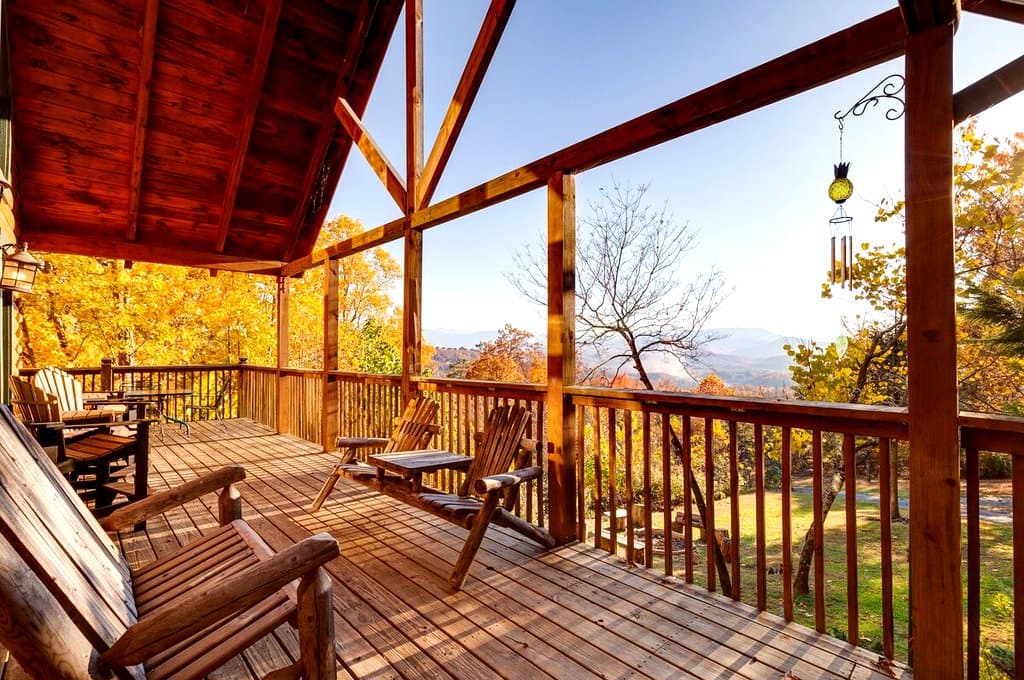
What fixes all three is where you sleep. Not fancier. Quieter, and positioned so you are not fighting the strip twice a day. The things I would look for in a fall base: real separation from traffic noise so the mornings feel like the mountains instead of a highway; a covered outdoor space you will actually use when it is 45 degrees at dawn; enough beds that nobody is sleeping on the floor; and a location close enough to Dollywood and the park entrance that an early start does not require an alarm at 5 a.m.
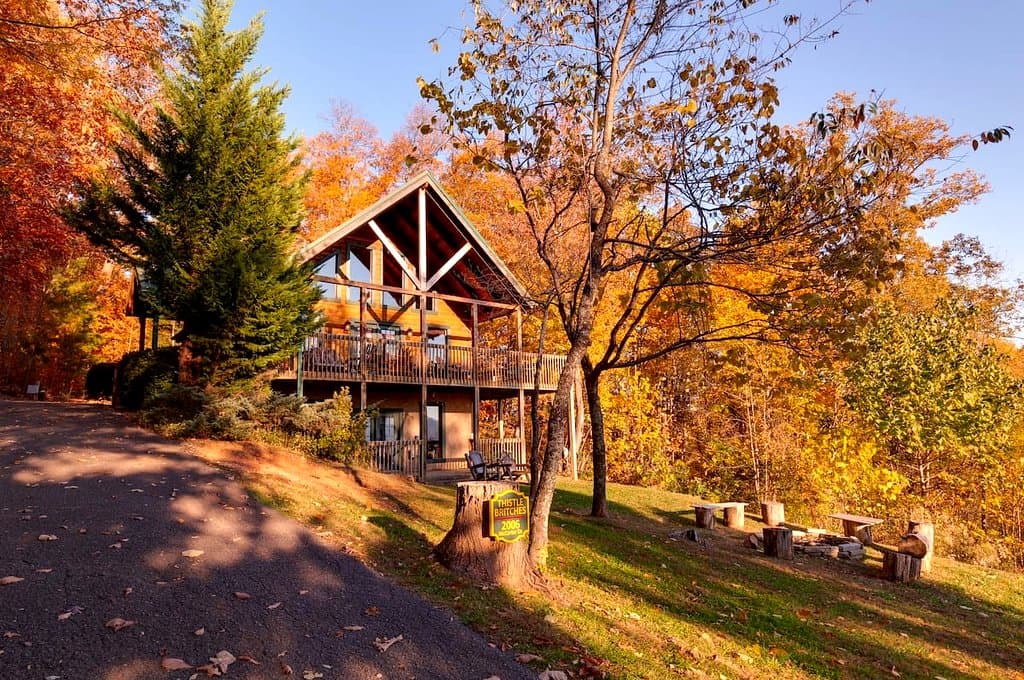
That is the shape of the place I host. One cabin on one secluded acre with no neighbors on three sides, two bedrooms and two bathrooms, two king beds plus three queen fold-out couches, comfortable for up to six guests. The deck faces south toward Dollywood, which sits 0.8 miles away, about four minutes by car. Dollywood and Splash Country fireworks and drone shows run seasonally on their own schedule, so when they are on, you may catch them from the deck. When they are not, you still get the quiet, which in November is arguably the better amenity. There is a propane grill for the chili-and-burgers kind of evening, and dogs are welcome with a two-dog maximum, though the outdoor dog area is open and unfenced, so leashes stay on.
Internet runs at 321 Mbps over T-Mobile 5G home service, which matters more than people expect in November when somebody inevitably needs to take one work call before heading to the park.
What November Actually Feels Like Here
Beyond the leaves, November has its own personality. Mornings are cold enough to want a jacket and a blanket on the deck. Afternoons often warm into comfortable hiking weather. The crowds thin noticeably after the first weekend, then build again around Thanksgiving week, which is one of the busiest stretches of the whole season.
Holiday lights start going up across Sevier County in early November, so you get an overlap window where fall color and Christmas displays coexist. Dollywood transitions into its holiday season during the month, which means the park is decorated while the surrounding hardwoods are still turning. That combination does not happen in October and it does not happen in December.
The national park also becomes much easier to actually enjoy. Trailheads that overflow in mid October have open spots. Cades Cove traffic eases. And once the canopy thins, you can see through the forest to ridgelines and rock outcrops that are completely hidden in summer. If you want a shortlist, my guide to the best things to do inside Great Smoky Mountains National Park holds up especially well in the off-peak months.
Frequently Asked Questions
Is it worth going to Gatlinburg in November?
For a lot of travelers it is the best month of the year here. You trade guaranteed peak color for shorter waits, easier parking, lower midweek lodging rates, and comfortable hiking temperatures. The first half of the month usually still delivers real fall color at lower elevations, and the holiday lights begin while the leaves are turning. The main caveat is Thanksgiving week, which gets busy fast.
What is the current fall foliage situation in Gatlinburg?
Conditions shift week to week, so check the park's own reporting rather than any static map. The National Park Service posts fall color updates and runs live webcams that show real-time ridge conditions. As a rule of thumb, if it is the first two weeks of November, assume high elevations are bare and town-elevation oaks and hickories are carrying the color. After roughly the third week, color is spotty and depends on how windy and cold it has been.
 56-Jet Luxury SpaBluetooth, subwoofer, LED waterfall.
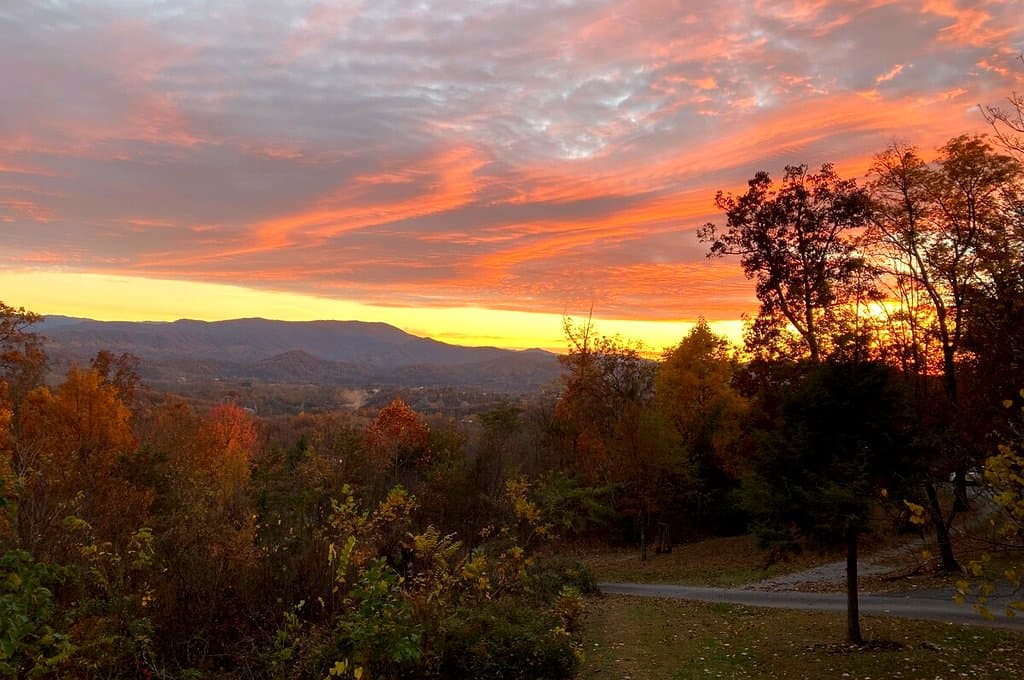
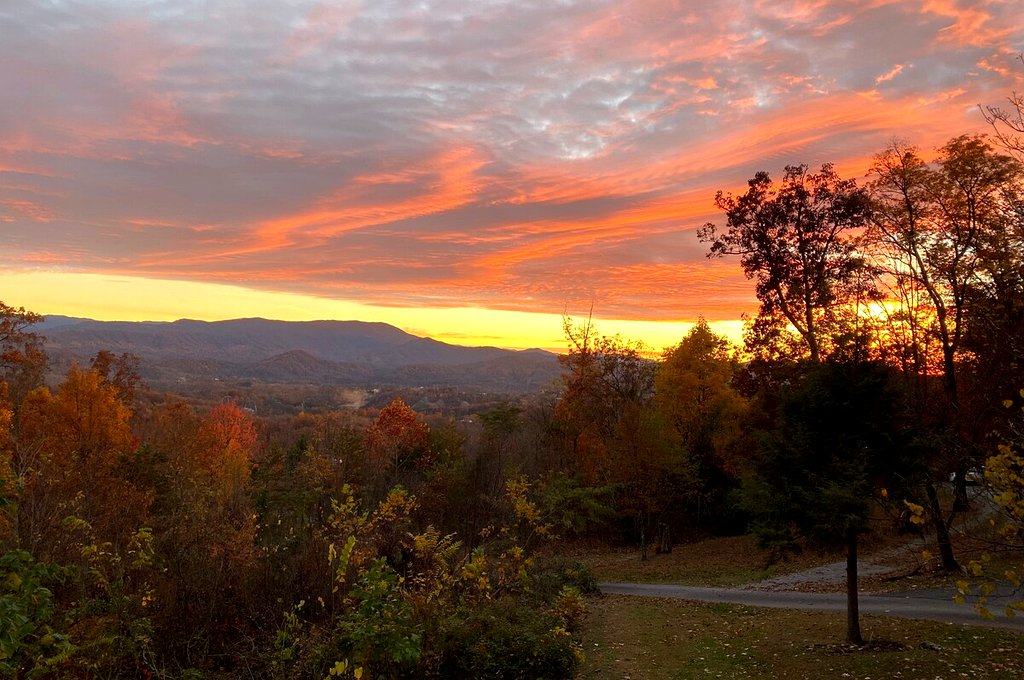 Mountain-View EveningsWatch the evening light change over the mountain ridges.
 Game RoomPool table, arcade, darts, Xbox.
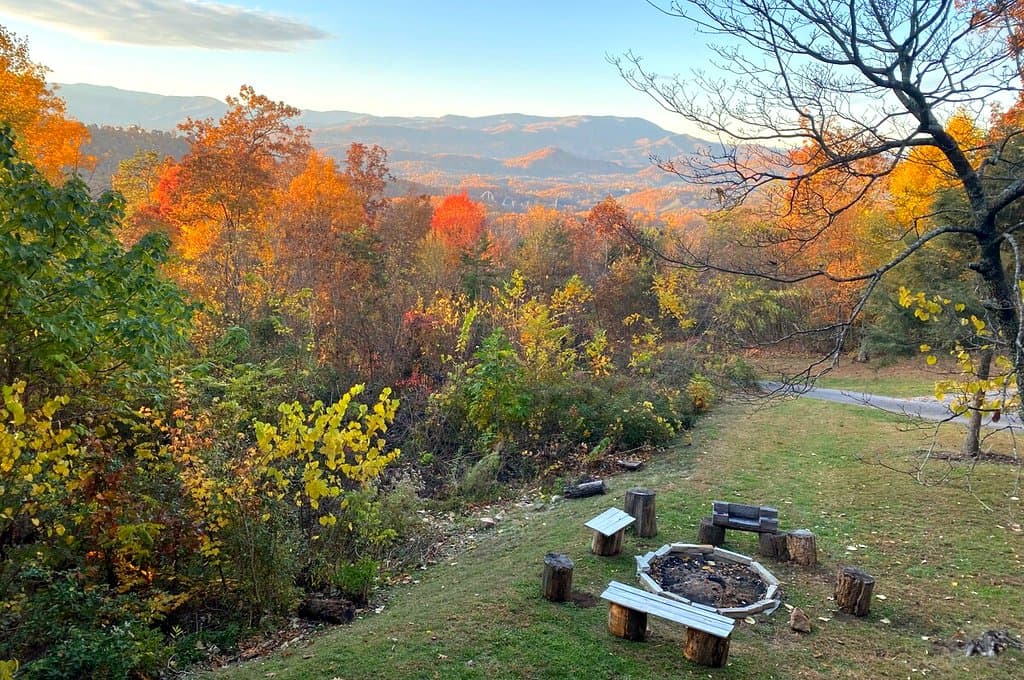
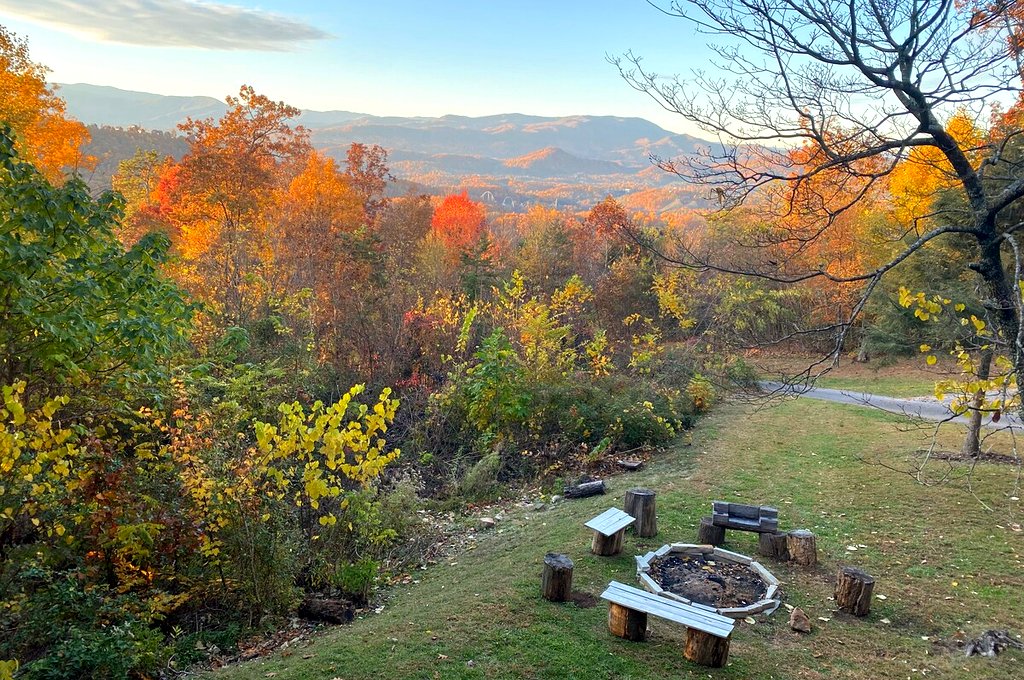 Mountain-View Fire PitS'mores with a ridgeline backdrop.
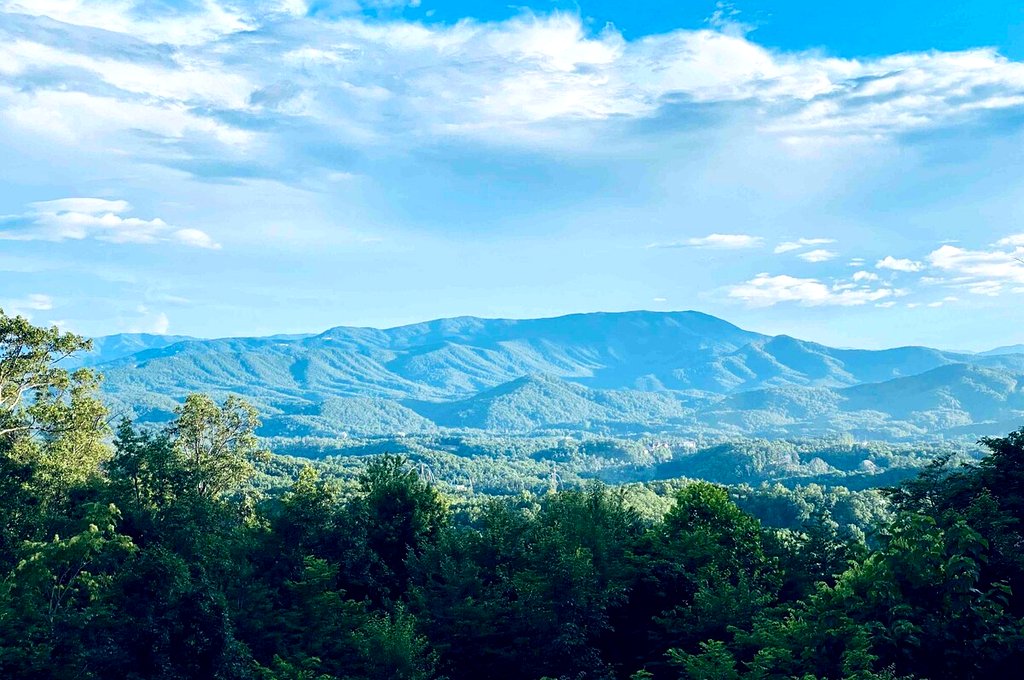 One Private AcreNo neighbors on three sides, 800 forest acres around you.
What is the best time to see fall colors in Gatlinburg, Tennessee?
Mid October through the first week of November is the broadest window if you want to see color at several elevations in one trip. Pure high-country peak usually lands in early to mid October. If your priority is lower-elevation color plus small crowds, aim for the first ten days of November. The honest answer to whether the leaves are still changing in November in Gatlinburg, Tennessee is that they often are, just lower down the mountain than most visitors expect.
When should you avoid Pigeon Forge and Gatlinburg?
The heaviest congestion tends to hit mid October weekends at peak leaf season, Thanksgiving week, the stretch between Christmas and New Year's, spring break, and summer Saturdays when weekly rentals turn over. If traffic is your main concern, target midweek stays in early November, late January, or the first half of May. For a side-by-side look at the two towns, I compared them in this Gatlinburg versus Pigeon Forge breakdown.
How late in November can you still see leaves changing?
In a mild year, scattered color in sheltered coves and along streams can hang on toward the end of the month. After the first hard freeze and a couple of windy fronts, most of it comes down quickly. If late November is your only option, set expectations toward bare-branch ridge views, long sightlines, and holiday lights rather than a full canopy.
Planning Around the Color Instead of Chasing It
The guests who have the best November trips stop treating peak color as a target and start treating it as a bonus. They pick a quiet base, get up early, drive low in the mornings and high in the afternoons, and leave one day completely unscheduled so they can react to whatever the weather does.
One scheduling note worth knowing before you shop dates: the default minimum stay here is three nights. Short two-night windows only open when a specific approved exception is active, and one-night stays are never available. That three-night floor is partly practical and partly philosophical. Fall mornings in the Smokies reward people who are not rushing out the door on day two.
If you have been wondering whether the leaves are still changing in November in Gatlinburg, Tennessee, treat the first half of the month as a legitimate, under-appreciated window. You get color, quiet, and a cabin deck that still smells like woodsmoke at sunrise.
If you want November color without the Parkway crawl, pick a base with an acre of separation, a covered deck facing south toward Dollywood, and a four-minute drive to the park side of town. Dates in the first two weeks of the month go first.
Start Planning Your Trip