

 Thistle Britches
You can feel the shift before you can see it. Early October mornings along the Little Pigeon River come in cool and damp, fog sitting low over the water until the sun climbs over the ridge, and the sourwoods are already going scarlet along the shoulders of Veterans Boulevard while the maples next to them are still stubbornly green. Guests pull into our gravel drive, step out onto the deck that faces south toward Dollywood, and ask the same question within about ninety seconds: are the leaves at peak in Pigeon Forge yet?
It is a fair question and a frustrating one, because the Smokies do not have one fall. They have about six weeks of overlapping falls stacked on top of each other by elevation. The color that is blazing on the high ridges can still be a week or two of green down here in the lower country near the Dollywood entrance, and the reverse is true by early November. So instead of a one-word answer, here is how a host actually reads the season, where to point your car, and how to plan a trip that lands on color instead of missing it by five days.
Key Takeaways
- Peak color in the Smokies moves downhill, starting on the highest ridges in late September and reaching the lower valleys around Pigeon Forge in late October into early November.
- Pigeon Forge sits at a lower elevation than the park's high country, so town-level color almost always peaks after the famous overlook photos start circulating.
- The reliable strategy is to book a base near the park and drive to whatever elevation is peaking that week, rather than betting on one single weekend.
- October weekends bring the heaviest traffic of the year on the Parkway, so early starts and back routes matter more than the forecast.
- Rain, wind, and a dry late summer can shift timing and intensity, which is why no predictor map is a promise.
Are the Leaves at Peak in Pigeon Forge? Read the Mountain by Elevation
The single most useful thing to understand about Smoky Mountain fall foliage is that color is a function of elevation, not a calendar date. Great Smoky Mountains National Park spans a huge vertical range, and that range acts like a slow conveyor belt carrying autumn from the summits down to the river bottoms. The National Park Service fall colors page describes this same elevation-driven progression, and it is the framework every local uses.
Up high, above roughly 4,000 feet, the yellow birch, American beech, mountain maple, and pin cherry start turning in late September. That is the stretch when visitors standing at a high overlook swear fall has arrived in full. Mid elevations, the broad band of oak, hickory, sweetgum, and red maple, generally come on through the middle of October. The lower elevations, which include the land around town and the cabin here, usually hold their color into the last week of October and often into the first week of November.
So if you are standing on the Parkway in the middle of October asking are the leaves at peak in Pigeon Forge, the honest read is usually "close, but the best town-level color is still ahead, and the high country is already past." That is not bad news. It means a single trip can give you three different versions of fall if you are willing to drive uphill and downhill.
The chemistry behind it is worth a minute of your attention too. Shortening days shut down chlorophyll production, which lets the yellow and orange pigments that were always present show through, while cool nights and bright days drive the sugar reactions that produce the deep reds. Autumn leaf color depends on that weather sequence, which is why two seasons at the same latitude can look completely different. A dry late summer tends to pull timing earlier and mute the reds. A string of warm nights can push the show later and stretch it out.
Are the Leaves Turning in the Smoky Mountains Right Now? What to Look For
If you want to assess color yourself instead of refreshing a Smoky Mountain fall foliage predictor, there are a few specific tells that locals read all season.
First, look at the ridge lines from a distance. From a south-facing deck or any open spot on the Pigeon Forge side, you can see the upper slopes before you can see individual trees. When the tops of the ridges go bronze and the bottoms are still green, you are in the early phase. When the color line has slid halfway down the slope, you are roughly a week to ten days from lower-elevation peak.
Second, check tree species rather than whole hillsides. Sourwood, black gum, and Virginia creeper lead. Maples, sumac, and dogwood follow. Oaks and hickories bring the deep rust and gold that carry the end of the season, and beech holds pale copper leaves long after everything else has dropped.
Third, pay attention to recent weather. A hard wind-driven rain during peak can strip a hillside in a day. A cool, clear, dry stretch can hold color for an extra week. Elevation plus the last ten days of weather tells you more than any map claiming to pin Smoky Mountains fall foliage to a date.
Fourth, remember that aspect matters. South-facing and west-facing slopes get more sun and more heat, so they often turn a few days behind sheltered north-facing coves. If one drive looks disappointing, the next cove over may be exactly what you came for. Our longer breakdown of the best week for fall colors in the Smoky Mountains walks through how those windows typically stack up.
Where Is Foliage Peaking Now? The Drives Worth Your Morning
Once you know which elevation band is peaking, the route picks itself. These are the local favorites, ordered roughly from highest to lowest so you can match them to the week you visit.
Newfound Gap Road and Kuwohi. Newfound Gap Road climbs from Gatlinburg over the crest toward North Carolina and gains thousands of feet in about half an hour of driving. In late September and early October, this is where the show starts. The spur road to Kuwohi, formerly called Clingmans Dome, takes you to the highest point in the park. Go at sunrise. The parking lot fills fast, and the light through fog on the spruce and fir is the kind of thing people drive ten hours for.
Foothills Parkway. A long, quiet ridge road with sweeping overlooks and almost no commercial clutter. Mid October is its moment, and it is far calmer than the park's main corridors.
Cades Cove Loop. The eleven-mile loop is gorgeous in mid to late October, with the open fields setting off the tree lines. It also has the worst traffic in the park on an October weekend. Arrive at opening or skip it.
Roaring Fork Motor Nature Trail and Little River Road. These mid-to-lower elevation drives peak later, often the last week of October, and reward slow driving. Little River Road along the water is my pick for late-season color with reflections.
Around town. Honestly, the Dollywood parking area, the Old Mill district, and the quiet backroads off Teaster Lane put on a real show in late October and early November, when the oaks finally let go of their green.
A fall trip works best when you can chase color at three different elevations without repacking the car every morning. Base yourself four minutes from the Dollywood entrance and let the mountain come to you.
Book Your Stay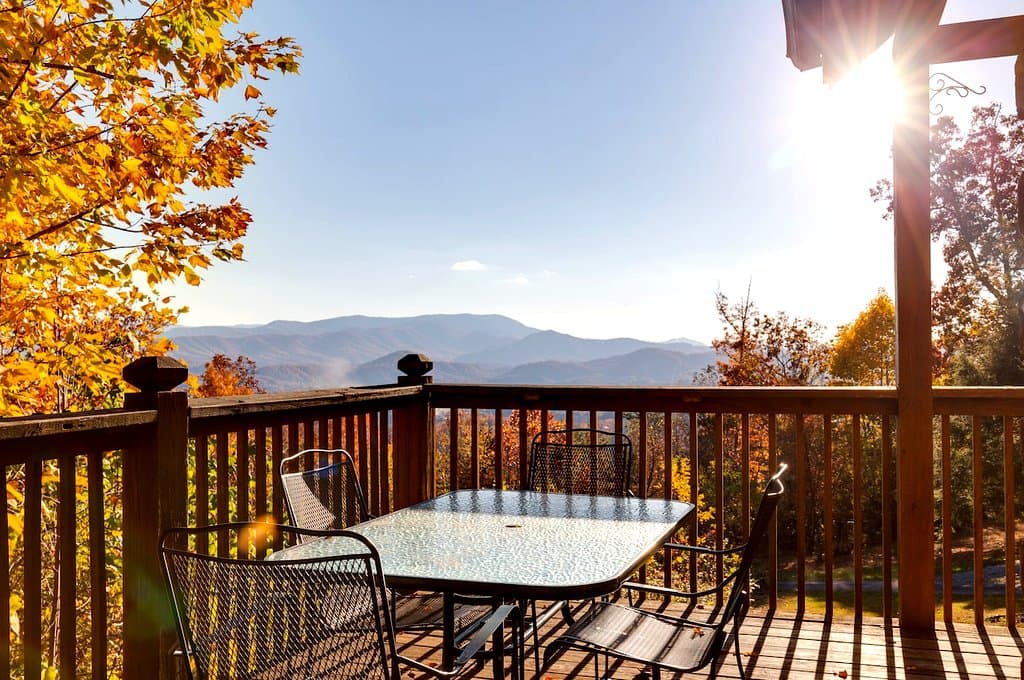
The Fall Trip Mistake That Costs Most First-Timers Their Color
Here is the pattern I see every autumn. A family picks one weekend in September based on a foliage map screenshot, books two nights, and arrives to find the high country already brown and the low country still green. They spend Saturday stuck in Parkway traffic between Dollywood and the park entrance, eat a late lunch, drive one overlook in fading light, and leave Sunday morning convinced they missed fall entirely.
The mistake is not the date. The mistake is building a fall foliage trip with no margin. Color timing moves. Traffic in October is the heaviest of the year on the Parkway. A two-day trip gives you one real daylight window, and if that window gets rained on or jammed up, there is no recovery day.
What fixes it is simple. Give yourself three or more nights, start driving before breakfast, and treat elevation as your adjustable dial. If the ridges have already dropped their leaves, drive down. If the valleys are still green, drive up. With three mornings, you will hit color. With one, you are gambling. Our honest calendar of when to avoid Pigeon Forge explains which October weekends get the worst of the crowds.
The second half of the fix is where you sleep. A room on the Parkway means you join the traffic the moment you leave the lot. What you actually want for a leaf trip is a base that is close to the park corridor but off the main drag, with enough space that a rainy afternoon does not feel like a punishment.
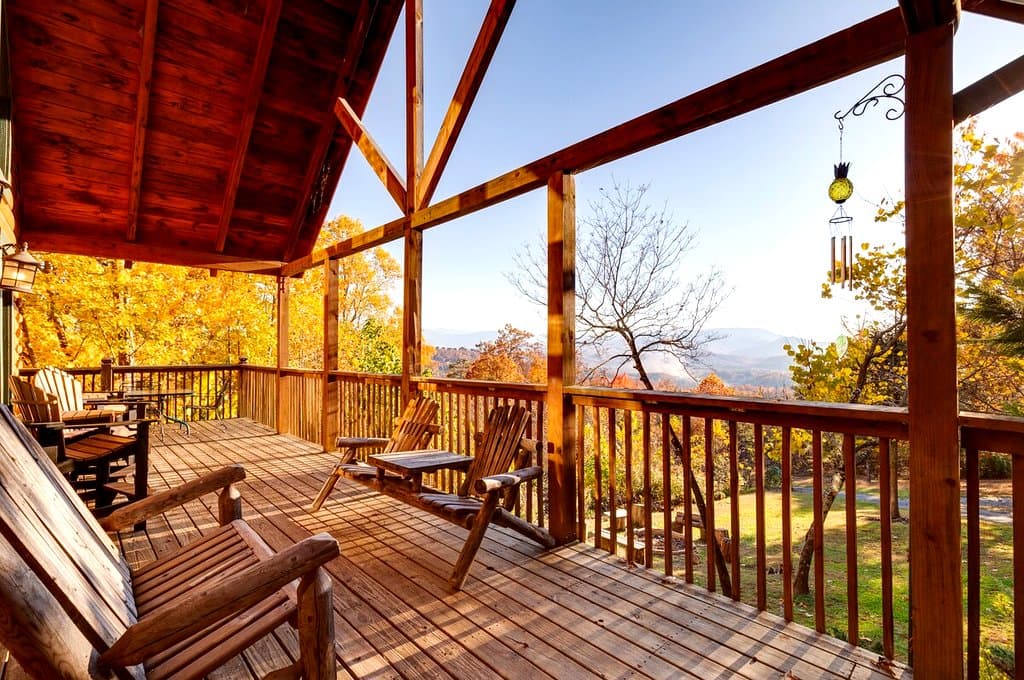
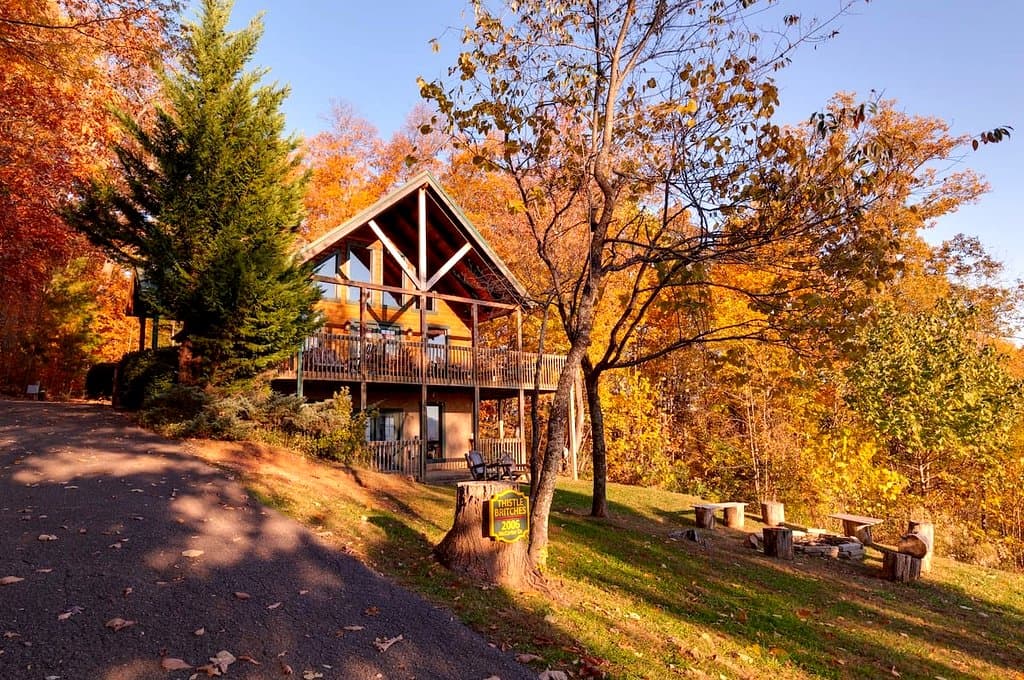
That is the exact gap this cabin was set up to fill. It sits on a secluded acre with no neighbors on three sides, 0.8 miles from Dollywood and Splash Country, roughly four minutes by car, which keeps you upstream of the worst congestion. Two bedrooms with king beds plus three queen fold-out couches sleep up to six, so a family or two couples can split costs instead of booking separate rooms. The south-facing deck looks toward Dollywood, which means seasonal fireworks and drone shows are sometimes visible from your chair when they are scheduled. There is a propane grill for a cool-evening cookout, a 2-dog maximum with an outdoor dog area that is open and unfenced, so leashes stay on, and 321 Mbps T-Mobile 5G home internet if someone in the group has to log in for an hour. Minimum stay is three nights by default, which, for a fall color trip, is a feature rather than a restriction. If budget planning is part of your decision, our breakdown of what a weekend in Pigeon Forge actually costs lays out the real numbers to expect.
Frequently Asked Questions
Are the leaves turning in the Smoky Mountains right now?
If it is late September or early October, yes, but only above about 4,000 feet where birch, beech, and mountain maple lead the season. Lower elevations around town typically hold green for several more weeks, so a high-elevation drive is your best bet early in the season.
Are the leaves at peak in Pigeon Forge?
Pigeon Forge sits in the lower country, so peak here usually lands in the last week of October through the first week of November rather than in early October. When people ask are the leaves at peak in Pigeon Forge in mid October, the accurate answer is that the mid elevations are peaking and town is close behind.
 56-Jet Luxury SpaBluetooth, subwoofer, LED waterfall.
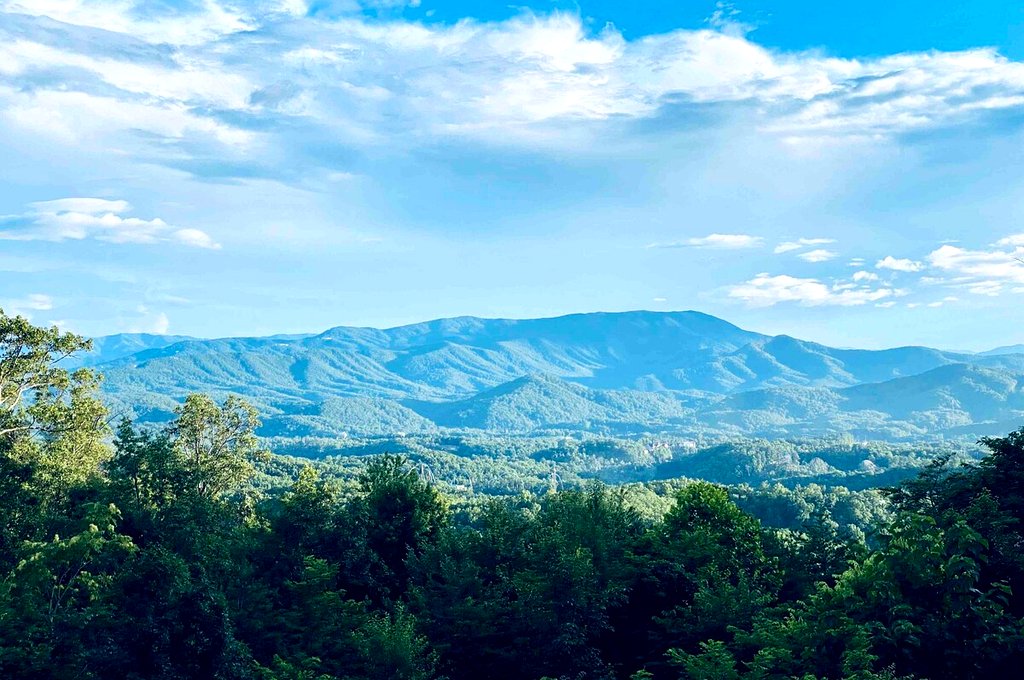
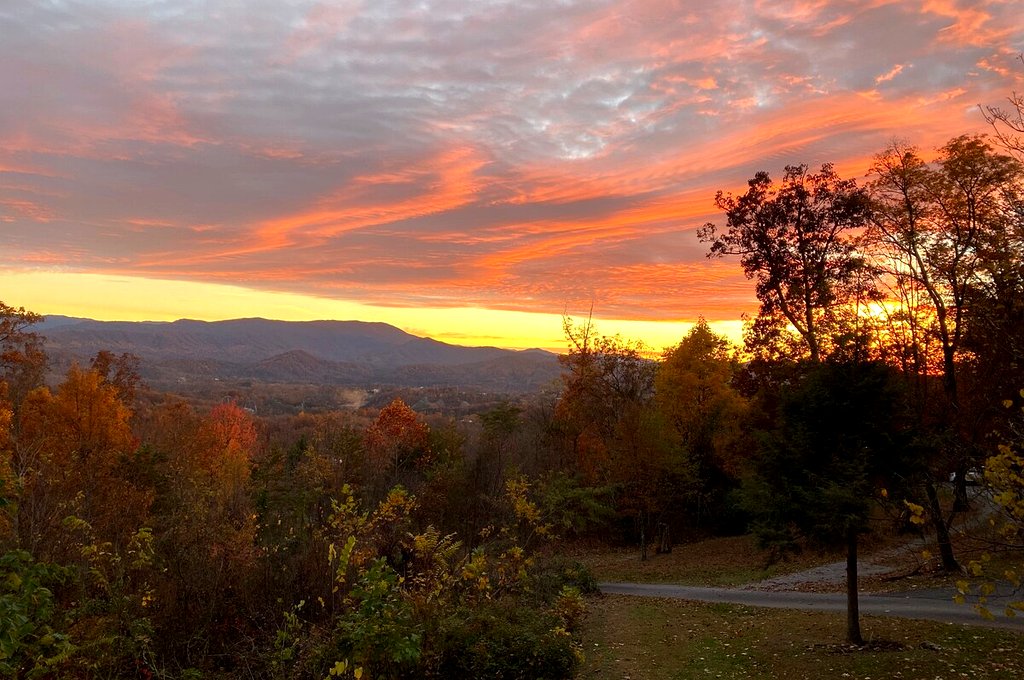 Mountain-View EveningsWatch the evening light change over the mountain ridges.
 Game RoomPool table, arcade, darts, Xbox.
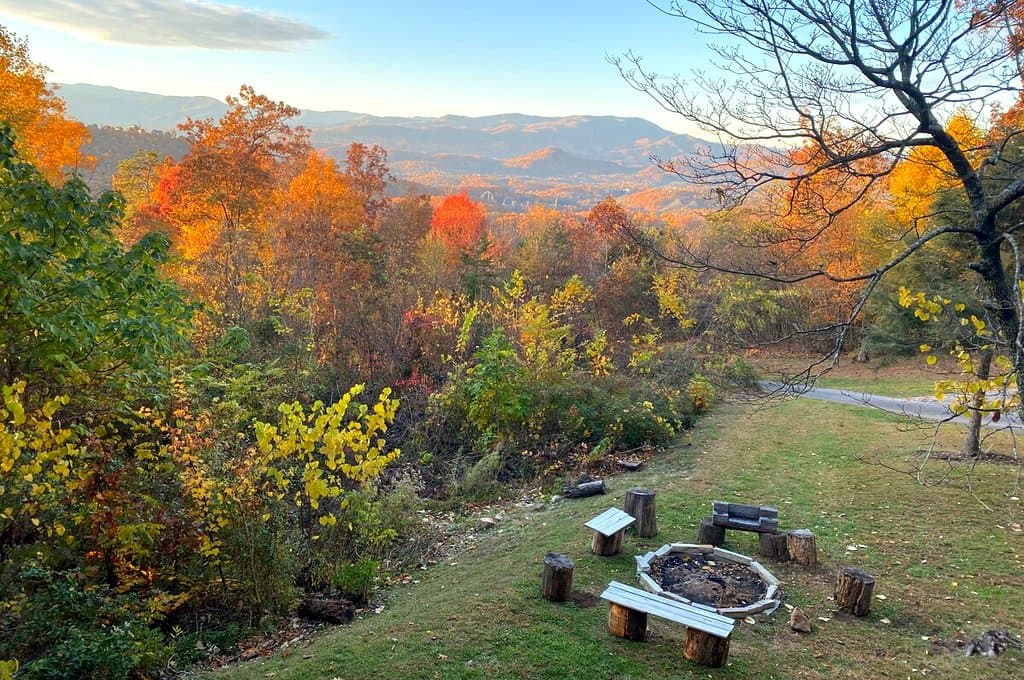
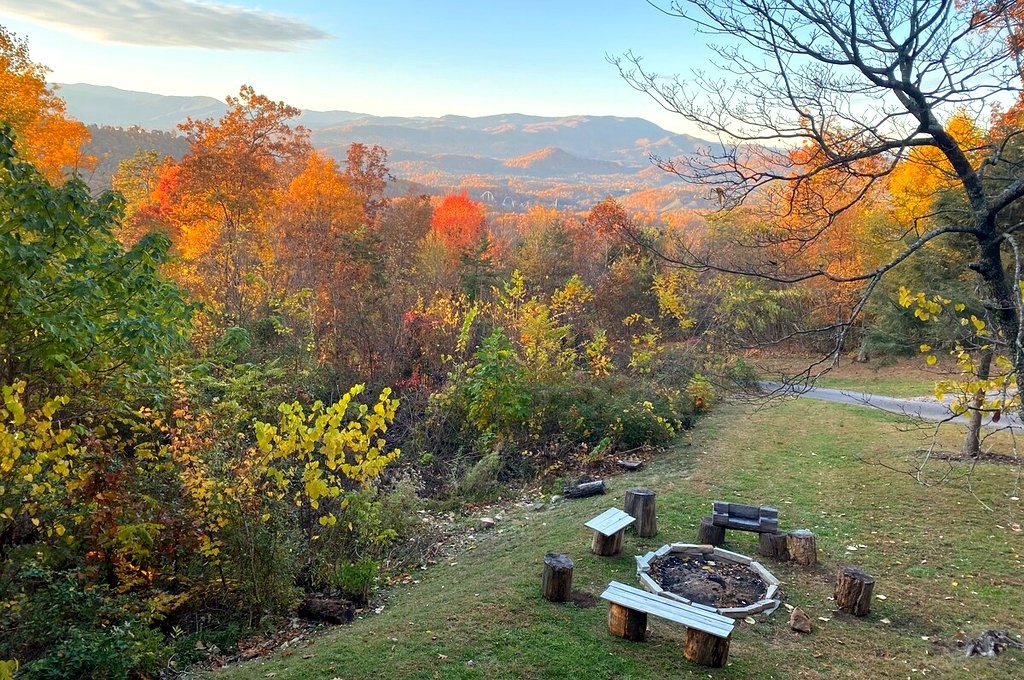 Mountain-View Fire PitS'mores with a ridgeline backdrop.
 One Private AcreNo neighbors on three sides, 800 forest acres around you.
Where is foliage peaking now?
Follow elevation. Late September and early October belong to the high country along Newfound Gap Road and Kuwohi. Mid October favors the Foothills Parkway and Cades Cove. Late October into early November shifts to Little River Road, Roaring Fork, and the neighborhoods and riverbanks around Pigeon Forge and Sevierville.
What is the best time to see the leaves change in Gatlinburg, Tennessee?
Gatlinburg sits at a somewhat higher elevation than Pigeon Forge and right at the park boundary, so its color often arrives a few days earlier. Mid to late October is the sweet spot for the town itself, with the drive up the Spur and over Newfound Gap giving you higher-elevation options from the same base. Our take on whether mid-October dates work for foliage gets specific about that window.
How accurate are fall foliage predictor maps?
Treat them as a rough guide, not a schedule. They are built on averages and broad weather models, and a single windstorm or an unusually warm week can shift real conditions by days. Checking the park's current conditions page a few days before you drive is more reliable than any seasonal forecast.
Plan for the Season, Not for One Perfect Day
The guests who leave happiest in autumn are the ones who stop chasing a single date and start treating the mountain as a range of options. Three mornings, an early alarm, a thermos, and a willingness to drive up or down a few thousand feet will put you in front of real color almost every time. The ones who leave disappointed booked one night, slept on the Parkway, and left before the oaks turned.
So the next time someone asks you, are the leaves at peak in Pigeon Forge, you will have the local answer ready: it depends entirely on how high you are standing, and here is where to go this week.
If you want real fall color without the Parkway gridlock, give yourself three nights on a quiet acre four minutes from Dollywood, with a south-facing deck for your coffee and the park corridor minutes away. October dates go first, so lock yours in early.
Start Planning Your Trip