

 Thistle Britches
There is a morning in mid October when the fog sits low over the ridgeline and the first sun hits the hardwoods behind the cabin, and the whole hillside goes copper for about twenty minutes before the light flattens out. Coffee on a south facing deck, one secluded acre with no neighbors on three sides, and the sound of nothing but a few crows arguing in the oaks. That is the moment people are chasing when they ask what is the best week for fall colors in the Smoky Mountains, and it is a fair question with a frustrating honest answer: the peak moves, and it moves by elevation more than by calendar date.
Guests plan trips around this all season. Some arrive in late September expecting the whole range to be blazing and find green everywhere below 3,000 feet. Others show up the first week of November and catch bare high country with gorgeous russet oaks and yellow hickories at cabin level. Both trips can be beautiful. Both can also feel like a miss if nobody told you what to expect. Here is how a host who watches the same hillside change every autumn thinks about timing, traffic, and picking dates you will not regret.
Key Takeaways
- Fall color in the Smokies runs top down, starting in the highest spruce fir and northern hardwood zones and finishing in the valleys weeks later.
- If you want one week that hedges your bets across elevations, the middle to third week of October is usually the strongest compromise.
- Late October into the first days of November tends to be prime for lower elevation color around Pigeon Forge, Sevierville, and the park foothills.
- Peak color weekends bring the heaviest traffic of the year, so staying close to the park entrance matters more than the exact date you pick.
- Weather shifts the schedule every year, so build a trip with two or three color elevations in reach instead of betting on a single overlook.
The Short Answer to What Is the Best Week for Fall Colors in the Smoky Mountains
If you can only book one week and you want the highest odds of seeing real color, aim for the stretch that covers roughly October 14 through October 24. That window usually catches mid elevation hardwoods at or near their best while the ridges above Newfound Gap are still holding late color and the valley floors are just beginning to warm up. You get layers, which is the whole point of this range. Blue haze on the far ridges, gold and orange in the middle distance, and green giving way at your feet.
Why not just say "the third week of October" and be done with it. Because the park spans a huge vertical range, from river valleys near 900 feet to summits above 6,600 feet, and that vertical spread behaves like hundreds of miles of latitude. The National Park Service fall color guidance for Great Smoky Mountains National Park makes the same point: color begins in the high country well before the lowlands turn, and the display continues for weeks as it works downhill.
The other reason for a range instead of a date is weather. A warm, wet September tends to delay and mute things. A cool snap with sunny days and chilly nights sharpens reds and pulls the calendar forward. A wind driven rainstorm at the wrong moment can strip a hillside in an afternoon. Anyone who promises you a specific peak date months out is guessing with confidence.
So the practical version of the answer: book the middle of October if you want the broadest mix of elevations, and book the last week of October if your priority is color right outside the cabin door and in the foothills you can reach in ten minutes.
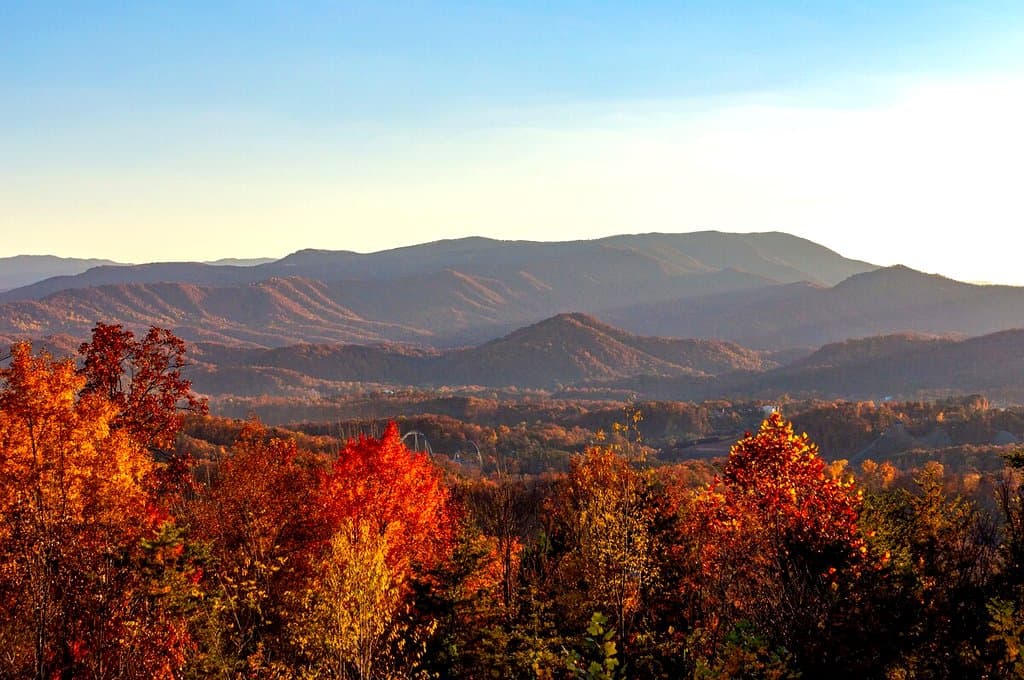
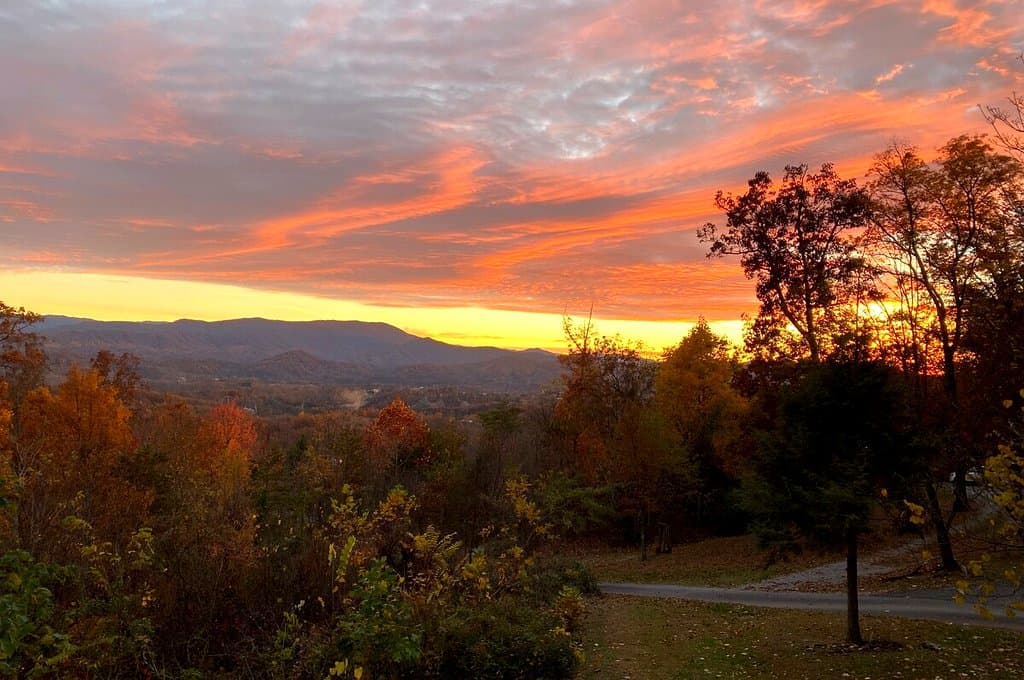
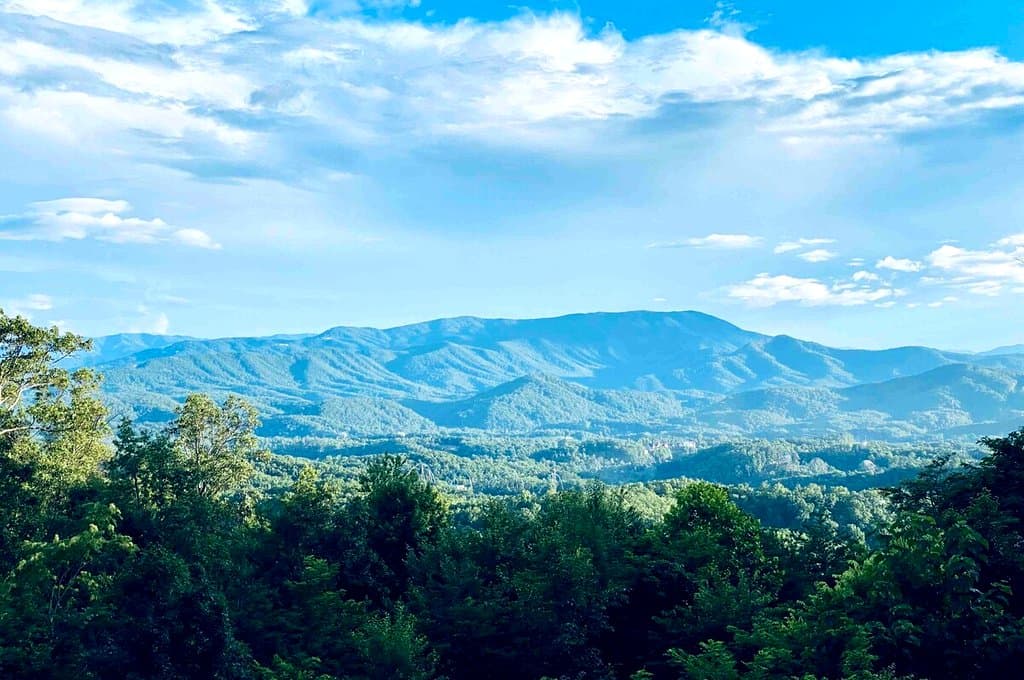
Actual mountain view from Thistle Britches with autumn foliage.
Elevation Is the Real Calendar
Once you think in feet instead of dates, planning gets easy. Here is the pattern that repeats year after year, with the usual caveat that nature does not read schedules.
Above roughly 4,500 feet
The high country goes first. Yellow birch, mountain ash with its red berry clusters, American beech, and pin cherry start turning in the second half of September and often look excellent through the first week or so of October. Clingmans Dome Road, the Newfound Gap corridor, and the higher pullouts on the Foothills Parkway show color earliest. Bring a jacket, because it can be twenty degrees cooler up there than in town.
Roughly 2,500 to 4,500 feet
This is the heart of the show and the reason the mid to late October window earns its reputation. Sugar maple, scarlet oak, sourwood, hickory, and dogwood layer up in the middle elevations. Drives along Newfound Gap Road, the Roaring Fork Motor Nature Trail above Gatlinburg, and the higher stretches of the Little River Road tend to be at their best in this period.
Below roughly 2,500 feet
The valleys and foothills finish last. Cades Cove, Metcalf Bottoms, the Greenbrier entrance, the Sugarlands area near the visitor center, and the ridges around Pigeon Forge and Sevierville usually hit their stride from about the third week of October into the first week of November. Oaks and hickories carry this stretch, so expect deep bronze, rust, and gold rather than the neon reds of higher maple stands.
When people ask me what is the best week for fall colors in the Smoky Mountains, I usually ask what they want to do. Long scenic drives with big overlooks favor earlier. Porch mornings, foothill hikes, and easy trips into town favor later. If you want more detail on how those elevations stack up day by day, our breakdown of the best time to see fall foliage in the Smoky Mountains goes deeper on the sequence.
A Week by Week Look at October Color
Here is roughly how the month tends to unfold. Treat it as a pattern, not a promise.
- Late September into the first week of October: High country color builds. Sourwood and black gum flash red at lower elevations, but the hillsides around town are still mostly green.
- Second week of October: Mid elevations begin turning in earnest. Overlooks start showing patchwork color. Weekday crowds are still manageable.
- Third week of October: The broadest coverage across elevations, and the reason this is the most requested window for anyone researching what is the best week for fall colors in the Smoky Mountains. Also the busiest.
- Fourth week of October: Lower elevations come into their own. Foothills, valleys, and the ridges around Pigeon Forge look their best, and high country is winding down.
- First week of November: Valley oaks hold on. Fewer visitors, softer light, bare high ridges that show off the mountain structure beautifully.
Regular visitors have their own loyalty to different weeks. Photographers often prefer the shoulder periods for the mix of bare branch structure and color. Families with kids tend to like the later end, when town attractions are less packed and a leaf drive can be shorter without feeling like a loss.
The Mistake That Wrecks Most Fall Leaf Trips
The date is almost never the thing that ruins a fall trip. Traffic is. Every autumn, someone books a place forty five minutes from the park entrance, then spends peak weekend mornings idling on the Parkway watching the clock eat their sunrise. By the time they reach an overlook, every pullout is taken and the light is harsh. They go home saying they picked the wrong week. They picked the wrong distance.
The second mistake is trying to compress a color trip into a single night. One night gives you exactly one morning, and mountain weather can hand you fog and drizzle on that morning. Three nights gives you three shots at clear light, which is why our default minimum stay is three nights. It is not a sales tactic. It is the difference between a trip that works and a trip that depends on luck.
The third mistake is booking a place with no reason to stay put. If the cabin is just a bed, you will drive constantly and burn your vacation on the road. What you actually want during peak week is a base where a slow morning feels like part of the trip rather than time wasted.
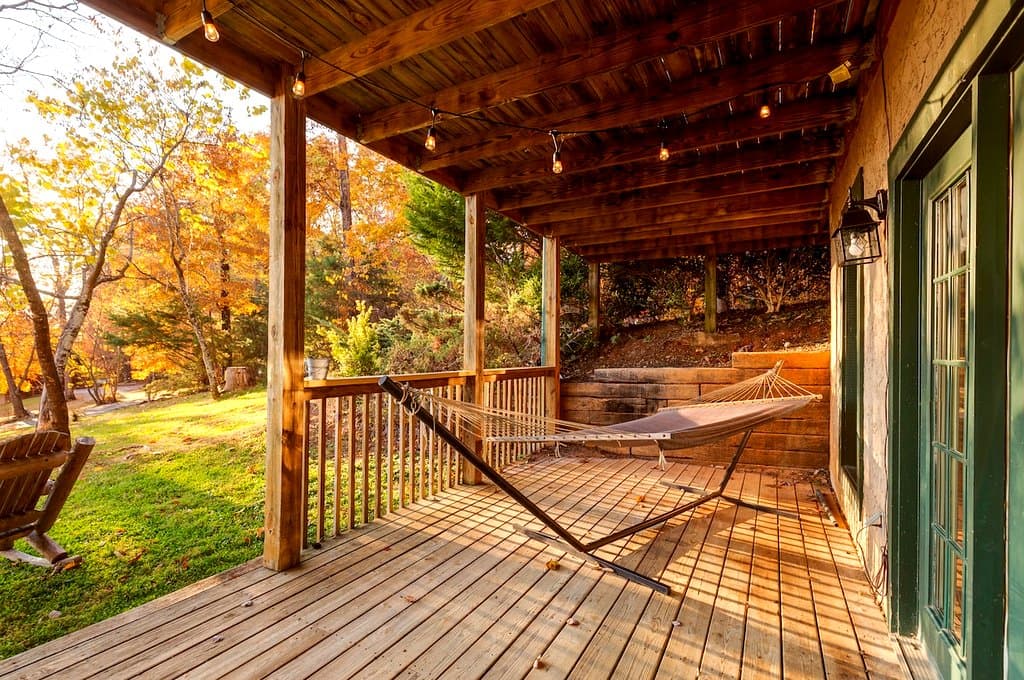
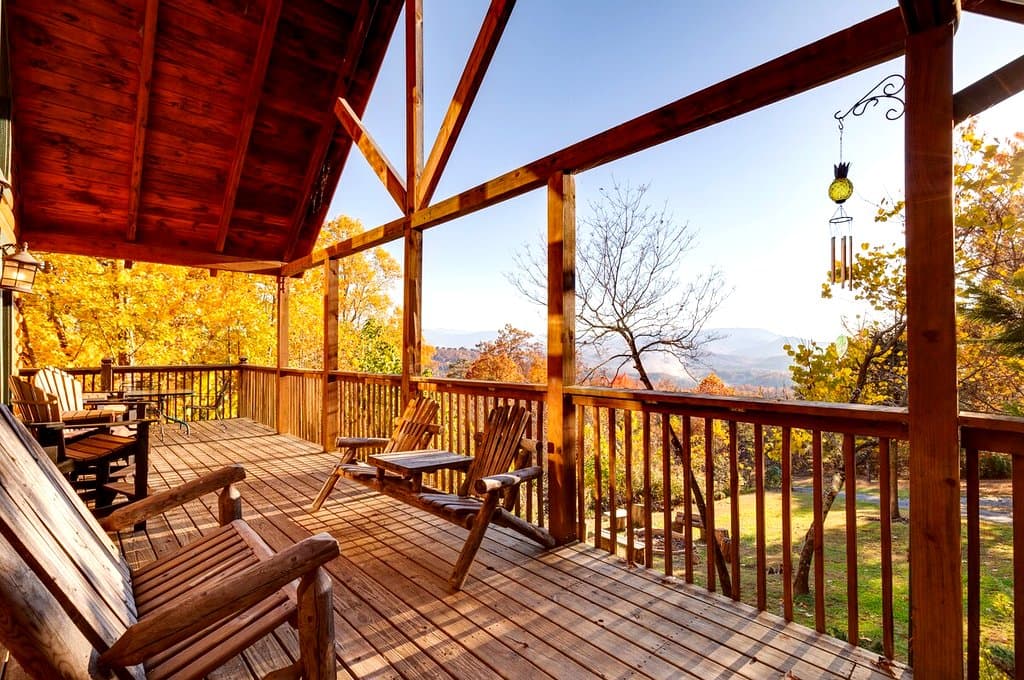
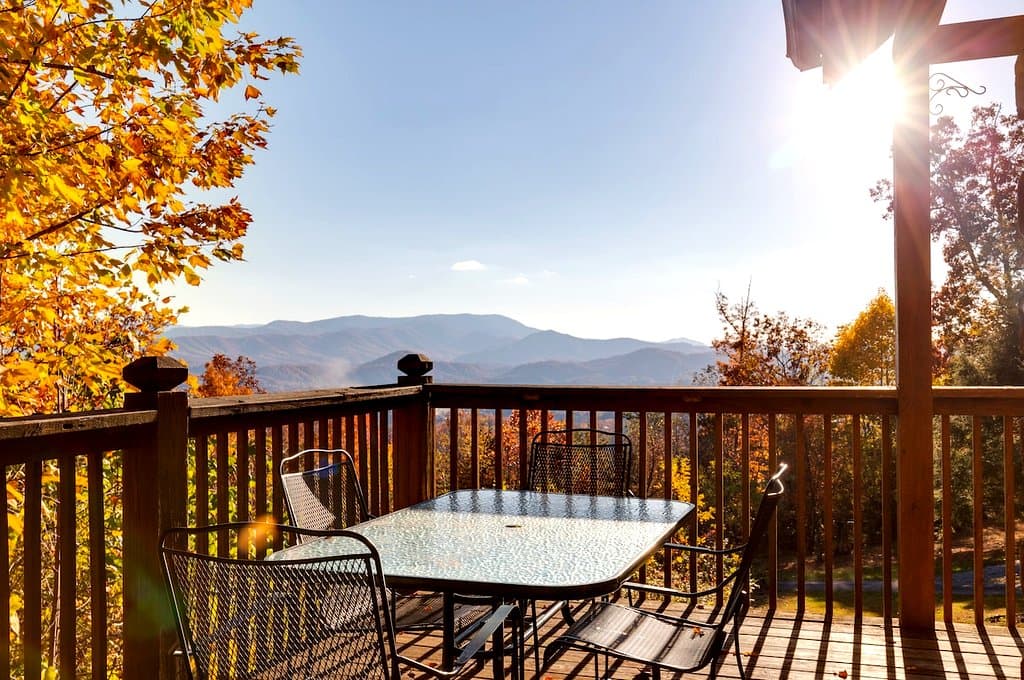
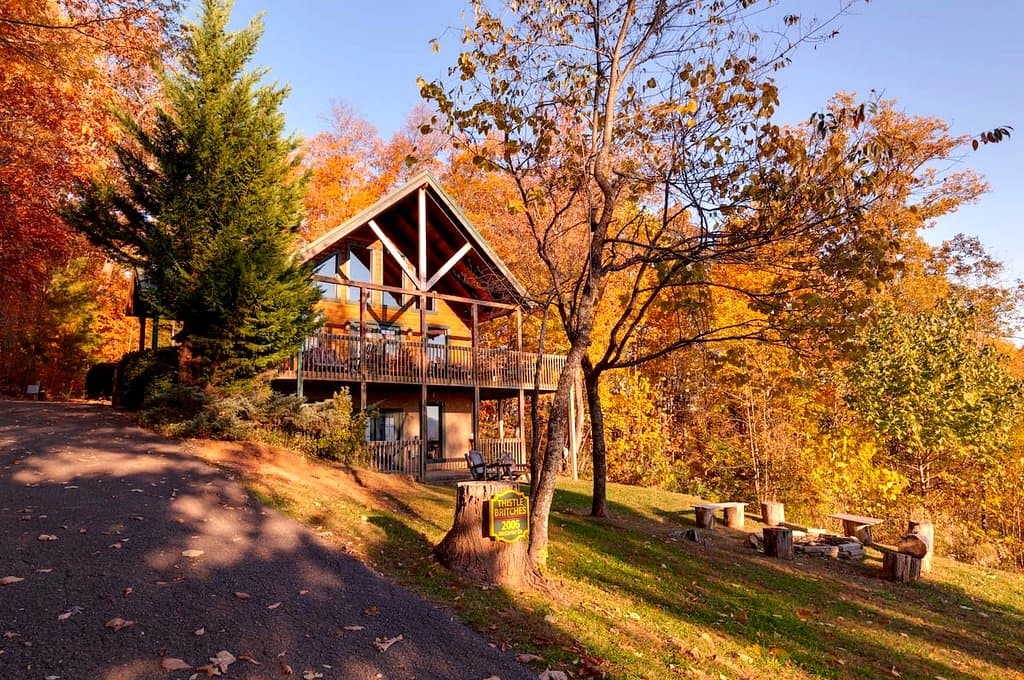
That is what to look for when you compare cabins in October. A deck with a real view and morning sun, so the porch counts as an activity. A short hop to the main draws instead of a long commute. Enough sleeping space that you are not stacking people awkwardly. Reliable internet for the person who still has to check in with work. At Thistle Britches, that shakes out as a south facing deck looking toward Dollywood, which sits about 0.8 miles away, roughly four minutes by car, two bedrooms and two bathrooms with two king beds plus three queen fold out couches for up to six guests, 321 Mbps T-Mobile 5G home internet, a propane grill for chilly evening cooking, and one secluded acre with no neighbors on three sides. Dogs are welcome too, two maximum, with an outdoor dog area that is open and unfenced, so leashes stay on.
Peak color weeks book out early, and there is only one Thistle Britches. If mid to late October is on your list, check availability now rather than in September.
Book Your StayHow to Build a Peak Week Day Plan That Beats the Crowds
A good fall day in the Smokies is front loaded. Here is the rhythm that works during the busiest color weeks.
Before sunrise: Coffee on the deck, then out the door. Head for whichever elevation matches the week. Early October means climbing toward Newfound Gap and the high pullouts. Late October means Little River Road toward Metcalf Bottoms, or the Greenbrier road along the river, where the water and the leaves work together.
Mid morning: A short walk. The Gatlinburg Trail and the paths near Sugarlands Visitor Center stay gentle enough for mixed ability groups. Cataract Falls is a quick out and back if you want moving water in the frame.
Midday: Come back and let the traffic peak without you. Grill lunch, nap, let the kids run the yard. This is where staying close pays off twice, once on the way in and once on the way out.
Afternoon and evening: Town time. The Old Mill district in Pigeon Forge, the shops along the Parkway, or a Dollywood evening during its fall festival season. Being minutes from the gate means you can go for a few hours instead of committing to a full day.
If you are still sorting out how long to stay, our take on how many days you need at Pigeon Forge lays out realistic itineraries. And if you are traveling with kids during peak week, where to stay with kids in Pigeon Forge covers the logistics that matter when nap schedules meet leaf season.
Frequently Asked Questions
 56-Jet Luxury SpaBluetooth, subwoofer, LED waterfall.
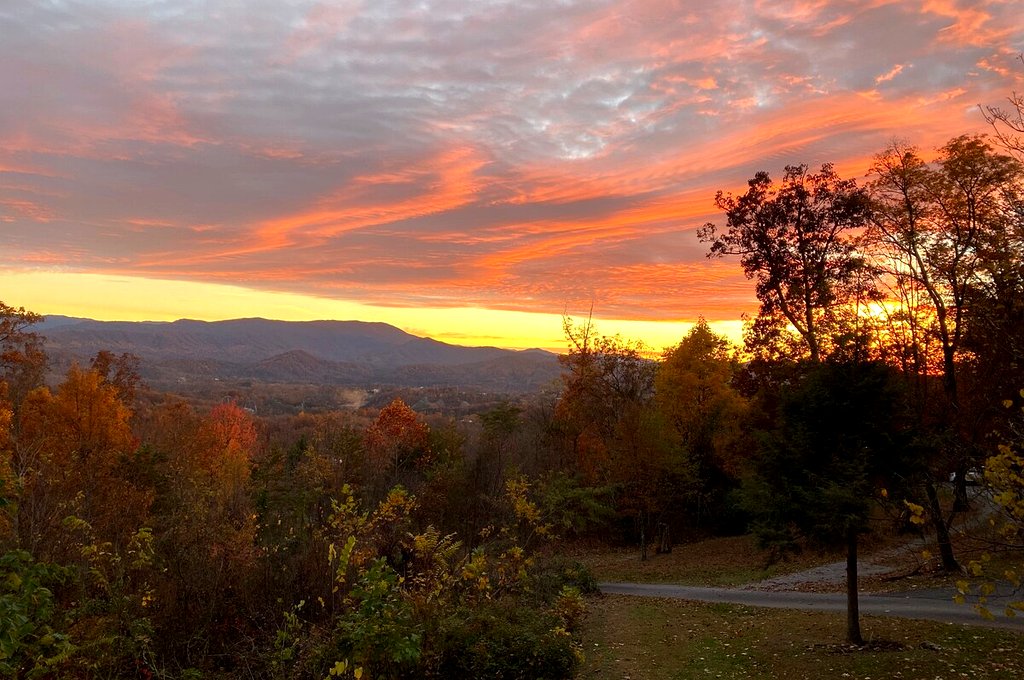 Mountain-View EveningsWatch the evening light change over the mountain ridges.
 Game RoomPool table, arcade, darts, Xbox.
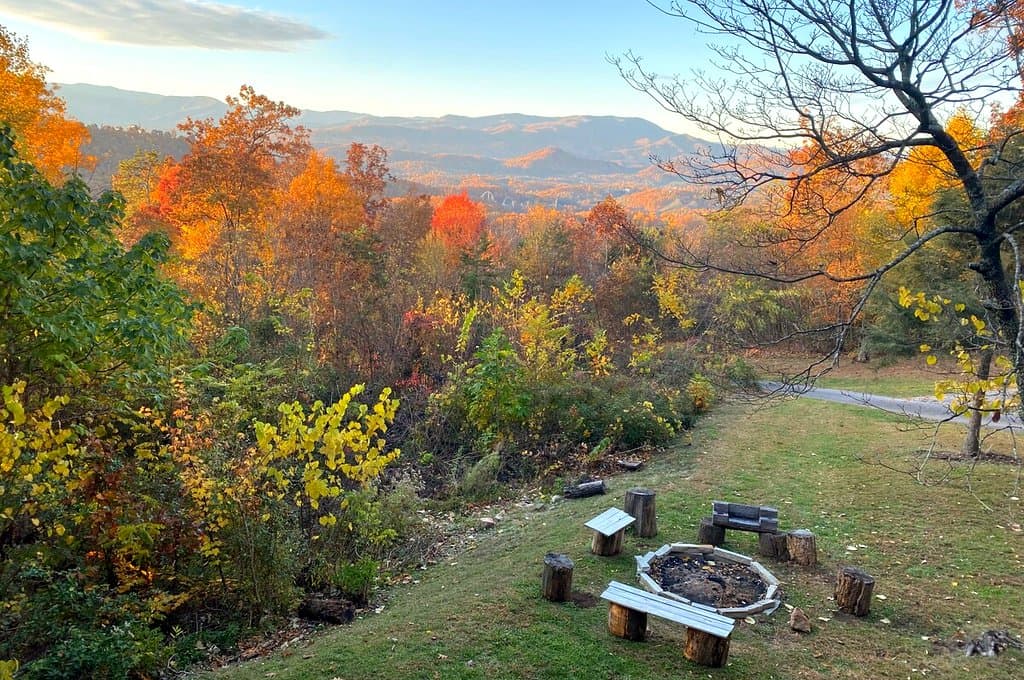
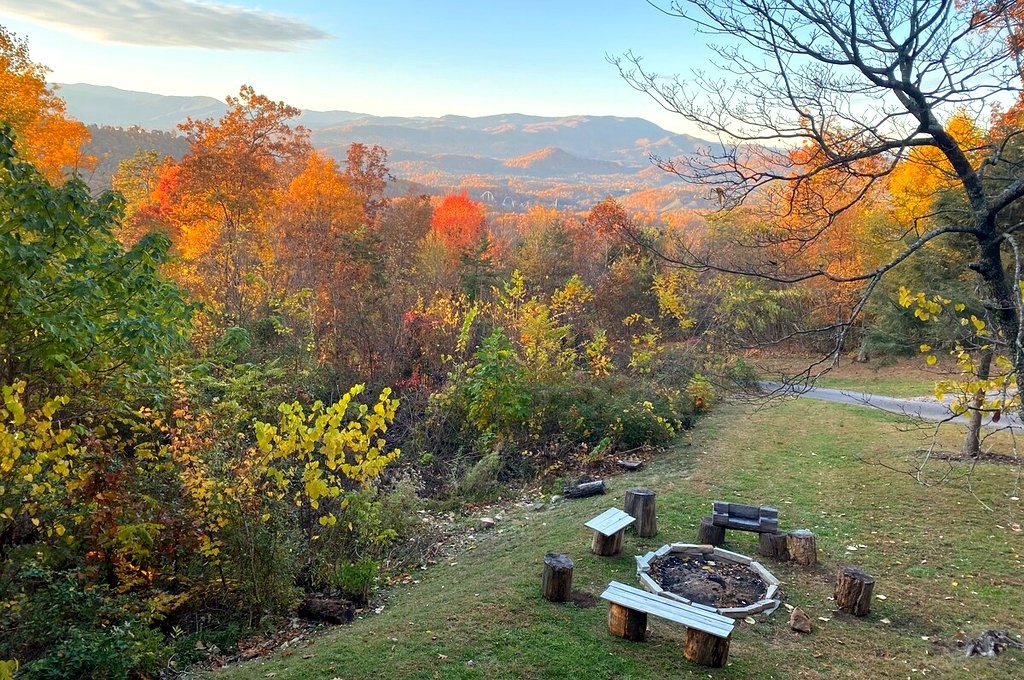 Mountain-View Fire PitS'mores with a ridgeline backdrop.
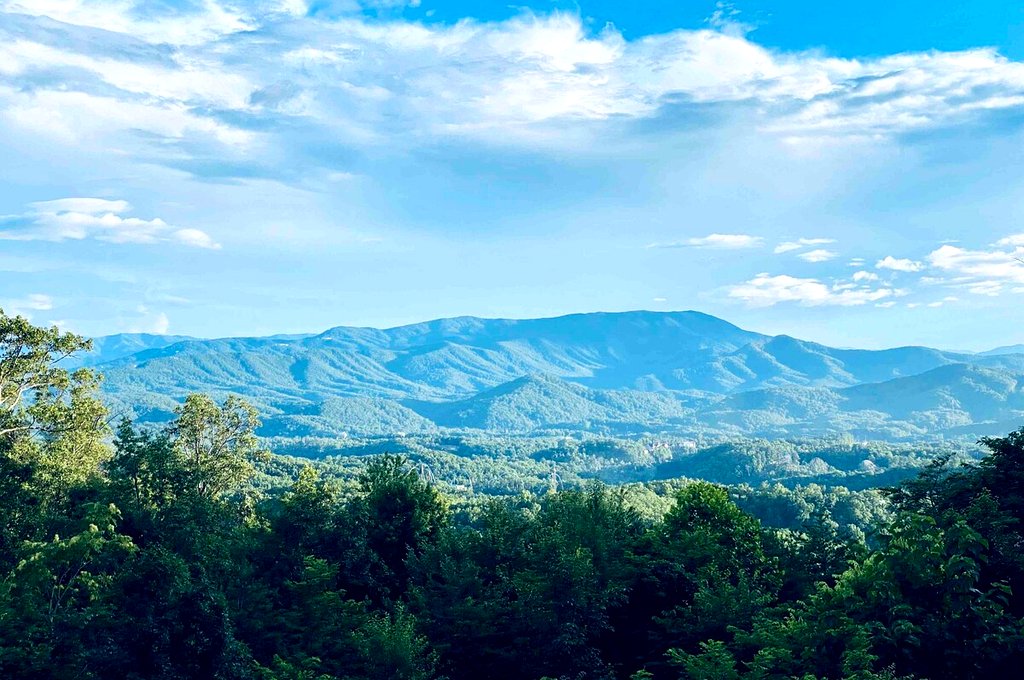 One Private AcreNo neighbors on three sides, 800 forest acres around you.
What is the best week for fall colors in the Smoky Mountains if I only have three nights?
Take the middle to third week of October and plan to move vertically. With three nights you can do one high elevation morning, one mid elevation drive, and one foothill or valley morning, which means you are almost guaranteed to catch something at or near peak. Book weekday nights if your schedule allows, since the difference in traffic between a Tuesday and a Saturday during color season is dramatic.
Is the last week of October too late for fall colors?
Not at all, it is simply a different show. High elevations will be mostly bare, but the foothills and valleys around Pigeon Forge, Cades Cove, and the Little River corridor are often at their absolute best then. If your ideal trip involves porch mornings, easy walks, and shorter drives, later October frequently beats mid October.
How much does weather change the peak?
Quite a bit. Cool nights with dry sunny days tend to intensify color and can pull the timing earlier, while a warm wet stretch usually delays and softens it. Heavy wind or rain during peak can strip exposed ridges quickly while sheltered coves keep their leaves, which is another argument for having several elevations within reach of your base.
Are bears active during fall color season?
Yes. Autumn is a heavy feeding period before winter, so black bears are frequently out foraging for acorns and berries. Keep food secured, never leave trash out overnight, and follow the park's wildlife distance guidance. The Great Smoky Mountains National Park supports one of the densest black bear populations in the eastern United States, and sightings around the foothills are common in October.
How far ahead should I book for peak color week?
Earlier than most people expect. The mid to late October weekends are among the most requested nights of the entire year across the Pigeon Forge and Gatlinburg area, and single properties like ours fill first. If you have specific dates in mind, reach out well before summer ends. Our standard minimum is three nights, and shorter stays are only possible when a specific approved exception is active for those dates.
Picking Your Week and Locking It In
Fall here rewards flexibility over precision. Pick the middle of October if you want the widest spread of color across elevations, or the end of the month if you want quieter roads and glowing foothills. Then choose a base that lets you be inside the park at first light and back on a porch by lunch, because that single logistical choice shapes the trip more than any date on a calendar.
For anyone who wants a deeper read on the whole autumn arc, our host notes on whether the leaves are changing in Pigeon Forge yet track the season from the first sourwood reds to the last valley oaks.
If you want peak color mornings without spending your vacation in Parkway traffic, a cabin four minutes from the Dollywood area with a south facing deck and a secluded acre is how you get it. Pick your October dates and hold them before the calendar fills.
Start Planning Your Trip