

 Thistle Britches
The first hint of fall around here does not arrive on a calendar page. It arrives one morning in late September when you step onto a south-facing deck with coffee, the air has an edge to it that was not there a week earlier, and the ridgeline above Dollywood looks slightly less green than it did the day before. Down at cabin level the maples are still stubbornly summer-colored. Up top, four thousand feet higher, the yellow birch and mountain ash have already turned.
That gap is the whole answer to the question. So what is the best time to see the fall foliage in the Smoky Mountains? It depends entirely on how high up the mountain you are standing, and the color moves downhill for roughly six weeks. Visitors who understand that arrive at the right overlook on the right week. Visitors who do not end up driving three hours to a summit that peaked ten days ago, or standing in a gray forest wondering where everyone else found the orange.
Here is how the season actually unfolds, from someone who watches it happen from one acre just outside the Parkway.
Key Takeaways
- High elevations above 4,000 feet turn first, generally mid to late September into early October.
- Mid elevations along Newfound Gap Road hit their stride through mid October.
- The foothills, including the Pigeon Forge area and the cabin sits at that lower elevation, usually peak late October into the first week of November.
- Weekdays beat weekends by a wide margin for parking, overlooks, and Cades Cove.
- Book lodging early. October fills faster than any other month in the Smokies.
What Is the Best Time to See the Fall Foliage in the Smoky Mountains? Start With Elevation
Great Smoky Mountains National Park climbs from roughly 875 feet in the lowlands to 6,643 feet at Kuwohi, the highest point in Tennessee. That vertical spread is why the park holds color longer than almost anywhere else in the East. Climbing a thousand feet in elevation is loosely comparable to driving several hundred miles north, so a single afternoon of driving can take you through what feels like three different weeks of autumn.
The National Park Service explains this same pattern on its fall colors page, and it matches what we see from the deck year after year. Sugar maple, sweetgum, scarlet oak, hickory, and yellow poplar do the heavy lifting at lower elevations, while the high country leans yellow and rust rather than fire red.
So when someone asks what is the best time to see the fall foliage in the Smoky Mountains, the honest answer is a follow-up question: which Smokies do you want? If you want the classic mountain-behind-a-split-rail-fence photograph in the valleys, you want late October. If you want cold air, dwarf spruce, and yellow birch glowing at a high overlook, you want the last week of September.
Weather shifts the timeline a little each year. A cool, dry September nudges color earlier. A warm, wet one pushes it back a week or more. Drought years can mute the reds. Nobody predicts it perfectly, which is why the smartest approach is a stay long enough to chase color up or down the mountain depending on what you find when you arrive. That is one reason our three-night minimum is not just a policy. Two days of leaf peeping in the Smokies is a gamble; four days is a plan.
If you want a running read on what the trees are doing right now, I keep notes on whether the leaves are changing in Pigeon Forge yet throughout the season.
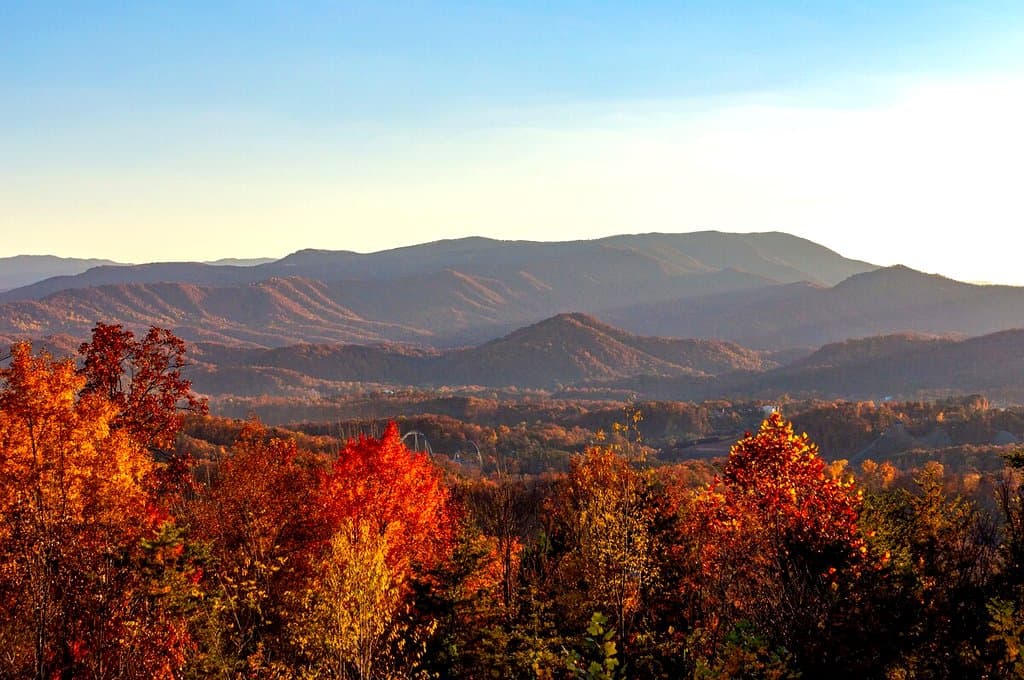
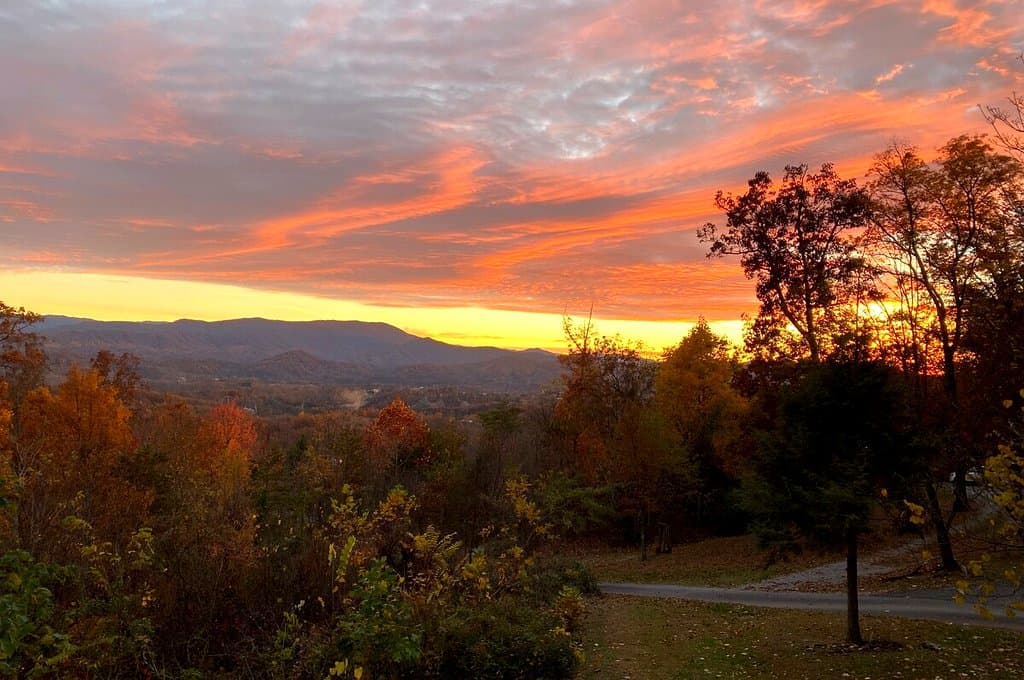
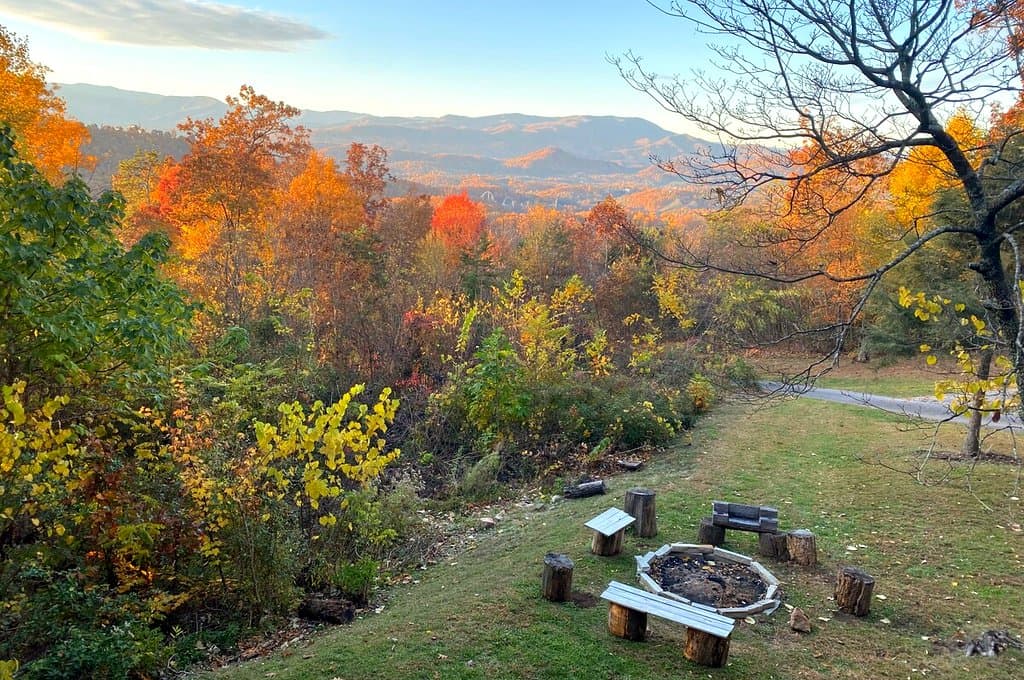
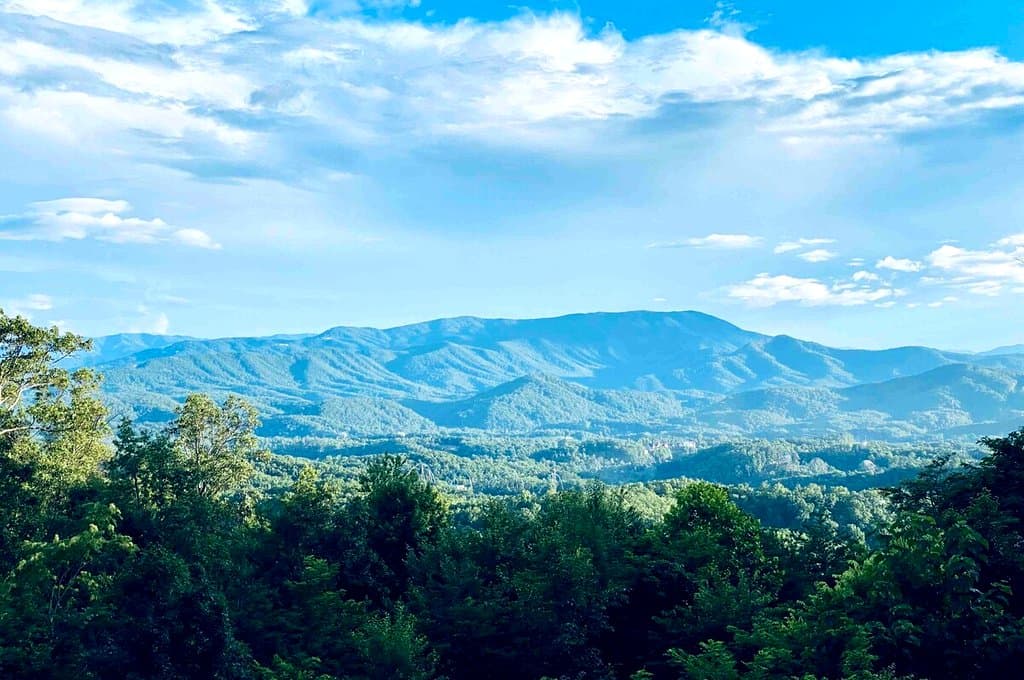
Actual mountain view from Thistle Britches with autumn foliage.
The Fall Foliage Calendar, Week by Week
Mid to late September: the high country
Color starts above 4,000 feet. Yellow birch, American beech, mountain ash with its clusters of red berries, and hobblebush begin turning while the valleys are still fully green. Kuwohi and the Appalachian Trail corridor along the state line are the places to be. Bring a jacket that you would consider excessive at the cabin, because the summit routinely runs far colder and windier than the foothills.
Early to mid October: the middle band
This is when the drive over Newfound Gap Road becomes the main event. The road crosses the crest at just over 5,000 feet, so a single up-and-back run passes through several stages of the season at once. Morning fog settling into the coves and burning off around mid morning is the shot most photographers are hoping for. Overlooks fill up early on weekends, so plan a sunrise start.
Mid to late October: the sweet spot
If you only get one trip and want the highest odds, this is the window. Mid elevations are usually at or near their strongest, and the lower slopes are catching up fast. Cades Cove, the Roaring Fork Motor Nature Trail, and Foothills Parkway overlooks all pay off. Expect company. Late October weekends are the busiest stretch of the entire Smoky Mountain year.
Late October into early November: the foothills
My personal favorite, and the most underrated answer to what is the best time to see the fall foliage in the Smoky Mountains. The crowds thin noticeably after the last weekend in October, but the valley floors, the ridges around Pigeon Forge, and the tree line directly off our deck are often at their best. Oaks and hickories hold on late, and the light in the first week of November is lower and warmer than anything you get in early October.
The Mistake That Wrecks Most Fall Trips Here
The mistake is almost never picking the wrong week. It is picking the wrong basecamp and then losing the best hours of every day to a car.
Fall traffic on the Parkway is its own weather system. A stay that sits deep up a steep gravel road, or on the far side of town from where you actually want to be, quietly taxes every single morning. You wake up at a reasonable hour, spend forty-five minutes creeping past traffic lights, arrive at the overlook after the fog has lifted and the parking area is full, then repeat the whole thing in reverse at dinnertime. Three days of that and the trip becomes a memory of brake lights rather than sugar maples.
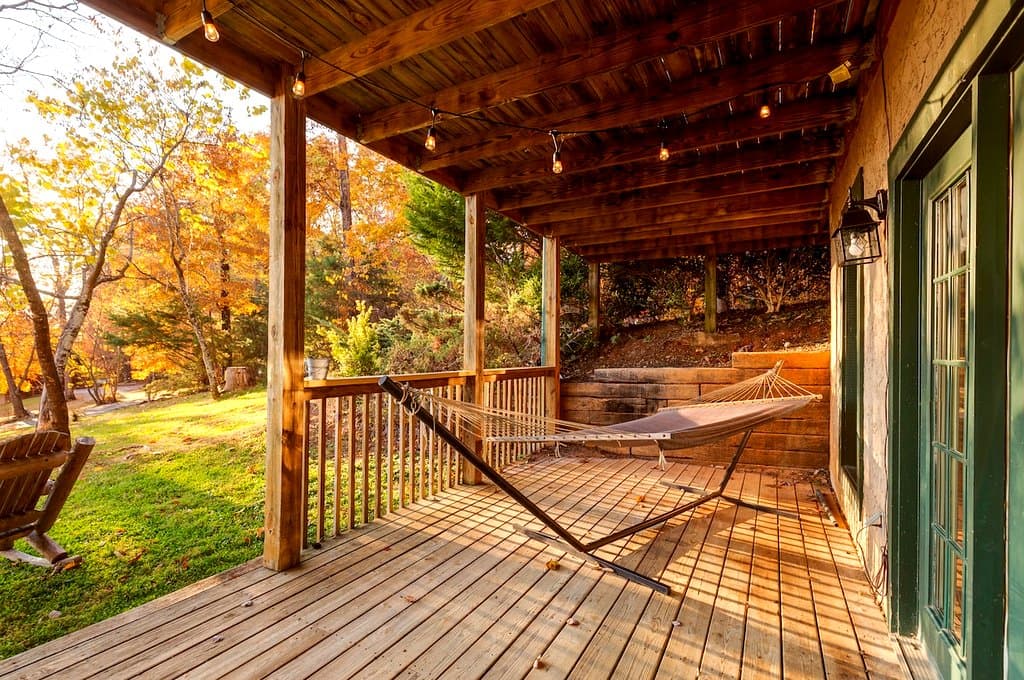
The second version of the mistake is booking a place with no view and no outdoor space. Fall is the one season here where sitting still outdoors is the activity. If your lodging has no deck worth using, or the deck faces a neighbor's siding, you have paid for peak-season lodging and given away the best part of it.
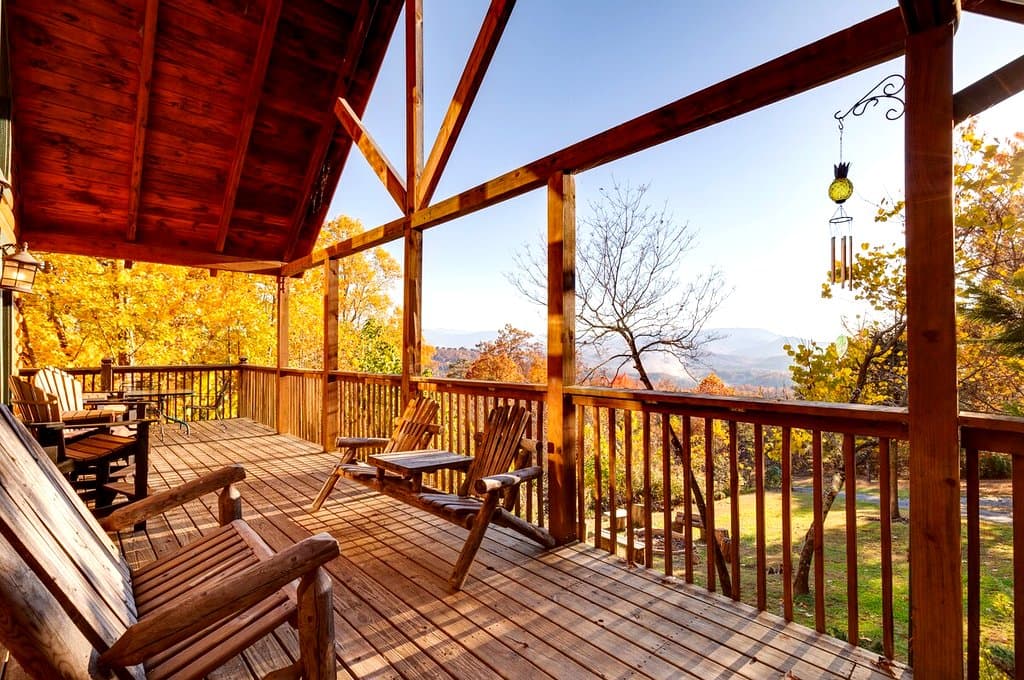
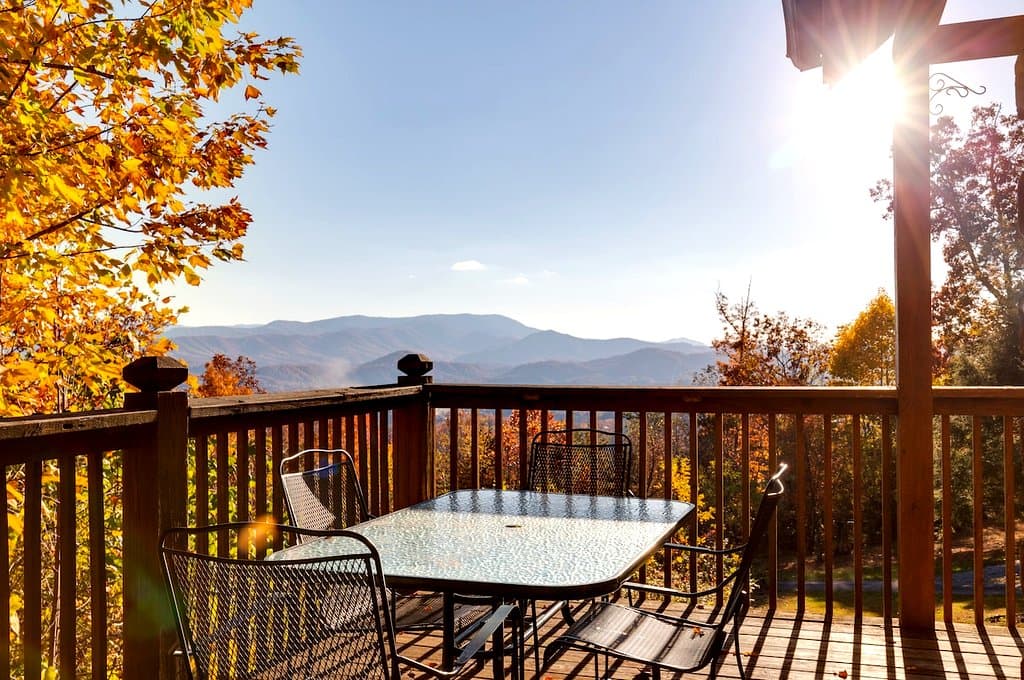
What to look for instead: a location close to the main artery but off it, real outdoor square footage facing open sky, and enough separation that morning quiet is actually quiet. Ours happens to check those boxes, which is why I know how much they matter. The cabin sits on one secluded acre with no neighbors on three sides, and the deck faces south toward Dollywood, which is 0.8 miles away, about four minutes by car. That means you can be back at the property for an afternoon rest and still get out for a late-day overlook run without giving up an hour to traffic in each direction.
Practical detail that surprises people: internet matters in October. Cell service inside the park is unreliable at best, so trip planning happens back at the cabin. Ours runs 321 Mbps T-Mobile 5G home internet, which handles map downloads, park alerts, and a remote work morning if you are stretching a long weekend. If you are weighing neighborhoods and price points, my breakdown of renting a cabin in Gatlinburg versus Pigeon Forge covers the tradeoffs honestly.
October weekends in the Smokies book out earlier than any other stretch of the year. If you want a quiet acre with a south-facing deck four minutes from Dollywood, claim your dates before the color starts.
Book Your StayWhere Locals Actually Go for Color
Everyone knows Newfound Gap and Cades Cove, and both deserve their reputations. These are the ones I recommend when guests want something with a little more room to breathe.
- Foothills Parkway overlooks. Long layered ridge views without a mountain crossing. Excellent in the last week of October when the lower slopes light up.
- Roaring Fork Motor Nature Trail. A narrow, slow, one-way loop with old homesteads, creek crossings, and a canopy that feels enclosed. It closes for the winter season, so check status late in the year.
- Little River Road. Water, rock, and color together, which photographs better than a wide vista on an overcast day.
- The deck at golden hour. Not a joke. Guests who plan one full stay-put afternoon almost always name it as their favorite hour of the trip.
Fall here also means the rest of the calendar picks up. Dollywood's autumn season runs alongside peak color, and the walk-around-and-eat pace of it fits a day when your legs are tired from a trail. Craft fairs, harvest events, and dinner shows fill in the evenings. If you want more of that side of the season, my roundup of how to plan a fall weekend without fighting the traffic maps out a workable order of operations.
One thing to keep in mind about the Great Smoky Mountains: it is the most visited national park in the United States, a fact you can verify through public park records, and October is when that shows most. Early starts and weekday visits are not just nice ideas. They are the difference between a good day and a frustrating one.
Fall Foliage Questions Guests Ask Most
 56-Jet Luxury SpaBluetooth, subwoofer, LED waterfall.
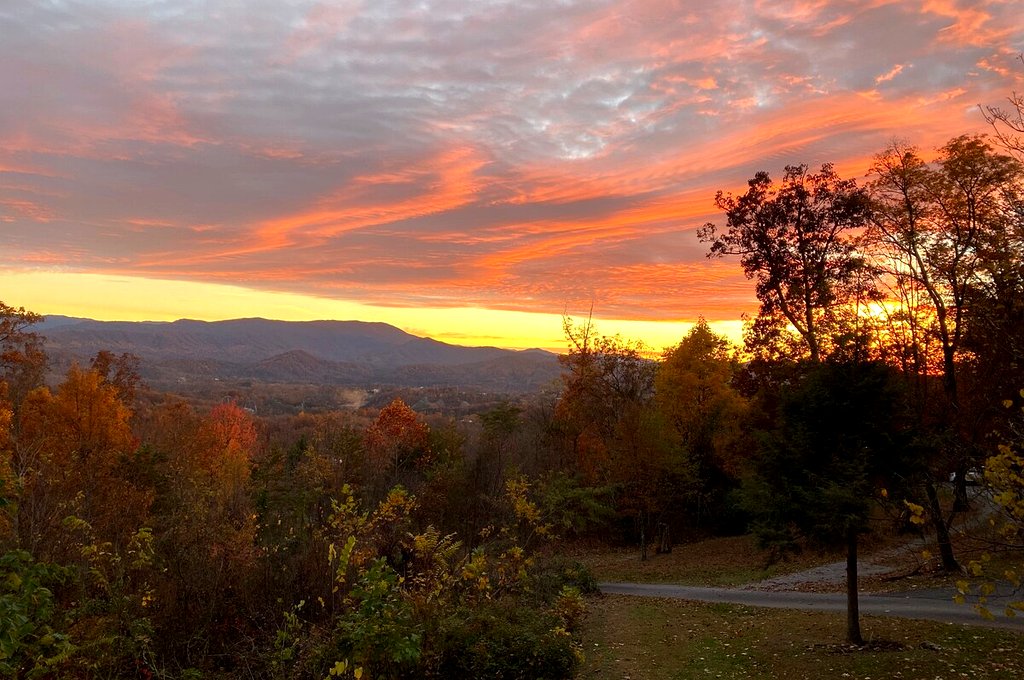 Mountain-View EveningsWatch the evening light change over the mountain ridges.
 Game RoomPool table, arcade, darts, Xbox.
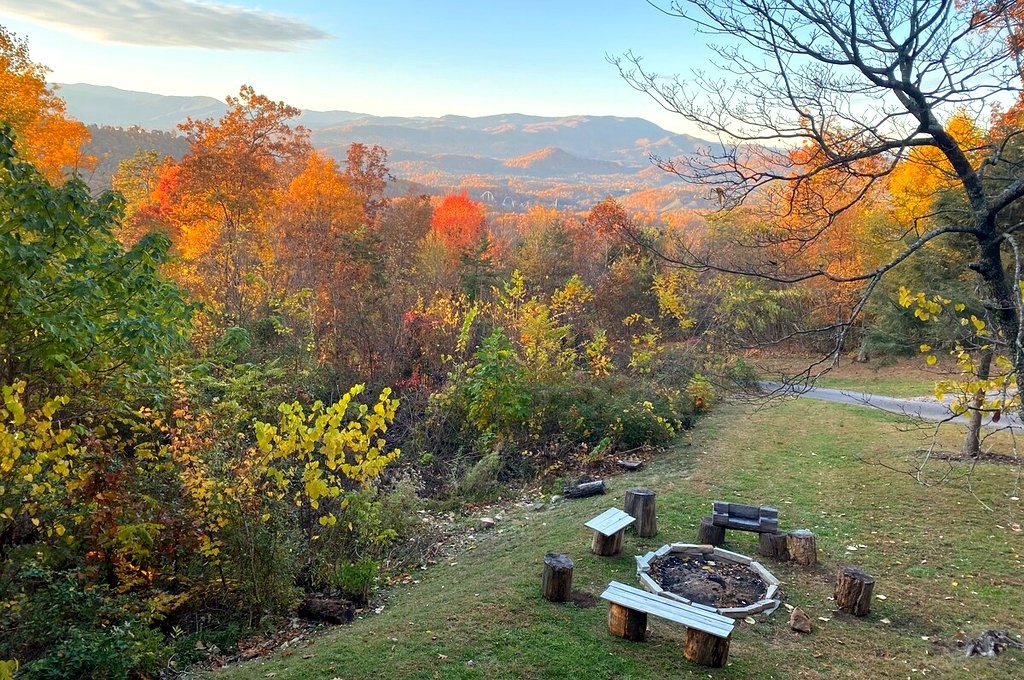 Mountain-View Fire PitS'mores with a ridgeline backdrop.
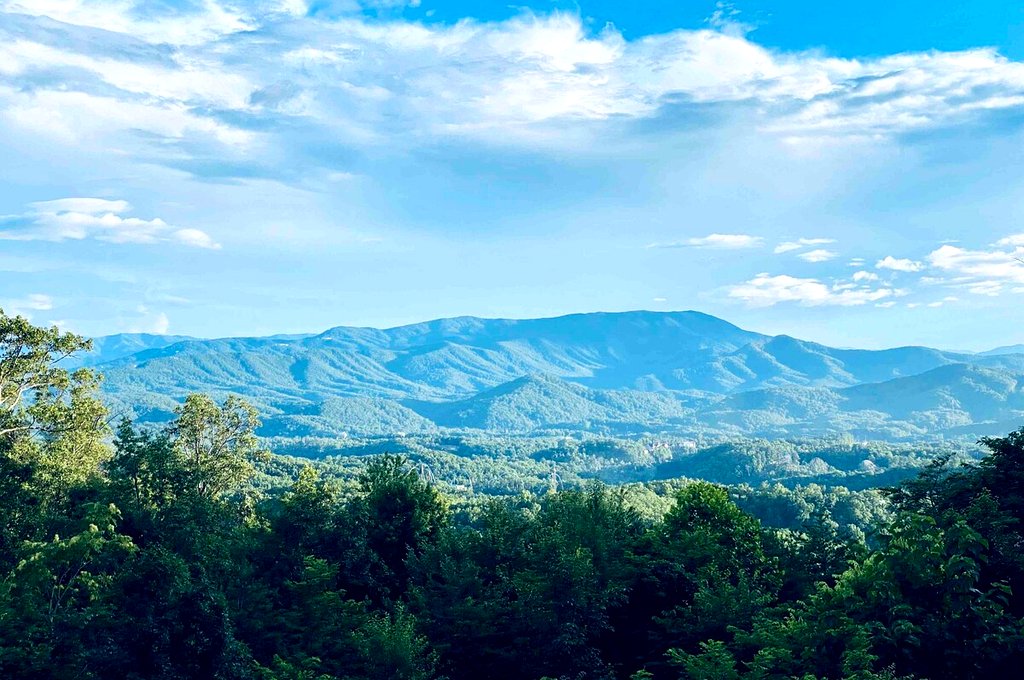 One Private AcreNo neighbors on three sides, 800 forest acres around you.
What is the best time to see the fall foliage in the Smoky Mountains if I can only pick one week?
The middle two weeks of October give you the highest probability of finding strong color somewhere within a reasonable drive, because that is when the high, mid, and lower elevations overlap. You can drive up for later-stage color or stay low for earlier-stage color on the same trip. The tradeoff is crowds, since those same weeks are the busiest of the year.
Is late October too late for fall colors?
Not at all, and this is where a lot of visitors guess wrong. The valleys and foothills, including the ridges you see from the cabin, frequently peak in the final days of October and into the first week of November. High elevations will be past, but the lower forests are often at their strongest with far fewer cars.
Do I need to drive deep into the park to see good color?
No. During peak weeks the roadsides and ridgelines around Pigeon Forge and Sevier County color up beautifully, and a short drive on the Foothills Parkway gets you wide views without a mountain crossing. Save the long park drives for one or two dedicated days rather than making them a daily commitment.
Can I bring my dog on a fall foliage trip?
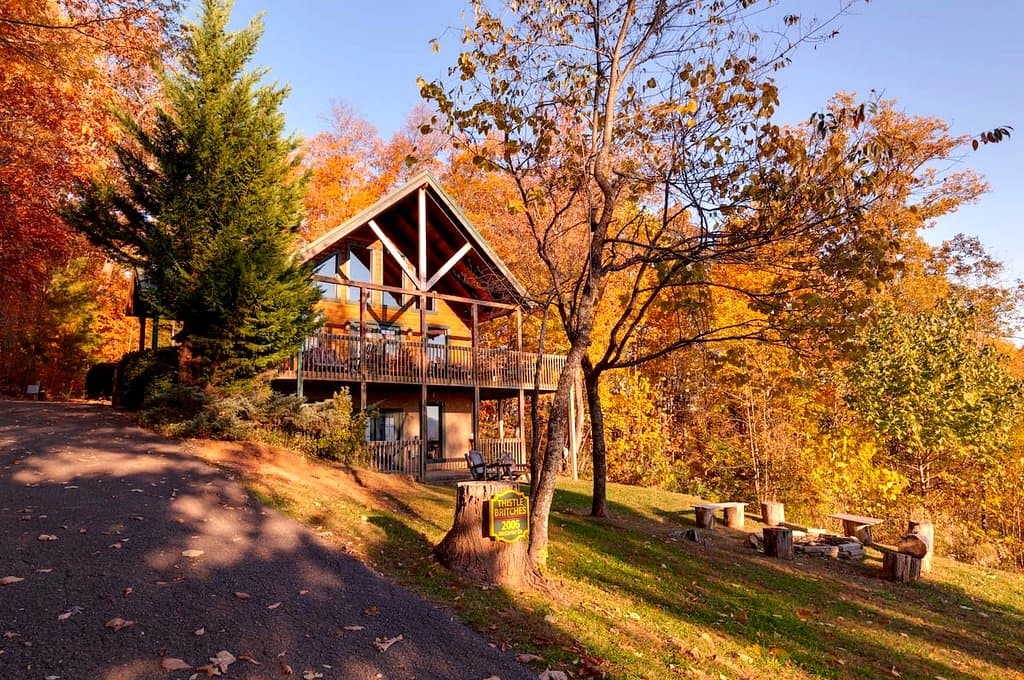
Yes, with planning. Dogs are welcome at the cabin, with a two-dog maximum, and there is an outdoor dog area on the property, though it is unfenced, so leashes and supervision are required. Keep in mind that most trails inside the national park do not allow pets, so build in cabin time and stick to pet-friendly routes and town walks.
How long should I stay to catch peak color?
Three nights is the realistic floor, and it is our default minimum for good reason. Foliage timing shifts year to year, so extra days let you adjust upward or downward in elevation once you see the actual conditions. Four or five nights turns a foliage trip into an actual vacation with room for Dollywood, a hike, and a slow morning.
Building the Trip Around the Color
The version of this trip that people remember follows a simple shape. One early morning devoted to a park drive, one afternoon on a short trail with water at the end, one full day in town or at Dollywood, and at least one afternoon where nobody gets in a car at all. Two king beds and three queen fold-out couches mean up to six people can spread out at the end of those days, and the propane grill on the deck handles dinner without anybody driving back into Parkway traffic at 6 p.m.
That last part is what turns a leaf-peeping weekend into a real getaway. The color is the reason you came. The quiet acre, the open sky off the south-facing deck, and the four-minute run to Dollywood are what make the days between the overlooks feel like something other than logistics.
If you want the answer to what is the best time to see the fall foliage in the Smoky Mountains in one sentence: come the second half of October for the widest range of color, or come the very end of the month for the best combination of color and calm.
If you want peak Smoky Mountain color without spending your mornings in Parkway traffic, hold your October or early November dates now. One cabin, one secluded acre, up to six guests, and a south-facing deck built for exactly this season.
Start Planning Your Trip