

 Thistle Britches
The first real sign shows up on a single tree. Somewhere along the back roads between the Parkway and Dollywood, one sourwood decides it is done with summer and goes scarlet while everything around it is still deep green. That happens weeks before the mountains look like a postcard, and it is exactly why so many people email me asking the same thing: are the leaves changing in Pigeon Forge yet?
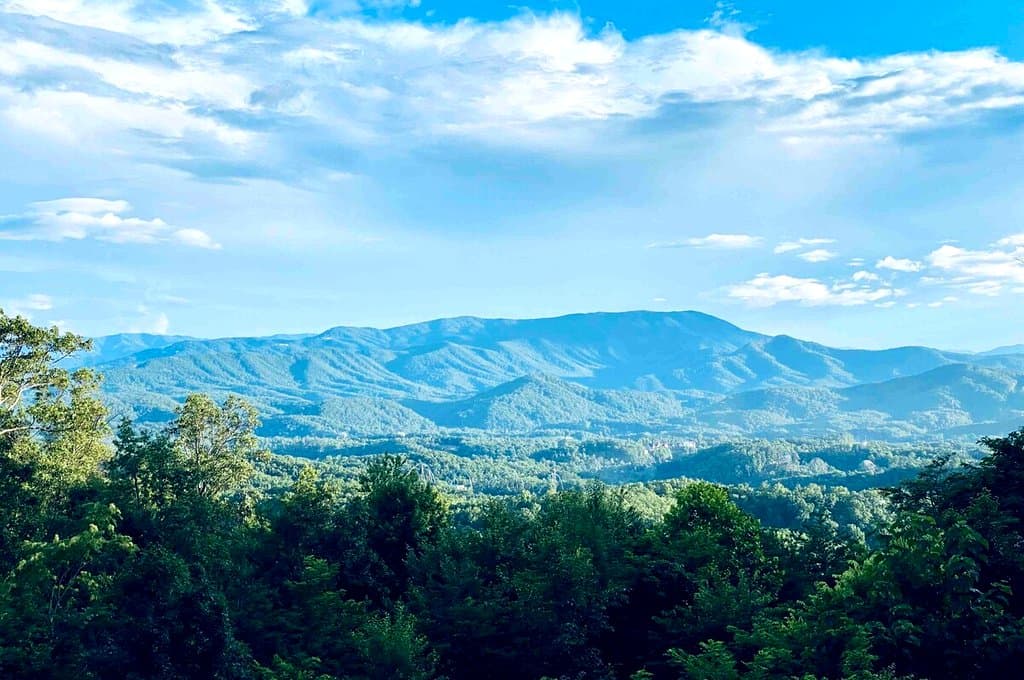
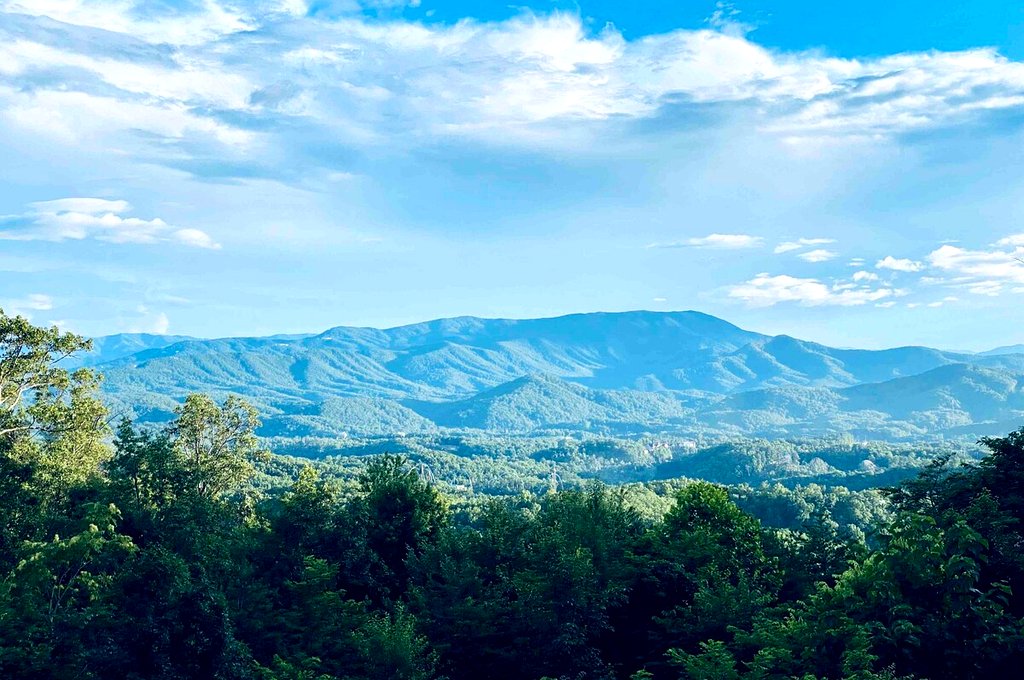
The honest answer depends less on the calendar and more on how high up you are standing. From our deck, which faces south toward Dollywood, the ridgelines hold their green a long time. Drive an hour up into the high country and you can be standing in full peak color while the valley floor still looks like August. Fall in the Smokies is not one event. It is a slow slide of color that starts near the crest of the mountains and works its way down toward the Little Pigeon River over roughly six weeks.
Here is how to read it, when to book it, and how to avoid the mistake that turns a color-chasing weekend into four hours of brake lights.
Key Takeaways
- Color starts high. The peaks above 5,000 feet usually turn first, in late September into early October, while the valleys stay green.
- Mid-elevation slopes generally hit their stride through mid to late October, which is when most visitors see the classic layered-ridge look.
- Valley color around Pigeon Forge, Sevierville, and Gatlinburg tends to arrive latest, often late October into early November.
- Weekends during peak color bring the heaviest traffic of the year. Staying close to the attractions and driving out early beats staying far away and driving in.
- Foliage maps and predictors are useful as a general guide, not a guarantee. Rainfall, warm nights, and early cold snaps shift everything.
Are the Leaves Changing in Pigeon Forge Yet? The Elevation Answer
The Great Smokies stack an enormous range of elevation into a small footprint. The high country tops out well above 6,000 feet at Clingmans Dome, and the valley floors sit closer to 1,000 feet. That vertical spread means the mountains contain several autumns happening at once, which is one of the reasons the park is so widely studied for its plant diversity. You can read more about that range on the National Park Service fall colors page, which tracks the same elevation-first pattern locals watch every year.
So when someone asks me in the last week of September whether the leaves are changing in Pigeon Forge yet, the truthful reply is: not down here, but absolutely up there. Yellow birch, American beech, mountain maple, and hobblebush along the highest ridges start turning while the maples in town are still fully green. Those first weeks are for people willing to drive up and gain elevation.
By mid-October, the story flips. Sugar maple, sweetgum, hickory, and scarlet oak on the mid-slopes light up, and that is when the view from a south-facing deck starts to change color week over week. Late October and into early November is when the valley finally catches up, and the drive along the river between Sevierville and Gatlinburg turns gold and rust.
Weather nudges all of it. A stretch of cool nights with bright dry days produces the deepest reds. A warm, wet October mutes things and can drop leaves early. A hard windstorm at the wrong moment strips a ridge in an afternoon. That is why I never promise a specific weekend to guests, and why I am skeptical of anyone who does.
Week by Week: How Color Moves Down the Mountain
If you want a mental model instead of a map, think of color as water running downhill, slowly.
Late September into the first days of October. The highest elevations begin. Newfound Gap Road and the spur toward Clingmans Dome show early yellows and the first burgundy tones. Down in Pigeon Forge, you will spot scattered early turners, mostly sourwood, black gum, and dogwood, plus a few stressed trees that always change first.
The first two weeks of October. Color spreads across the upper and middle slopes. This is a strong window if you want cool hiking weather without the absolute peak crowds. Mornings get genuinely crisp, and fog settles in the low areas at sunrise.
Mid to late October. The classic postcard stretch. Ridges layer in orange and red, the overlooks fill up, and the drive to Cades Cove takes noticeably longer than the map claims. If you have ever wondered why the park draws the crowds it does, this is the answer in visual form.
Late October into early November. The valley finally turns. Gatlinburg's side streets, the river corridor, and the tree line behind the Pigeon Forge attractions go gold. Higher trails may already be bare, which makes for wide-open views you cannot get in summer.
People search for a current fall foliage map, a Smoky Mountains fall foliage map, or a Smoky Mountain fall foliage predictor every single autumn, and those tools are worth checking. Just treat them as a forecast rather than a schedule. An average peak fall foliage map tells you the typical window for your latitude and elevation. It cannot tell you what the last three weeks of weather did to the sugar maples on one particular slope.
The Fall Trip Mistake That Wrecks the Colors
Here is the pattern I watch play out every October. A family books a single peak-weekend night in a cabin thirty or forty minutes up a mountain road because the listing photo looked remote. They arrive Friday evening in bumper-to-bumper traffic, spend Saturday morning driving back down to reach a trailhead, sit in the same traffic returning for dinner, and check out Sunday having spent more time in the car than under the trees.
The colors were fine. The logistics ate the trip.
Two things fix this. First, give yourself more than one night. Peak-season leaf weekends reward a three-night stay because you get a full unhurried day in the park, a slow day near town, and a morning that is not spent packing. Our default minimum stay is three nights for exactly that reason, and it is the single best piece of advice I give fall guests. Second, and this matters more than most people realize, stay close to the base of everything rather than far up a switchback.
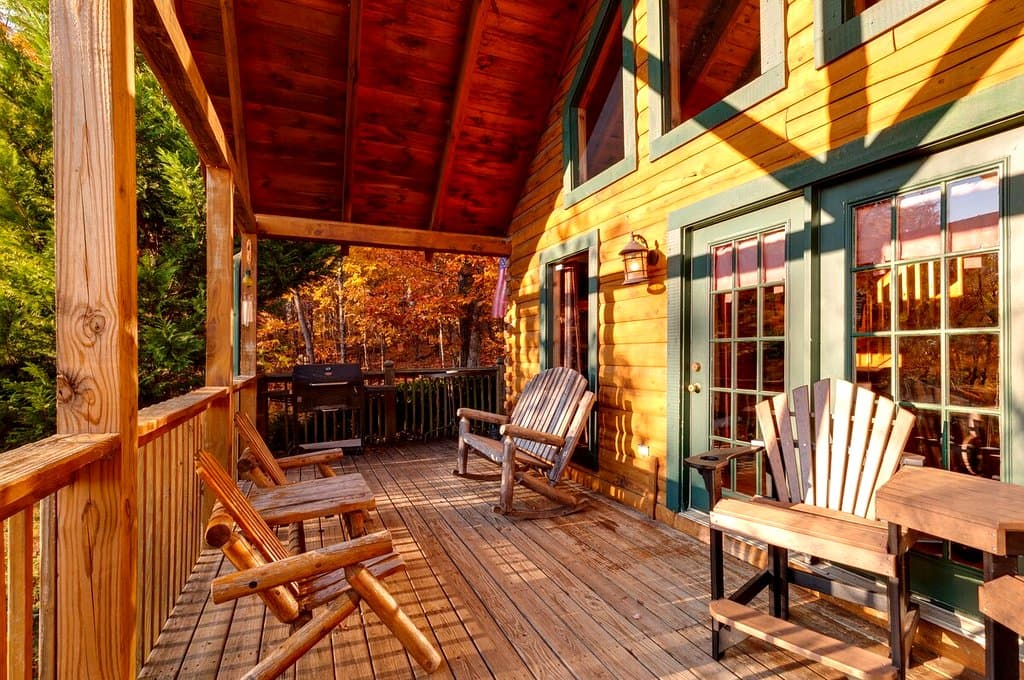
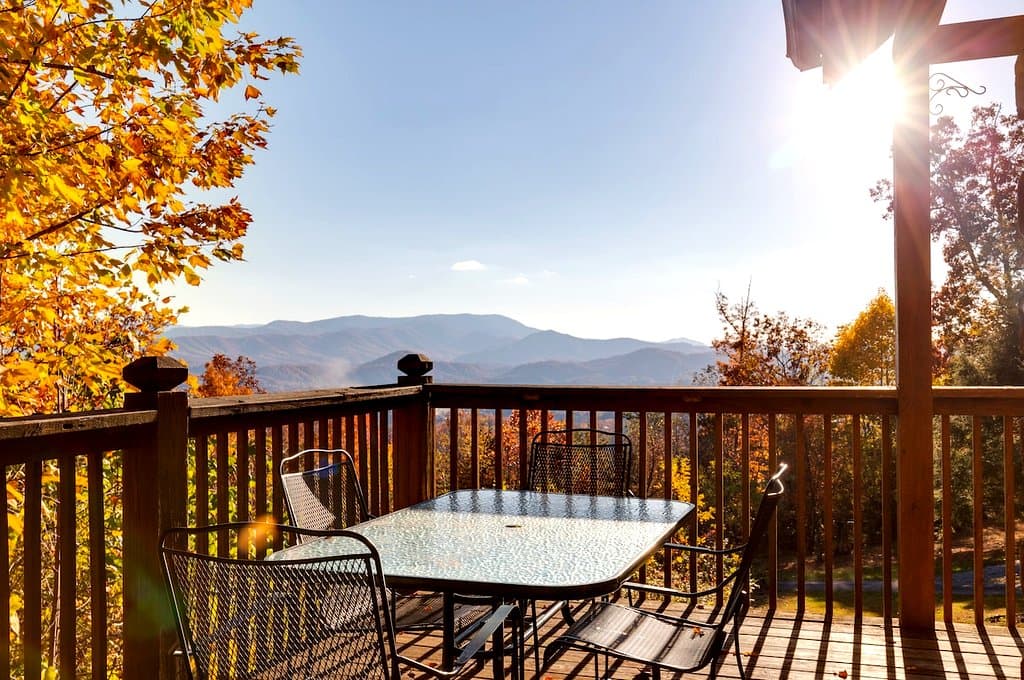
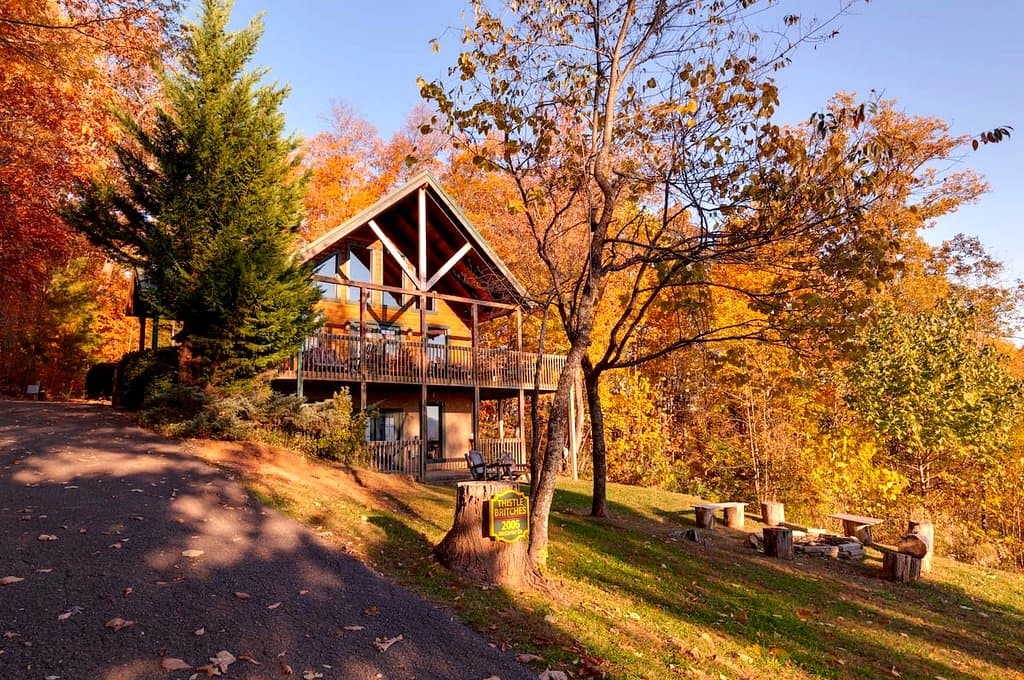
What to look for when you are comparing places: a short drive to the attractions you already plan to visit, real privacy that does not require altitude, and a deck with an actual view rather than a view of the next cabin's hot tub. Our place sits on one secluded acre with no neighbors on three sides, and it is 0.8 miles from Dollywood and Splash Country, roughly four minutes by car. The deck faces south toward Dollywood, so the ridgeline color show and the seasonal, scheduled fireworks and drone shows happen in the same direction you are already looking. Dollywood's evening shows run on a published seasonal calendar, so check before you count on them.
That combination is the point. You are close enough that a morning drive to a high overlook is easy, and secluded enough that the evening feels like the mountains instead of a parking lot. If traffic is your main worry, we broke down a full routing strategy in our fall weekend plan for skipping the worst of the Parkway.
Peak color weekends book out earlier than any other time of year, including the holidays. If you want a two-bedroom, two-bath cabin four minutes from Dollywood with a south-facing deck and an acre of quiet behind it, now is the time to claim your dates.
Book Your Stay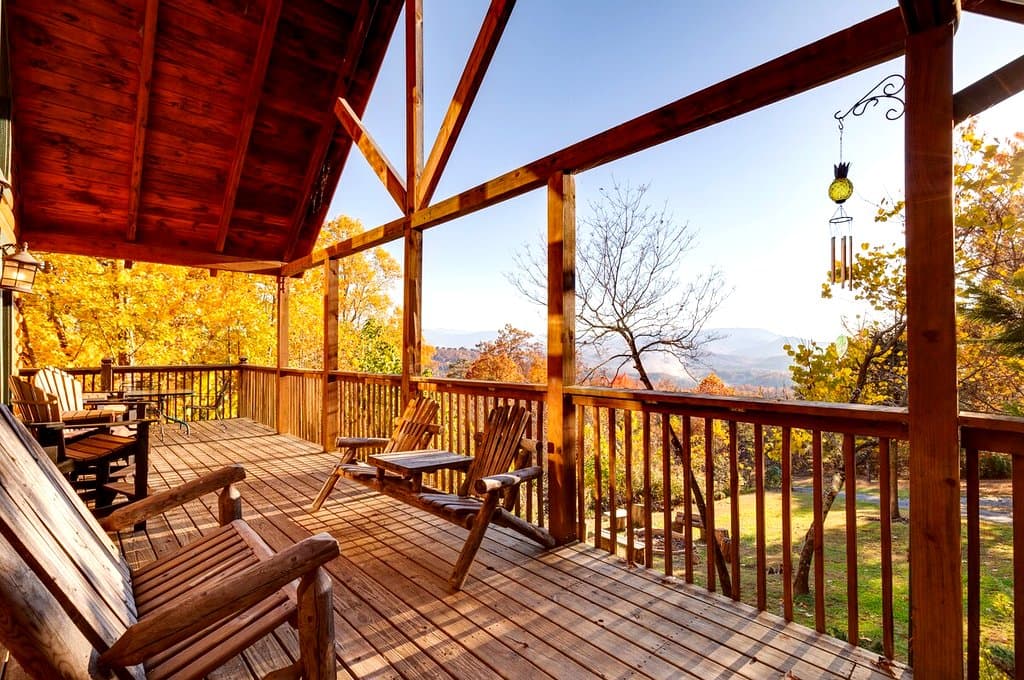
Where to Actually See Peak Fall Foliage Near Pigeon Forge
Once you know whether the leaves are changing in Pigeon Forge yet, the next question is where to point the car. These are the drives and stops I send guests to, roughly in order of how much elevation they give you.
- Newfound Gap Road (US 441). The most efficient color machine in the park. In a single drive from Sugarlands up to the gap you climb through several thousand feet, which means you pass through multiple stages of autumn in about an hour of driving. Go early. The overlook pullouts fill by mid-morning on October weekends.
- Foothills Parkway. Wide, layered ridge views with far fewer stop-and-go moments than the busiest park roads. Best in the last hour of light when the ridges separate into blue and gold bands.
- Roaring Fork Motor Nature Trail. A narrow one-way loop out of Gatlinburg with old cabins, creeks, and dense tree cover overhead. This one is about being inside the color rather than looking at it from a distance. No trailers or buses.
- Cades Cove Loop. Open meadows framed by turning hardwoods, plus the best wildlife odds in the park. Also the slowest loop in October. Arrive at opening or plan to be patient.
- The Little Pigeon River corridor. The one you get for free. Late in the season the river valleys between Sevierville and Gatlinburg turn gold, and a slow drive with the windows down beats any overlook you had to fight for.
You do not need a trailhead to have a good leaf day, either. Some of the best hours my guests report are the low-key ones: coffee on the deck watching fog lift off the ridgeline, an afternoon at the Old Mill area, chili on the propane grill while the temperature drops. For couples especially, the slow version of fall works better than the itinerary version, which we get into in our notes on planning a couples trip in this area.
Fall Foliage Questions I Get Every October
What is the best time to see fall colors in Gatlinburg, Tennessee?
For the valley floors around Gatlinburg and Pigeon Forge, late October into the first days of November is usually the strongest bet, since low elevations turn last. If you want peak color at higher elevations, aim earlier, from late September through mid-October, and plan to drive up Newfound Gap Road to reach it. Booking mid-October gives you the widest odds of catching good color somewhere within an hour of your cabin.
What month do the leaves start changing colors?
September, but only at the top. The highest ridges above 5,000 feet begin turning in the second half of September, while the valleys stay green well into October. That is why the answer to "are the leaves changing in Pigeon Forge yet?" can be yes and no at the same time depending on your elevation.
 56-Jet Luxury SpaBluetooth, subwoofer, LED waterfall.
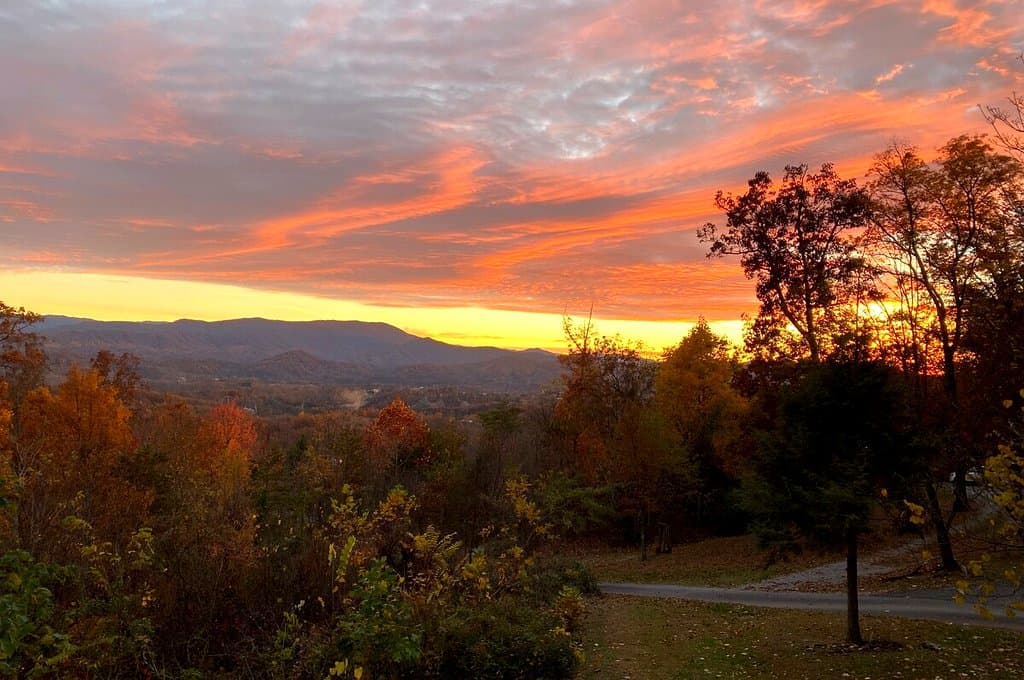
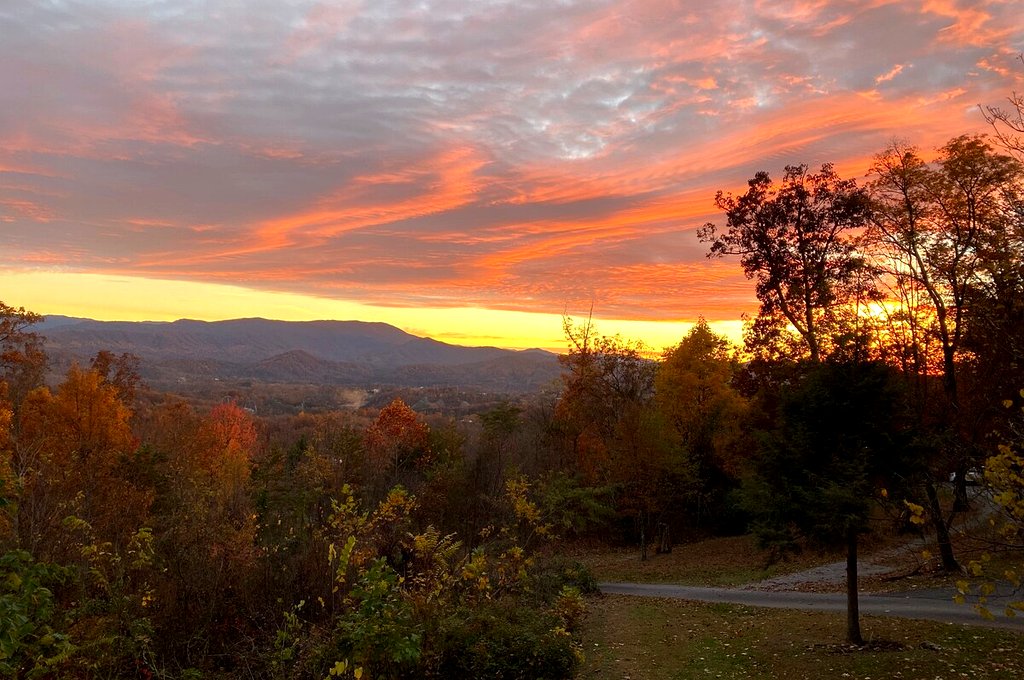 Mountain-View EveningsWatch the evening light change over the mountain ridges.
 Game RoomPool table, arcade, darts, Xbox.
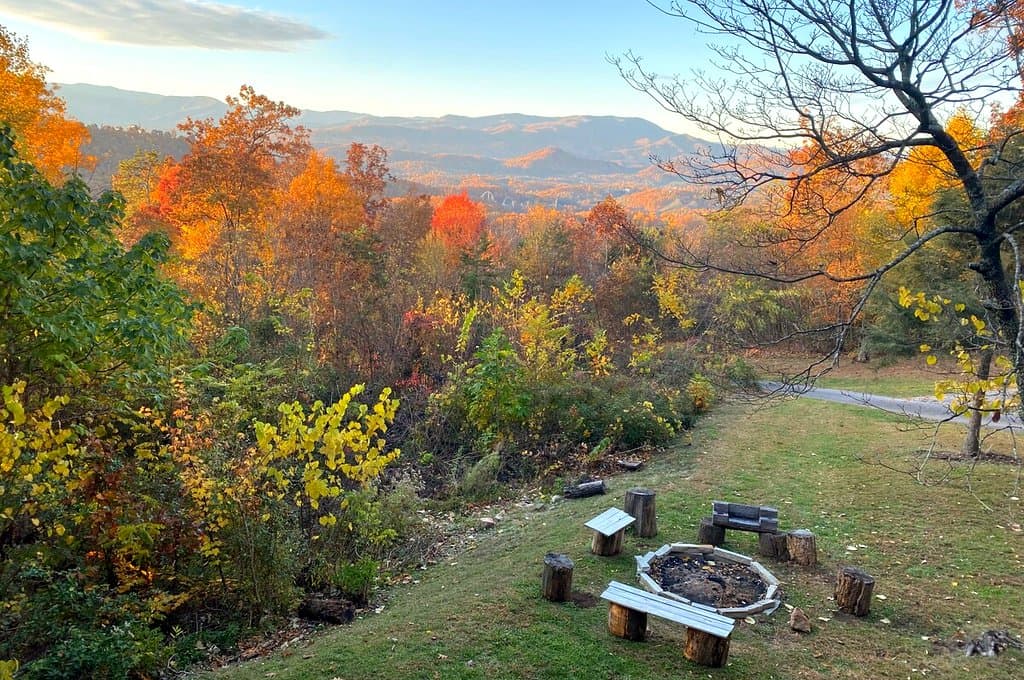
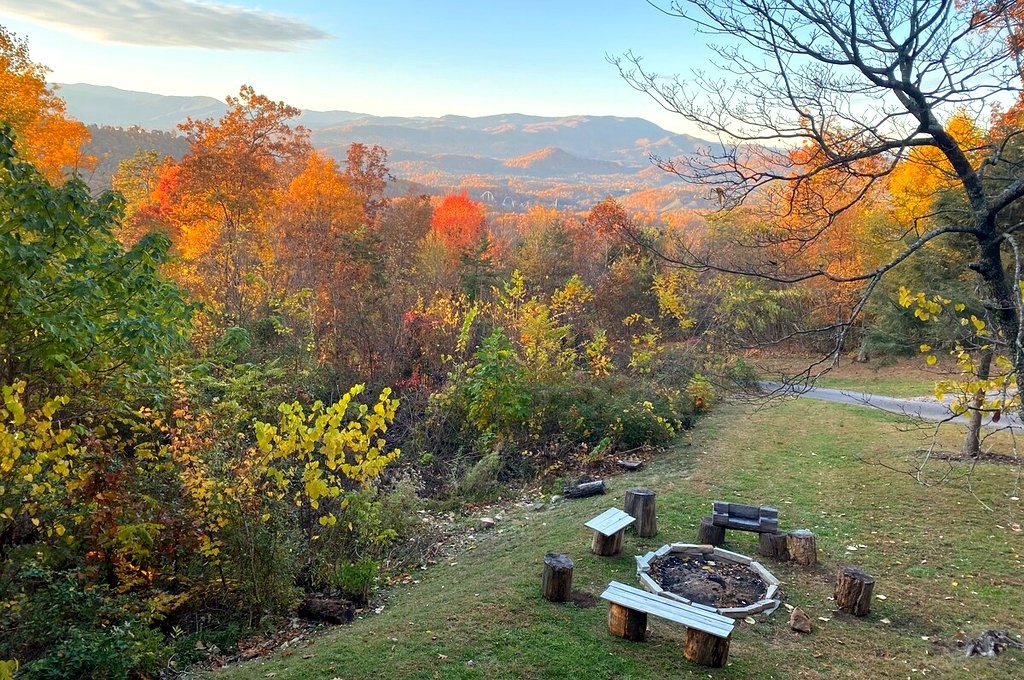 Mountain-View Fire PitS'mores with a ridgeline backdrop.
 One Private AcreNo neighbors on three sides, 800 forest acres around you.
What is the slowest month for Pigeon Forge and Gatlinburg?
The stretch after the holiday lights come down through late winter is the quietest period of the year. Traffic thins out, restaurant waits shrink, and cabin rates are at their softest. Some attractions run reduced schedules then, so confirm hours before you build a plan around anything specific.
What are the four worst times to visit Gatlinburg?
If crowds are your main concern, the busiest and most congested windows tend to be peak leaf weekends in October, the big spring and fall car show weekends on the Parkway, holiday weekends like Memorial Day and Labor Day, and the Thanksgiving-through-Christmas light season. None of those are bad trips. They just require earlier arrivals, a shorter driving radius, and reservations made well ahead.
Do I need to check a fall foliage map before booking?
Check one for context, but book on the calendar window rather than the forecast. Peak-season cabins fill months before any predictor becomes accurate, so waiting for a map to confirm color usually means waiting until nothing is available. Reserve the dates that fit your elevation goal, then use the maps to decide which drive to take once you arrive.
Planning the Version of Fall You Actually Wanted
The people who leave happiest in October are not the ones who nailed the exact peak weekend. They are the ones who gave themselves enough nights to be flexible, stayed close enough to the attractions that traffic did not decide their day, and had a quiet place to land at night with a view in the right direction.
That is the whole formula. Cool mornings on a deck facing south toward Dollywood, a drive up into real color, dogs stretching out on the acre behind the cabin, and nobody in the car longer than they wanted to be. If you are still wondering whether the leaves are changing in Pigeon Forge yet, the safest move is to pick your window, lock the dates, and let the mountains do their thing on their own schedule. For families weighing options near the park entrance, our guide to staying within minutes of Dollywood covers the trade-offs in more detail.
If you want peak-season color without spending your weekend in Parkway traffic, book a three-night stay four minutes from Dollywood on a secluded acre with a south-facing deck. Two bedrooms, two baths, sleeps six, dogs welcome with a two-dog maximum.
Start Planning Your TripMore background on the range and ecology of the park is available through the Great Smoky Mountains National Park entry on Wikipedia if you want to understand why this particular set of mountains puts on such a long autumn.