

 Thistle Britches
Step onto a south-facing deck in mid October, coffee in hand, and the ridgeline across the valley looks like somebody dragged a paintbrush through it. Rust, butter yellow, a stubborn patch of green that has not gotten the memo yet. Woodsmoke somewhere down the hollow. The morning fog that gives these mountains their name sits low and burns off by nine. That is the thing people chase when they ask the question I get in my inbox more than any other: when should I visit the Smoky Mountains for fall colors?
The honest answer is that there is no single weekend. Great Smoky Mountains National Park climbs from around 875 feet to over 6,600 feet, which means autumn does not arrive all at once. It walks downhill. Understanding that walk is the difference between a trip where you stand on an overlook saying "wow" and a trip where you stand on the same overlook squinting at a lot of green.
Here is how a host who watches this ridge from a deck 0.8 miles from Dollywood thinks about the calendar, the crowds, and the color.
Key Takeaways
- Color starts above 4,000 feet in late September and reaches the valley floors in late October and early November.
- Mid October through the third week of October is the widest window where high, mid, and low elevations all show color at once.
- Weekends in October are the heaviest traffic of the year on the Parkway. Arrive and move midweek when you can.
- Book lodging early for October. The good cabins near the national park entrance go long before the leaves do.
- A 3-night stay is the minimum that lets you catch both a high-elevation drive and a valley morning.
When Should I Visit the Smoky Mountains for Fall Colors? Start With Elevation
Think of the park as a stack of three seasons happening at the same time. The spruce-fir country up top behaves like New England. The mid slopes behave like Appalachia proper. The valleys behave like the upper South, slow and late and warm.
Above 4,000 feet, roughly late September into the first half of October. Yellow birch, mountain ash, American beech, and hobblebush turn first up here. Newfound Gap Road climbs to about 5,046 feet at the gap itself, and the Clingmans Dome spur road runs higher still. Early in the season this is the only place you will find real color, and it is worth the drive even when the lower country looks like summer.
Between 2,500 and 4,000 feet, generally the middle two weeks of October. This band is where the show gets loud. Sugar maple, scarlet oak, sweetgum, hickory, and sourwood all stack together. Drives like the Roaring Fork Motor Nature Trail and the upper stretches of Newfound Gap Road sit squarely in this range.
Below 2,500 feet, late October into early November. The valley floors, the river corridors, and the fields around the foothills finish the season. Hickories go gold, oaks go bronze and deep red, and the late light in these lower areas is softer than anything you get in peak week.
So when someone asks when should I visit the Smoky Mountains for fall colors, my follow-up question is always the same: do you want one guaranteed hit or do you want range? If you want a single trip that gives you high-country color, mid-slope fire, and valley gold all in one visit, aim for the stretch between roughly October 12 and October 25. That window overlaps the most elevation bands at once. If you want solitude and are fine with subtler color, the first days of November in the lower valleys are quietly one of the best-kept secrets around here.
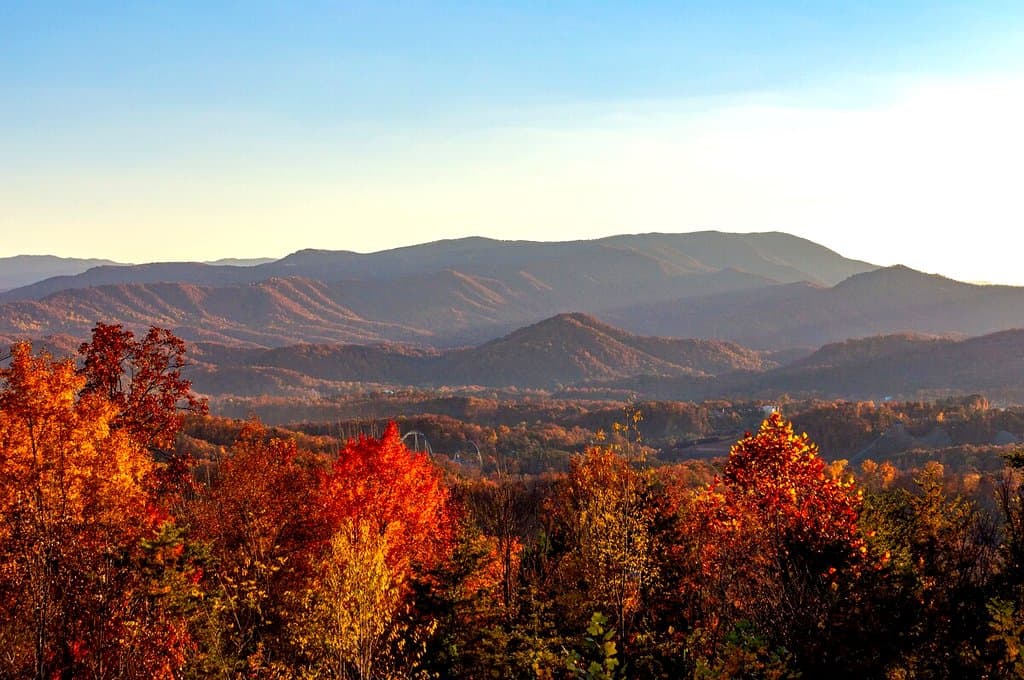
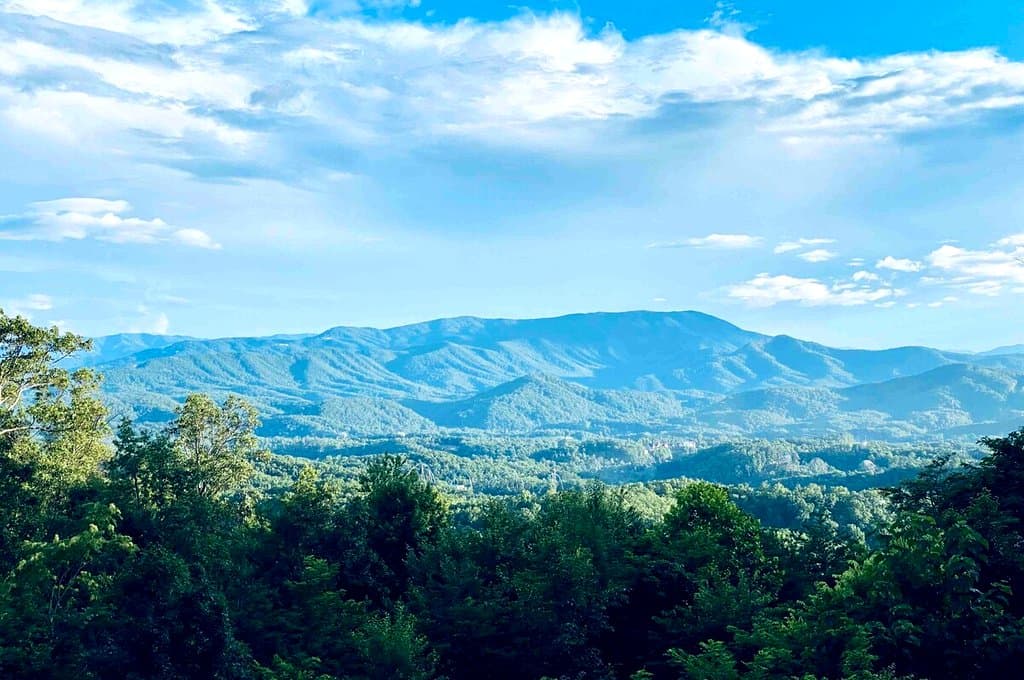
Actual mountain view from Thistle Britches with autumn foliage.
What Is the Best Time to See Fall Colors in the Smoky Mountains?
If you forced me to circle one stretch on a calendar, I would circle the second and third weeks of October. That is when the mid-elevation hardwoods, which make up the bulk of what you actually see from a car, a deck, or a trail, tend to go. It is also when the odds are best that the high country is still holding and the valleys have started to turn.
Weather moves this window in both directions every year. A warm, wet September tends to push peak later and mutes the reds. A dry late summer followed by crisp nights and bright days, the classic recipe, brings color on earlier and deeper. Sugar maples in particular need those cool nights to produce the anthocyanins that make them glow. A hard early frost can knock leaves down before they ever brighten, and a windy storm system can strip a ridge in a single afternoon.
Because of that, I never tell guests to book a specific Saturday and expect perfection. I tell them to book a window and give themselves options. That is also why I pay attention to live conditions rather than long-range forecasts. The National Park Service posts fall color updates for Great Smoky Mountains National Park as the season progresses, and that page is more useful in the week before your trip than any prediction map published in August.
People also search for a Smoky Mountains fall colors live camera, and there are a few webcams positioned in and around the park. They are helpful for a quick gut check on cloud cover and general progress, though they tend to show a single angle at a single elevation. Pair a camera with the park's conditions page and you will have a far more accurate read than any static foliage map.
One more practical note on timing within the day. Mornings are when the fog sits in the valleys and the light rakes across the ridges. That first hour after sunrise is worth losing sleep over. By midday the color flattens out, and by late afternoon the western light comes back and makes everything look lit from inside. If you only get one good photography window, take the morning.
The Mistake That Ruins Most Fall Trips Here: Treating October Like a Normal Month
This is the part nobody tells first-timers, and it is the single biggest reason people leave disappointed.
October is the busiest month of the year in this corner of Tennessee. Leaf season, fall festival season at the theme parks, and perfect hiking weather all land at once. The result is that a drive that takes fifteen minutes in April can take fifty on an October Saturday afternoon. Families book a cabin forty minutes out because it looked like a deal, then spend their short weekend sitting in traffic on the Parkway instead of standing under a maple.
The second half of that mistake is the two-night weekend. Guests arrive Friday evening in the dark, spend Saturday fighting traffic and crowds at an overlook, and check out Sunday morning before they ever get a quiet sunrise. They see the Smokies through a windshield. I have written before about how many days you actually need in the Smoky Mountains, and fall is the season where that math matters most.
What fixes both problems is proximity plus time. Stay close enough to the park entrance that an early start costs you minutes instead of an hour, and give yourself at least three nights so one rainy or foggy day does not sink the trip.
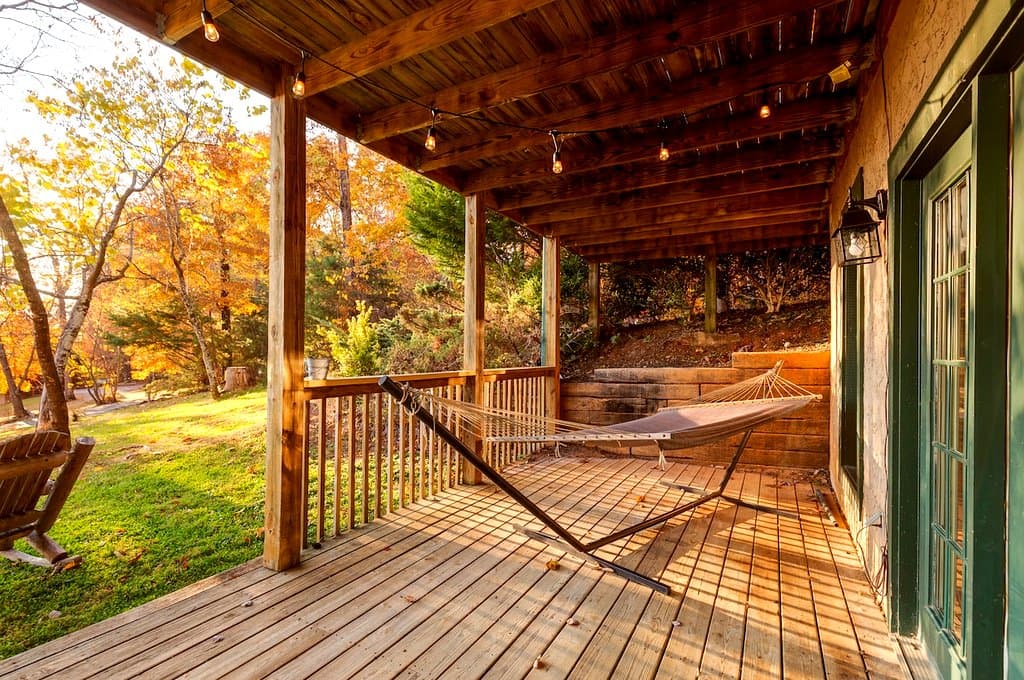
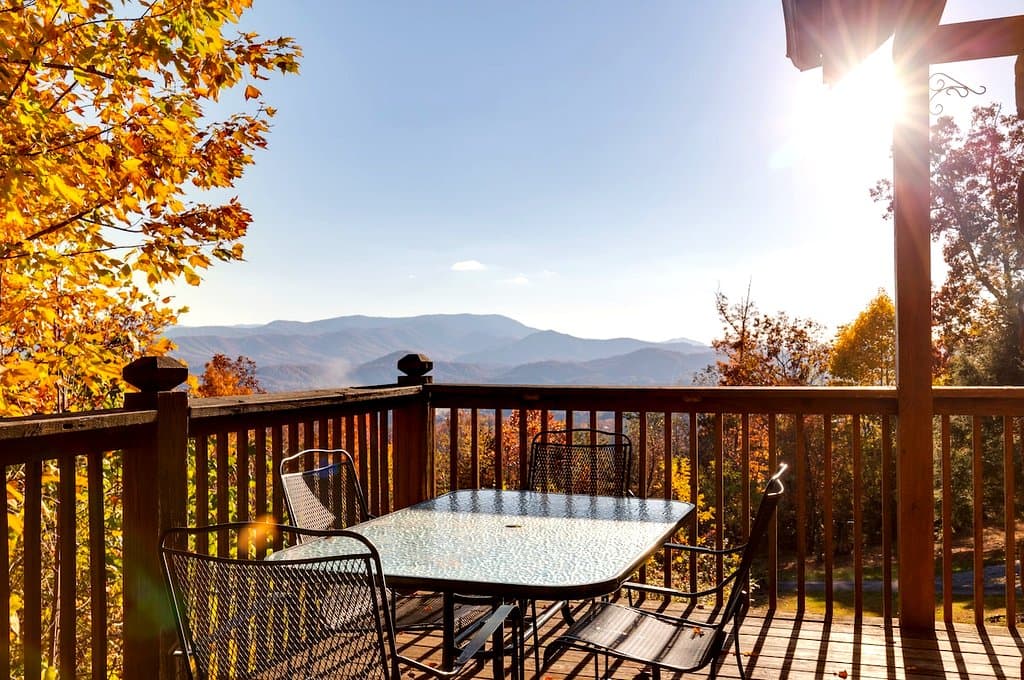
When you are comparing cabins for leaf season, a few things matter more than the listing photos suggest. Look for a property that is genuinely close to the national park corridor rather than one buried on a back road thirty minutes up a mountain. Look at which direction the deck faces, because a south-facing deck gives you long light across the valley and, in our case, a sightline toward Dollywood where seasonal fireworks and drone shows run on their own schedule. Look at whether the lot is actually private, since a cabin with neighbors on every side is not really a mountain getaway. And check the internet before you book if anyone in your group plans to work a half day. Our place runs on 321 Mbps T-Mobile 5G home internet, which handles video calls and streaming without drama.
October dates near the park entrance book out early. If you want a secluded acre, two king beds, and a four-minute drive to Dollywood during the best color of the year, now is the time to claim your window.
Book Your Stay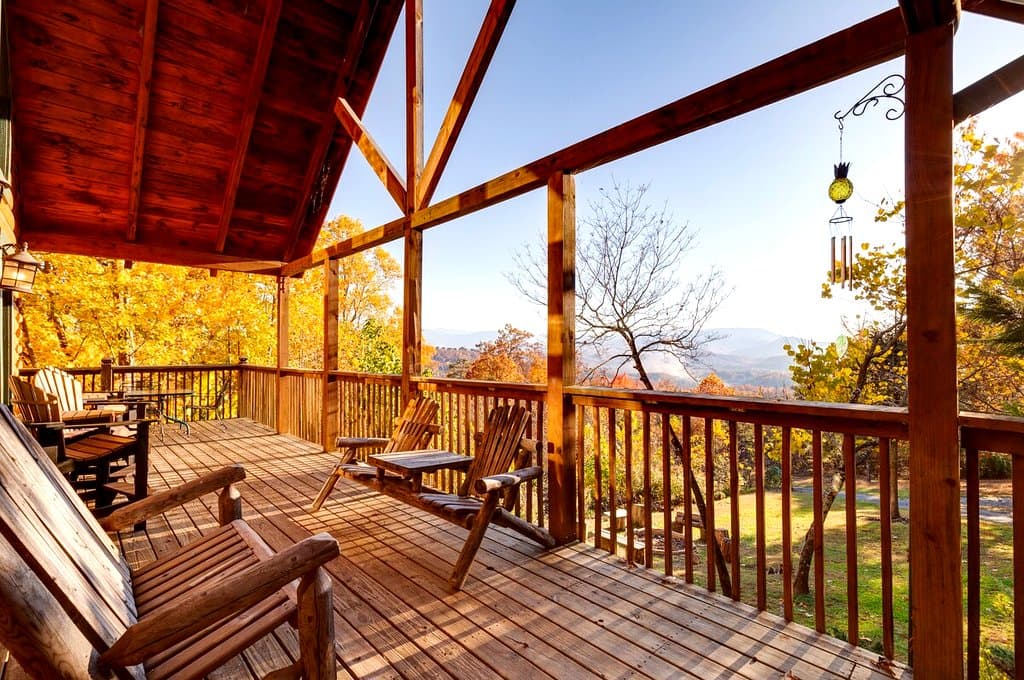
A 3-Night Fall Plan That Actually Works
Our default minimum stay is three nights, and leaf season is exactly why. Here is how I would spend those nights if the trip were mine.
Arrival afternoon. Get in, unpack, fire up the propane grill, and eat on the deck while the light goes gold. Do not try to squeeze in a park drive the same day you travel. Let the mountains introduce themselves slowly. If the timing lines up with a scheduled Dollywood fireworks or drone show, you may catch it from the deck. It is seasonal and scheduled rather than a nightly thing, so treat it as a bonus.
Day one, high country. Leave before sunrise and drive Newfound Gap Road. You will be climbing through elevation bands, which means watching autumn run in reverse as you go up. Stop at the Chimney Tops overlooks, then the gap itself, then take the Clingmans Dome spur if it is open. Come back down midmorning before the traffic builds. Afternoon is for Cades Cove loop or a low-key trail, your call.
Day two, mid elevation and town. Roaring Fork Motor Nature Trail in the early morning, then the Grotto Falls trailhead off the same road if you want a short hike with a waterfall payoff. Afternoon in Gatlinburg or at the Dollywood Harvest Festival, which runs on its own fall calendar and fills the park with pumpkins and southern gospel. Dollywood and Splash Country are 0.8 miles from our front door, about four minutes by car, so the theme park day costs you almost no drive time.
Day three, valley color and slow morning. This is the day you take the coffee to the deck and do nothing for an hour. Then a short drive through the foothills, where the lower elevations are usually at their best in the last week of October, before heading home.
My honest advice after watching a lot of leaf seasons from this deck: plan one anchor activity per day, not three. The mountains reward people who are not in a hurry, and October traffic punishes anyone with a tight schedule.
If you want more granular ideas for how to fill those days, our rundown of the top things to do in Great Smoky Mountains National Park covers the stops worth prioritizing when your time is limited.
Frequently Asked Questions About Smoky Mountains Fall Colors
What is the best time to see fall colors in the Smoky Mountains?
The broadest answer is mid to late October, when mid-elevation hardwoods peak and you can still find color both above and below that band on the same day. Above 4,000 feet, color typically starts in late September and runs through the first half of October, while the valley floors below 2,500 feet usually hit their stride in the final week of October and into early November. Checking the park's conditions page the week of your trip beats relying on any single date.
When should I avoid Pigeon Forge, TN?
The heaviest congestion lands on October weekends, Thanksgiving week, the stretch between Christmas and New Year, and holiday weekends like Memorial Day and Labor Day. If you want the mountains without the bumper-to-bumper Parkway experience, come midweek or aim for the shoulder windows in early December or late January. The slowest, quietest stretch tends to be deep winter after the holiday lights come down.
 56-Jet Luxury SpaBluetooth, subwoofer, LED waterfall.
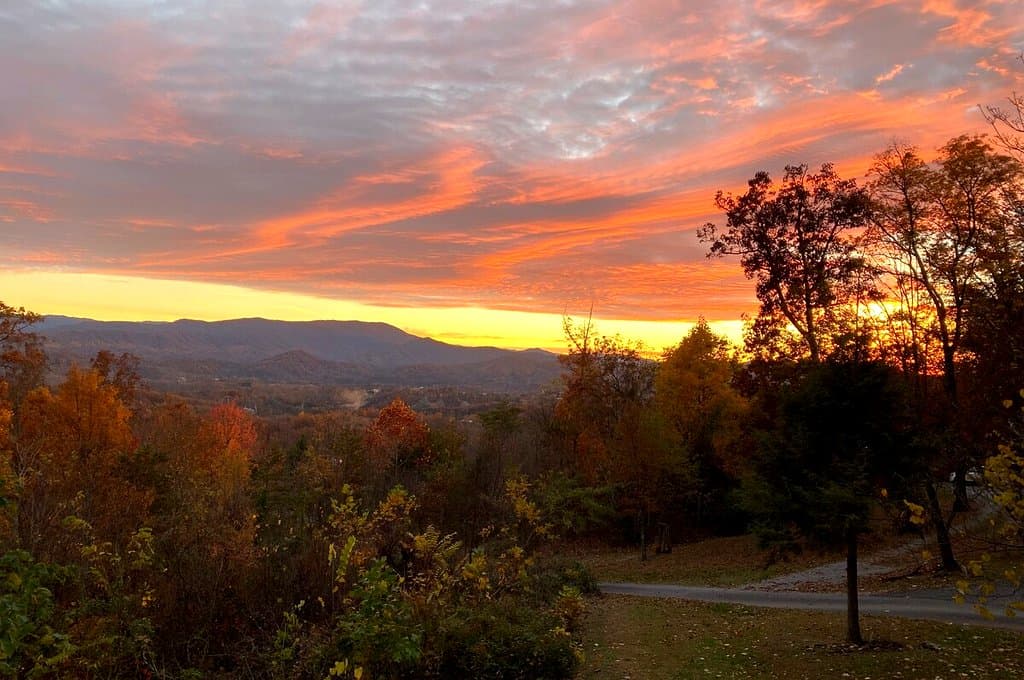
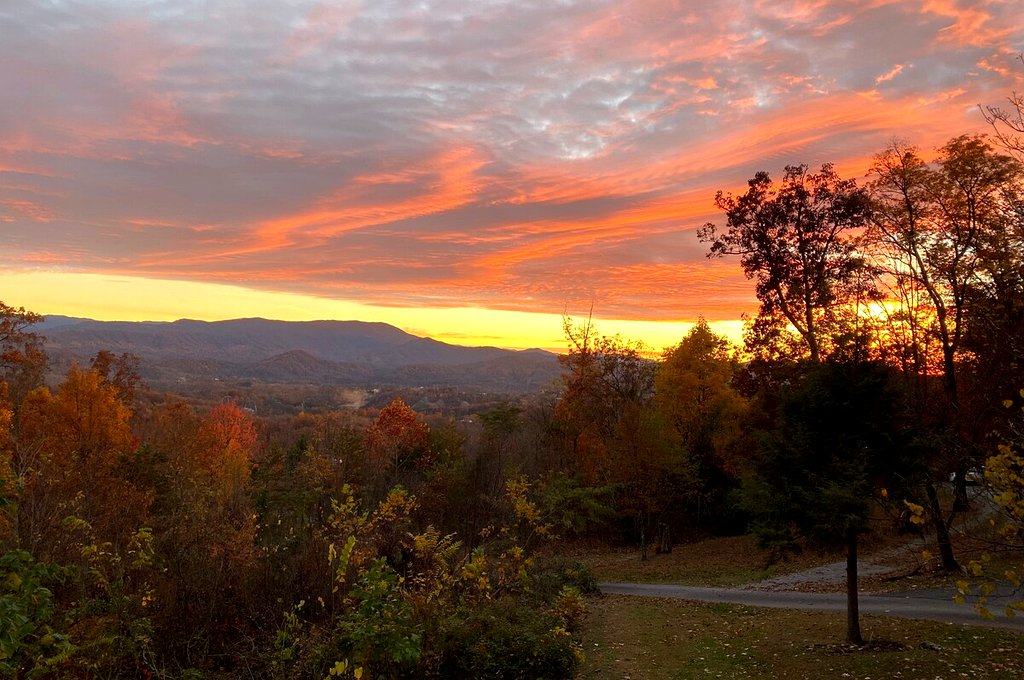 Mountain-View EveningsWatch the evening light change over the mountain ridges.
 Game RoomPool table, arcade, darts, Xbox.
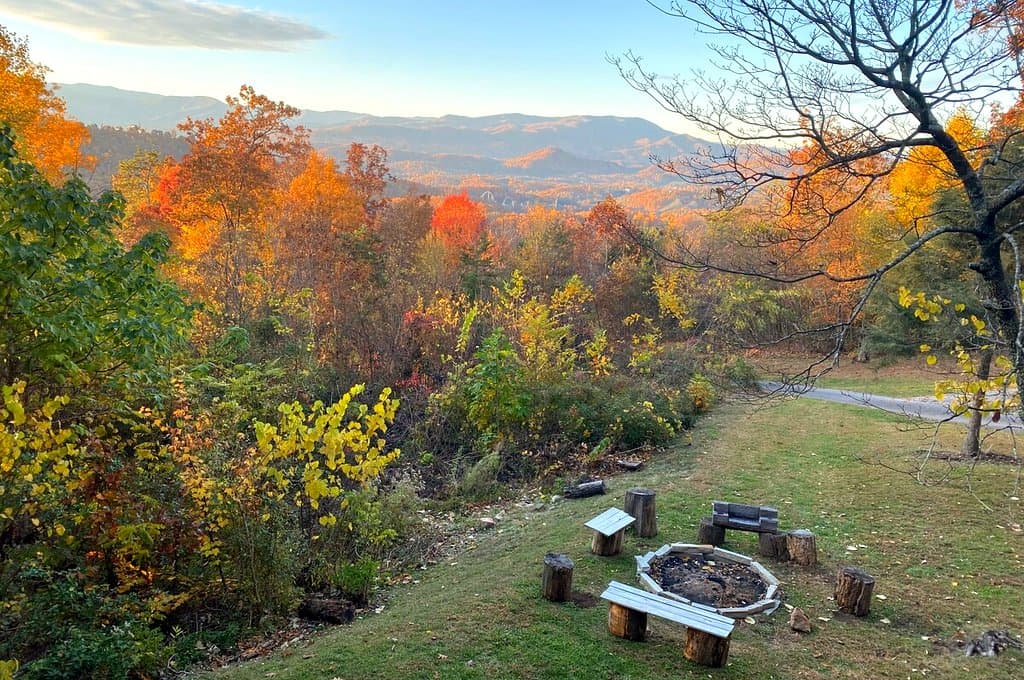
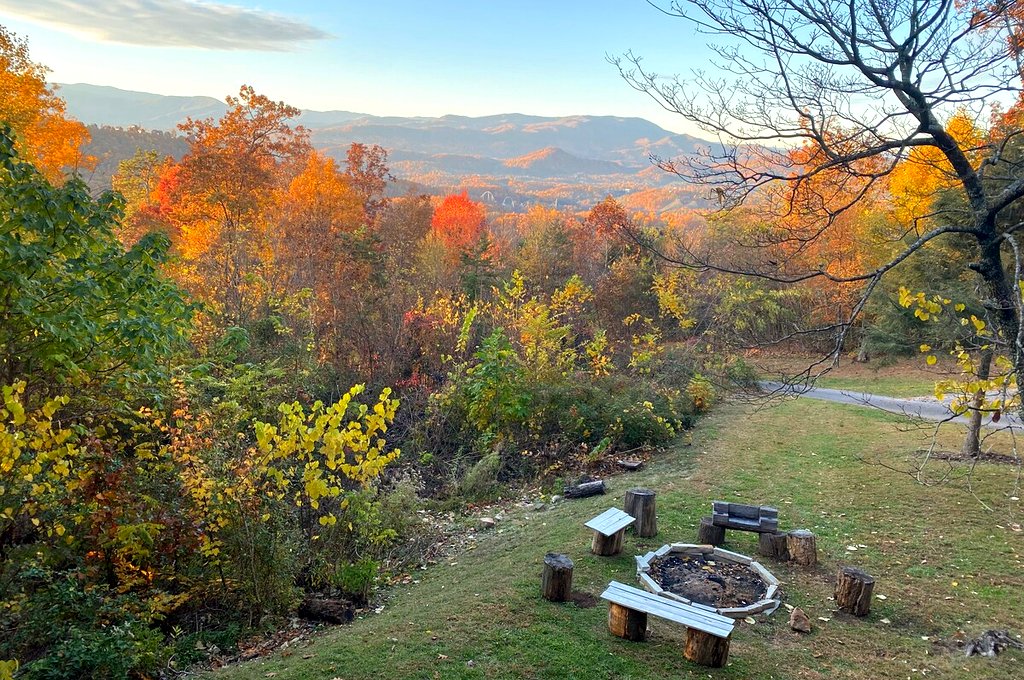 Mountain-View Fire PitS'mores with a ridgeline backdrop.
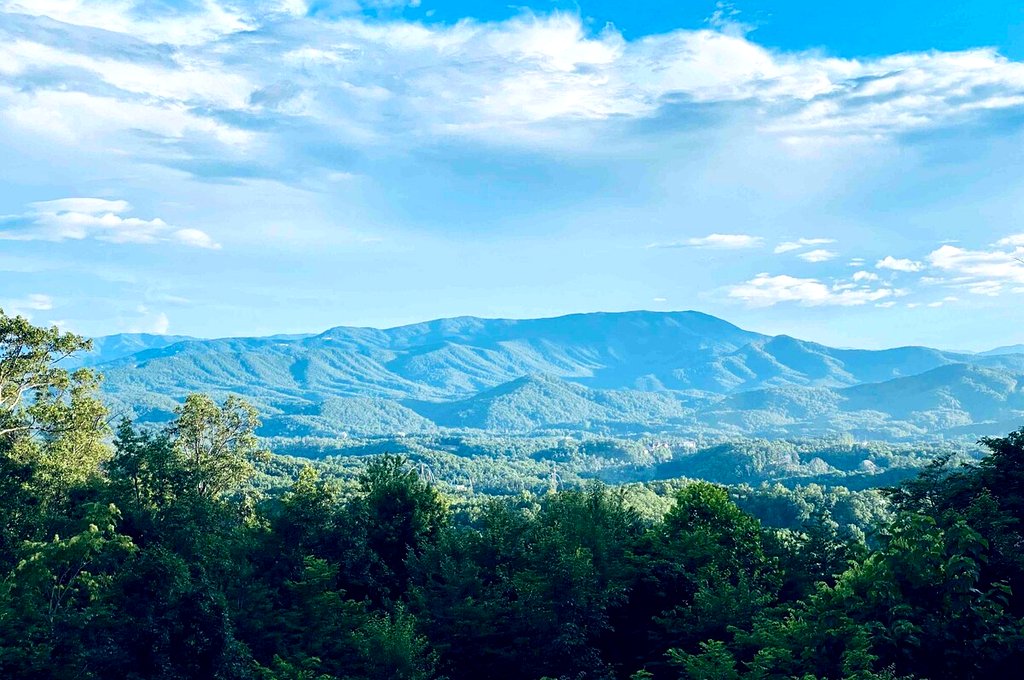 One Private AcreNo neighbors on three sides, 800 forest acres around you.
What fall colors will be in the Smoky Mountains this year?
The species mix does not change, so you can count on the same palette: yellow from birch, hickory, and tulip poplar, orange from sugar maple and sassafras, deep red from scarlet oak, red maple, and sourwood, and plenty of russet and bronze from the oak family late in the season. What changes year to year is intensity and timing, both driven by summer rainfall and the pattern of cool nights in early autumn. More than 100 native tree species grow in the park, which is why the color here looks layered rather than uniform.
What are the predictions for fall foliage colors this season?
Long-range foliage predictors published months ahead are entertaining but not especially reliable, since peak color depends on weather in the three or four weeks right before it happens. A good strategy is to book a flexible window in the second half of October, then fine-tune your drives once you arrive using live park conditions. Guests who stay three or more nights almost always find good color somewhere, because they have the elevation range to chase it.
Are the leaves still changing in November?
Lower elevations often hold color into the first week or two of November, particularly the oaks, which hang on long after the maples have dropped. The high country will be bare by then, but the foothills and river corridors can be beautiful and far less crowded. We covered this in more detail in our look at whether leaves are still changing in November around Gatlinburg.
Making the Window Work for Your Group
Leaf season brings every kind of traveler to these mountains. Couples want the quiet deck and the early fog. Families want Dollywood's Harvest Festival and a trail short enough for small legs. Multigenerational groups want everybody under one roof without anyone sleeping on an air mattress.
Our cabin sleeps up to six across two bedrooms and two bathrooms, with two king beds and three queen fold-out couches, which covers most of those shapes. Dogs are welcome with a two-dog maximum, and there is an outdoor dog area, though it is unfenced, so a leash or a long line is the move. The property sits on a secluded acre with no neighbors on three sides, which during peak leaf week feels like the real luxury. You hear the ridge instead of the road.
For couples specifically, the fall shoulder weeks are the sweet spot. Early November, when the valley oaks are still holding and the weekend crush has eased, is my personal favorite time to be here. If that is your trip, our notes on the most romantic things to do in the Smoky Mountains lean into exactly that slower rhythm.
One logistics note that saves people grief: our default minimum is three nights, and one-night stays are never available. That is partly operational and partly philosophical. Nobody has ever driven six hours, slept once, and left feeling like they saw the Smokies. Three nights is what it takes to catch a sunrise, a high-elevation drive, and a lazy deck morning without rushing a single one of them.
So when you sit down with the calendar and ask yourself when should I visit the Smoky Mountains for fall colors, pick your priority first. Peak intensity and full elevation range means mid October. Fewer people and softer light means the last days of October into early November. High-country color with summer still in the valleys means late September. All three are good trips. They are just different ones.
If you want real fall color without spending your weekend in Parkway traffic, stay four minutes from Dollywood on a quiet acre with a south-facing deck. Pick your October or November window and lock in your three nights before the calendar fills.
Start Planning Your Trip