

 Thistle Britches
The first real sign of October around here is not the leaves. It is the smell. Sometime in the first week of the month, the air coming down off the ridge turns cool and faintly sweet, like damp leaf litter and woodsmoke, and you notice it most around seven in the morning when the fog is still sitting in the low spots along the Little Pigeon River. That is the moment regular visitors start texting me the same question: what are the fall colors in Gatlinburg in October, and when exactly should we come?
The honest answer is that October in the Smokies is not one color season. It is three or four of them stacked on top of each other, separated by elevation, running from the spruce fir forest near Kuwohi down to the valley floor where Gatlinburg sits at roughly 1,300 feet. If you drive thirty minutes uphill in mid October you can pass through late summer green, screaming scarlet, and bare branches in the same afternoon. Understanding that vertical staircase is the difference between a trip where the mountains look like a postcard and a trip where you keep saying "maybe next weekend."
Key Takeaways
- Color in the Smokies moves downhill, starting above 4,000 feet in early October and reaching the Gatlinburg valley floor in the final week of October into early November.
- Early October reds come from sourwood, black gum, and dogwood at low elevations, long before the maples and oaks turn.
- Mid to late October is the broadest window for mid elevation color along Newfound Gap Road and the Roaring Fork Motor Nature Trail.
- Weekends in mid October bring the heaviest traffic of the entire year, so plan drives for sunrise, not mid morning.
- A stay with real seclusion and a mountain-facing deck beats chasing overlooks you cannot park at.
What Are the Fall Colors in Gatlinburg in October? A Week-by-Week Read
Week one, roughly October 1 through 7, belongs to the high country. Above 4,500 feet, the yellow birch, American beech, and mountain ash are already turning gold and orange, and the mountain ash berries go bright red against the dark spruce. Down in town, the greens still dominate, but the sourwood trees along the roadsides have gone deep burgundy and the black gum leaves look almost purple. Those early reds confuse people every year, because they look like peak color from a car window when really they are the opening act.
Week two, around October 8 through 15, the color line slides down to the 3,500 to 4,500 foot band. This is when Newfound Gap Road starts earning its reputation. Drive from Sugarlands Visitor Center toward the state line and you climb through roughly 3,000 feet of elevation in about fifteen miles, which means you are effectively time traveling through two weeks of autumn in half an hour.
Week three, October 16 through 24, is the sweet spot most years. Mid elevations light up with sugar maple yellow, scarlet oak red, hickory gold, and the occasional sassafras that turns three different colors on the same branch. Roaring Fork Motor Nature Trail, the Chimney Tops picnic area, and the Little River Road toward Metcalf Bottoms all hit their stride.
Week four, October 25 through 31, is when the valley floor finally joins in. Gatlinburg proper, Pittman Center, the Greenbrier entrance, and the lower valley corridor go yellow, orange, and rust. This is also when color often lingers into the first week or two of November, which I broke down in detail in my post on whether the leaves are still changing in November.
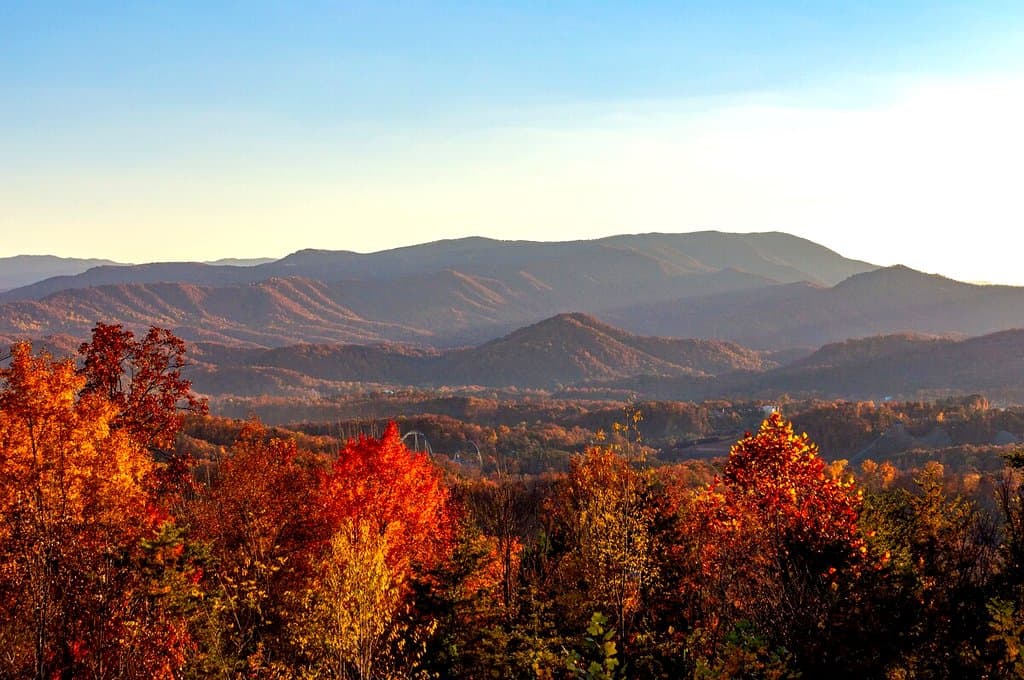
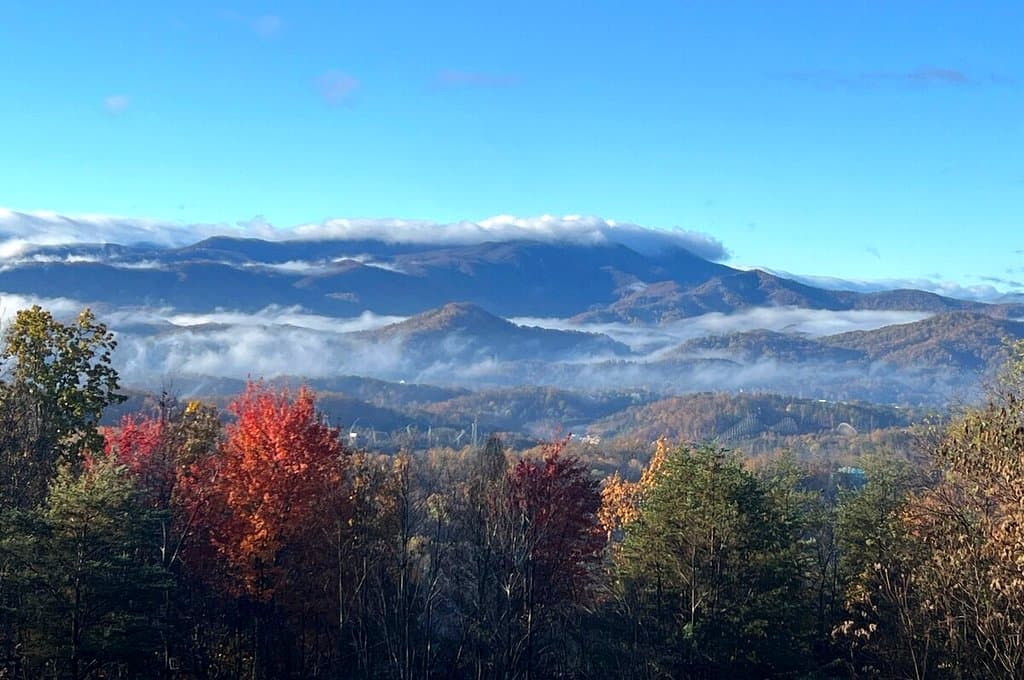
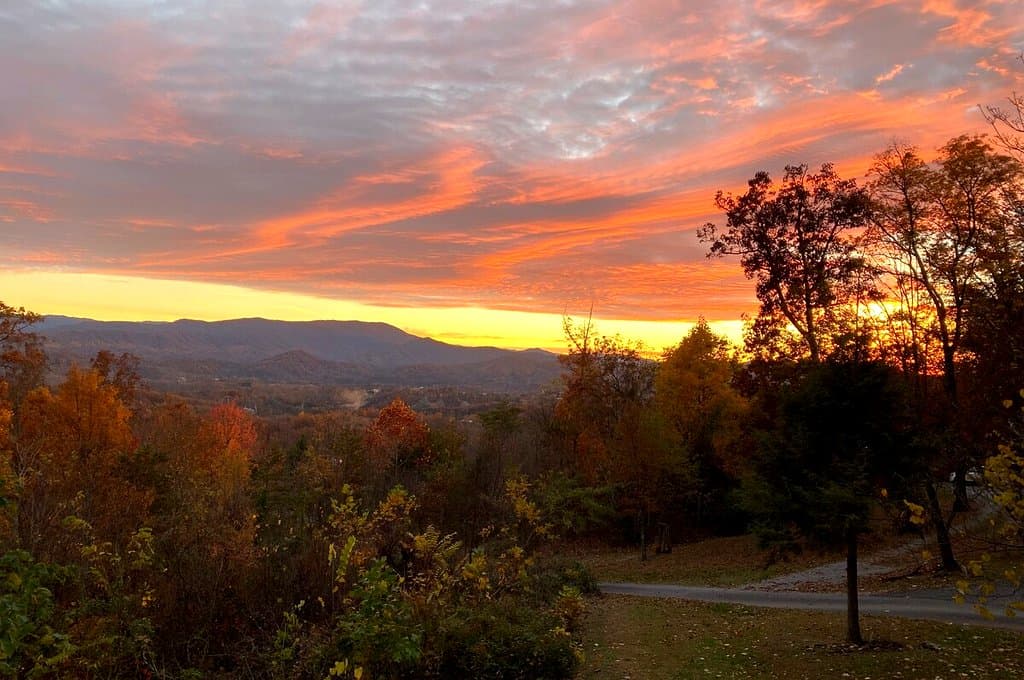
Actual mountain view from Thistle Britches with autumn foliage.
Why Elevation Matters More Than the Calendar
Great Smoky Mountains National Park spans from around 875 feet at its lowest point to 6,643 feet at Kuwohi, formerly called Clingmans Dome. The National Park Service fall color guidance describes that range as supporting an unusually broad mix of tree species, and that diversity is exactly why the color season here stretches across six weeks instead of one tidy weekend.
Think of it this way. Every 1,000 feet you gain is roughly comparable to driving a few hundred miles north. The forest at 5,000 feet behaves like southern Canada. The cove hardwood forest at 2,000 feet behaves like middle Tennessee. When someone asks what are the fall colors in Gatlinburg in October, they are really asking which altitude band is peaking the week they arrive, and that is a question you can plan around.
The practical version: if you arrive the first or second week of October, drive up. Newfound Gap, the Kuwohi access road, and the Heintooga Ridge area on the North Carolina side will be doing the heavy lifting. If you arrive the last week of October, stay low. Cades Cove, Greenbrier, the Foothills Parkway, and even the dogwoods and maples along residential Gatlinburg streets will be better than anything at the summit, where the trees may already be stripped by wind.
Species matter too, and knowing a few names makes the whole drive more interesting. Tulip poplar is the tall straight tree that goes clear yellow early and can brown out fast after a dry September. Sugar maple gives you that orange-to-gold glow. Scarlet oak and red maple carry the deep reds into November. The park's roughly 100 native tree species are the reason no two Octobers look identical here.
The October Mistake That Wrecks Most Leaf-Peeping Trips
Here is the frustration I hear about every single autumn, and it has almost nothing to do with the leaves. People book a mid October weekend, build a plan around three scenic drives and one hike, then spend their entire Saturday sitting in brake lights on the Parkway trying to get from their cabin to the park entrance. By the time they reach Sugarlands, the light is flat, every pullout is full, and the four-year-old in the back seat has given up on the whole concept of nature.
Mid October weekends are the single busiest stretch of the year in this corridor. It is not that the roads are badly designed. It is that a finite number of lanes are absorbing leaf season, Dollywood's Harvest Festival, Oktoberfest crowds, and motorcycle rally traffic at the same time. If your lodging sits in the middle of that flow, you pay the toll twice a day.
The fix is partly scheduling and partly location. Scheduling means treating sunrise as your main event. Leave by 6:45am, be at Newfound Gap for first light, and be back for a late breakfast while everyone else is just merging onto the Parkway. Afternoons are for the deck, not the road. I walk through this timing logic in more depth in my take on whether three days in Gatlinburg is actually worth it.
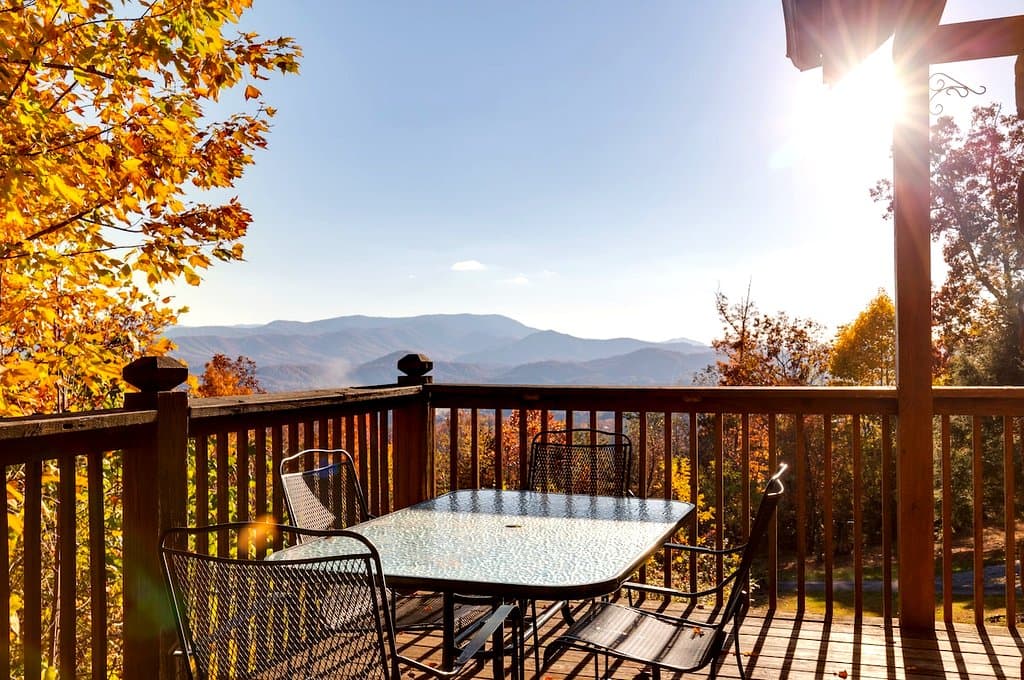
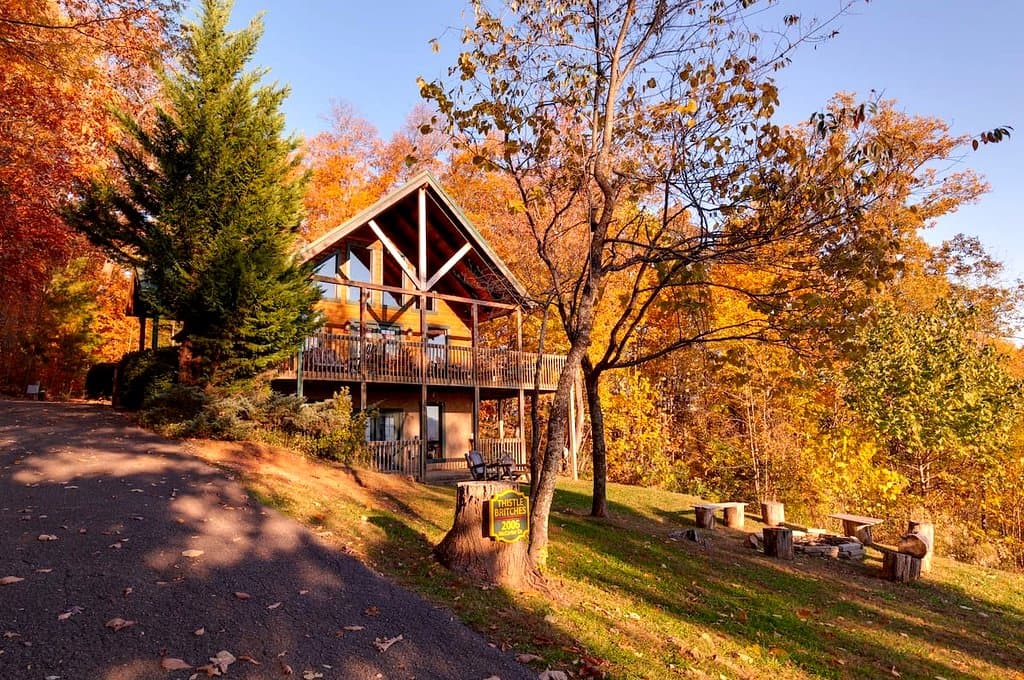
Location means looking for a place that is off the main artery but still minutes from the things you came for. When you compare cabins this October, check three things: how far you actually sit from a four-lane road, whether you have your own outdoor space with a view instead of a shared balcony, and whether the driveway dumps you into traffic or out of it. A cabin on a quiet acre with no neighbors on three sides and a south-facing deck means you can watch the ridgelines change color with coffee in hand instead of fighting for a parking spot. Thistle Britches sits on exactly that kind of lot, under a mile from the Dollywood and Splash Country entrance, which is about a four minute drive, so the big-ticket attraction is behind you before the crowds wake up.
Peak color weekends in October fill earlier than any other dates on the calendar. If you want a secluded acre, a mountain-facing deck, and room for six without sharing a wall with anyone, now is the time to claim your week.
Book Your Stay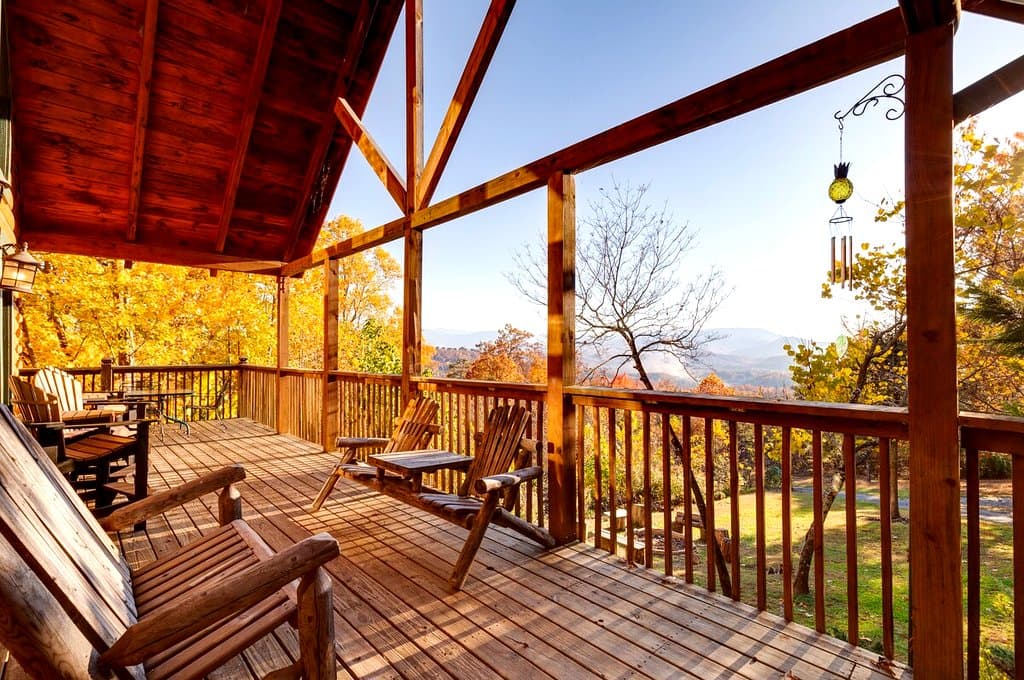
Where to Actually See the Color (and When to Go)
Not every famous overlook is worth your October morning. These are the ones that consistently deliver, with the timing that matches.
- Newfound Gap Road, early to mid October. Best for high elevation color. Start at Sugarlands before 7:30am and work uphill. The Morton Overlook pullout faces west, so it is better in late afternoon if you can tolerate the traffic.
- Roaring Fork Motor Nature Trail, mid to late October. A narrow one-way loop through old growth hardwoods with stone chimneys and creek crossings. It closes to vehicles in winter, so October is prime time.
- Cades Cove Loop, late October. Open meadow views framed by colored ridges, plus the best odds of seeing deer and bears. Expect a slow crawl after 9am.
- Foothills Parkway, late October. Wide layered ridge views without the park entrance bottleneck, and far fewer tour buses.
For hikers, the Alum Cave Trail toward Mount LeConte climbs through several color bands in a single outing, which makes it a smart pick no matter which week you land on. If you want a gentler option with kids, the Gatlinburg Trail runs flat along the river from Sugarlands into town and is one of the few park trails where dogs are allowed. That matters if you are traveling with a pup, and it pairs well with a stay that permits up to two dogs, though keep in mind the outdoor dog area at our place is unfenced so leashes stay on.
Frequently Asked Questions
What are the fall colors in Gatlinburg in October like during the first week?
In the first week of October, the valley floor around Gatlinburg is still mostly green with scattered red from sourwood, black gum, and dogwood. The real color that week is above 4,000 feet, where birch and beech have already turned gold, so plan a drive up Newfound Gap Road rather than expecting peak views in town.
When is actual peak color in Gatlinburg?
Mid elevations typically peak in the third week of October, and the valley floor including Gatlinburg itself usually peaks in the last few days of October into the first week of November. Weather shifts this by several days in either direction, since a dry late summer can push color early and a warm, wet September can delay it.
 56-Jet Luxury SpaBluetooth, subwoofer, LED waterfall.
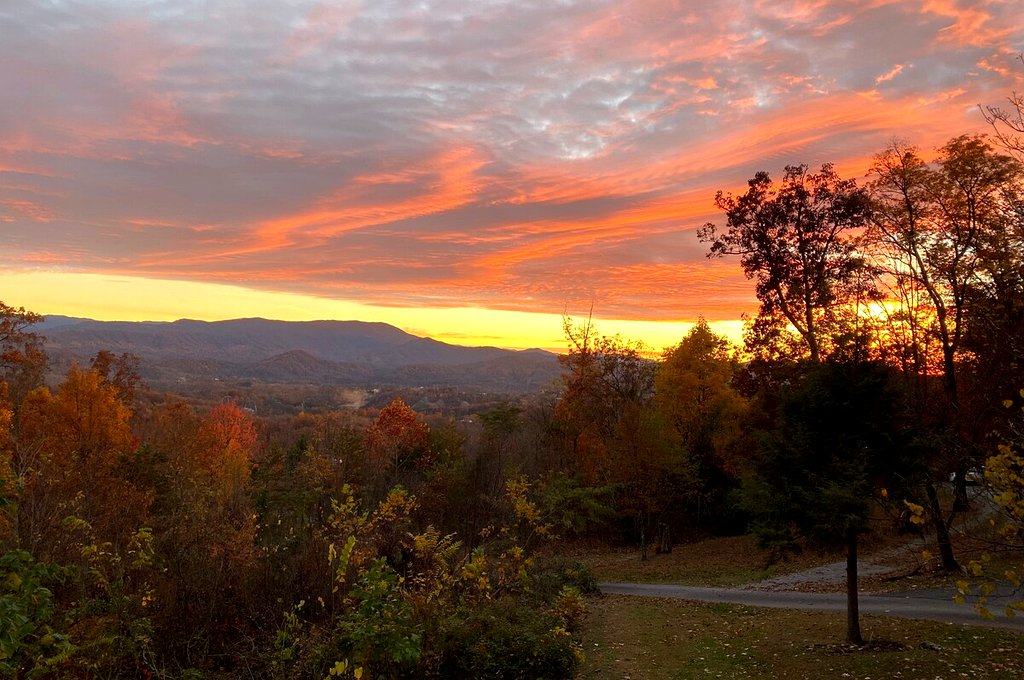 Mountain-View EveningsWatch the evening light change over the mountain ridges.
 Game RoomPool table, arcade, darts, Xbox.
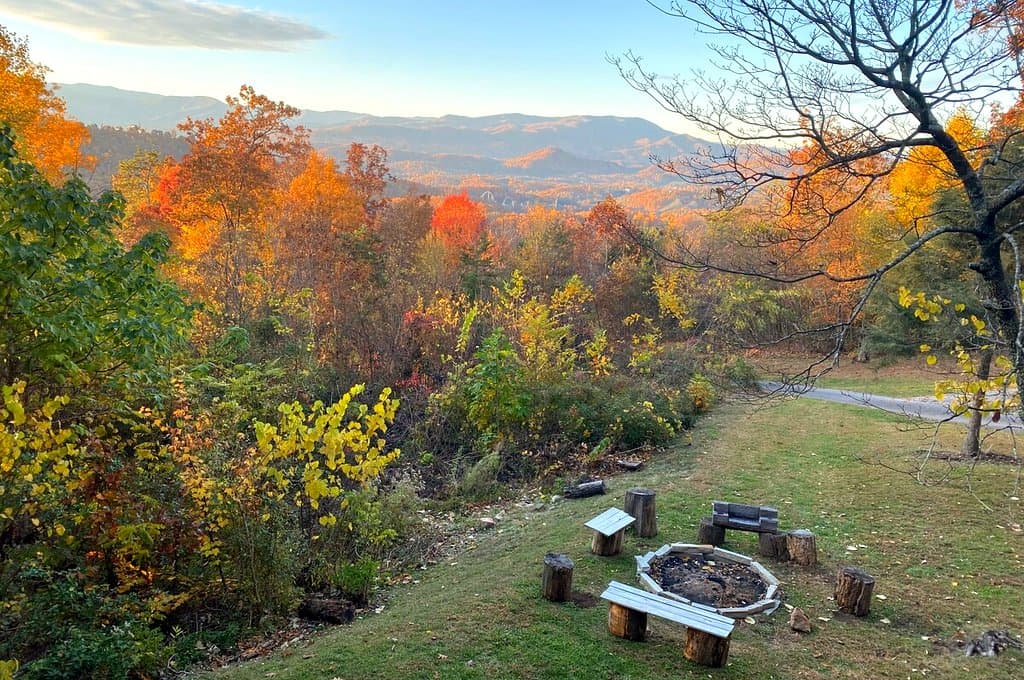
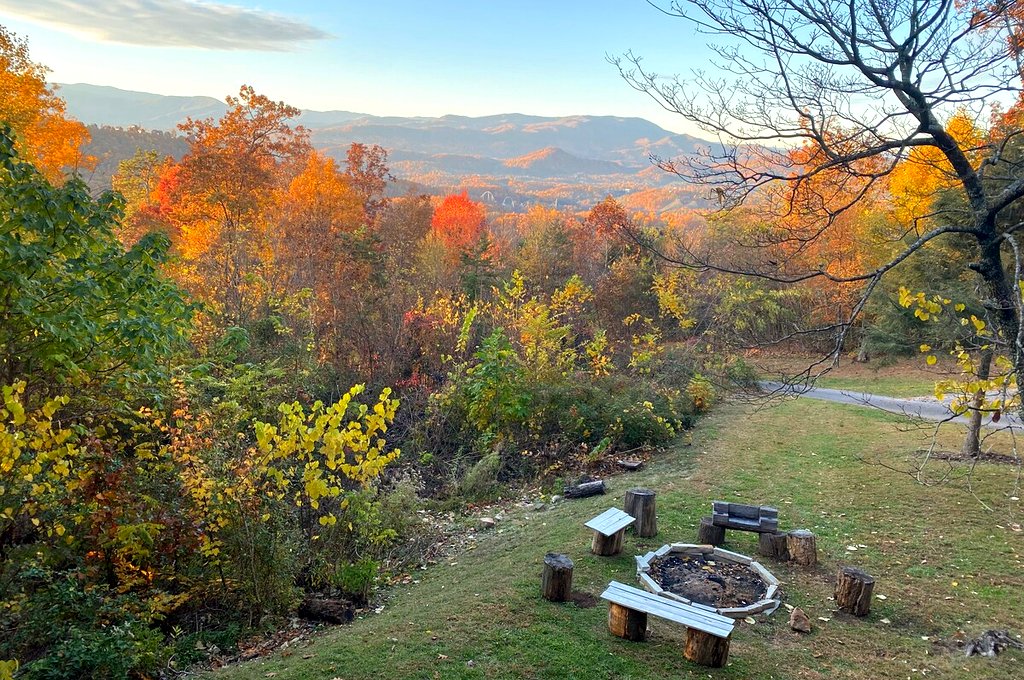 Mountain-View Fire PitS'mores with a ridgeline backdrop.
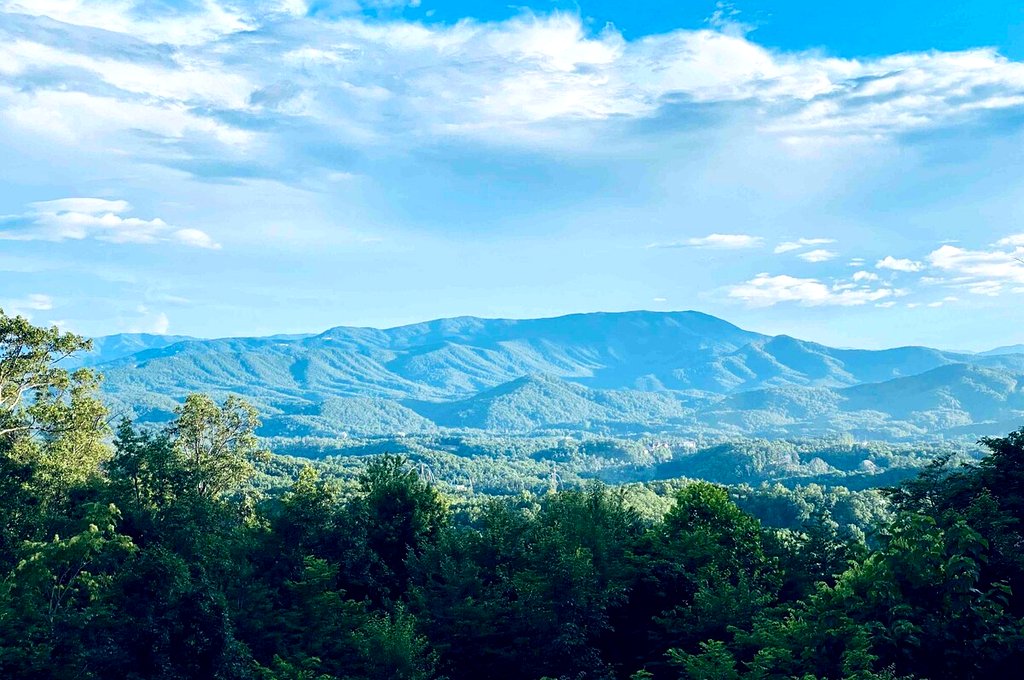 One Private AcreNo neighbors on three sides, 800 forest acres around you.
Is October a bad time to visit because of crowds?
October weekends are genuinely busy, but weekdays are far more manageable and the payoff is the best scenery of the year. If you can arrive Sunday through Thursday, you get close to the same color with a fraction of the traffic. My honest read on the area's crowd reputation is in this piece on whether Pigeon Forge is a tourist trap.
Do I need to drive into the national park to see good color?
No. Some of the best October viewing happens from the Gatlinburg Bypass overlooks, the Foothills Parkway, and from any elevated deck with an open ridge view. The park gives you immersion, but the layered long-distance views are often better from outside the boundary.
How many nights should I book for a leaf trip?
Three nights is the realistic minimum, which also happens to be our default stay length. One full day gets eaten by arrival and grocery runs, so three nights gives you two clean mornings for scenic drives plus an afternoon for town or attractions.
Planning Your October Window
If you have flexibility, book the stretch from roughly October 17 through 28 and you will catch something excellent regardless of how the weather behaves that year. Earlier than that, go high. Later than that, stay low and enjoy the fact that the crowds thin considerably while the oaks and maples hold their red. The question of what are the fall colors in Gatlinburg in October has no single answer, and that is genuinely good news for anyone who cannot get the one perfect weekend off work.
What makes or breaks the trip is where you sleep. Color viewing is a dawn and dusk activity, and dawn and dusk are exactly when the roads are hardest to navigate. A place on its own secluded acre with a south-facing deck, two bedrooms and two bathrooms, and enough beds for six means your best viewing happens before you even put shoes on. Add fast 321 Mbps internet if you are stretching the trip with a remote work day, and a propane grill for dinner after a long hike, and you have a base camp instead of just a bed.
If you want peak Smoky Mountain color without losing your mornings to Parkway traffic, lock in a three-night October window on a quiet acre with no neighbors on three sides and a deck pointed straight at the ridges.
Start Planning Your Trip