 Thistle Britches
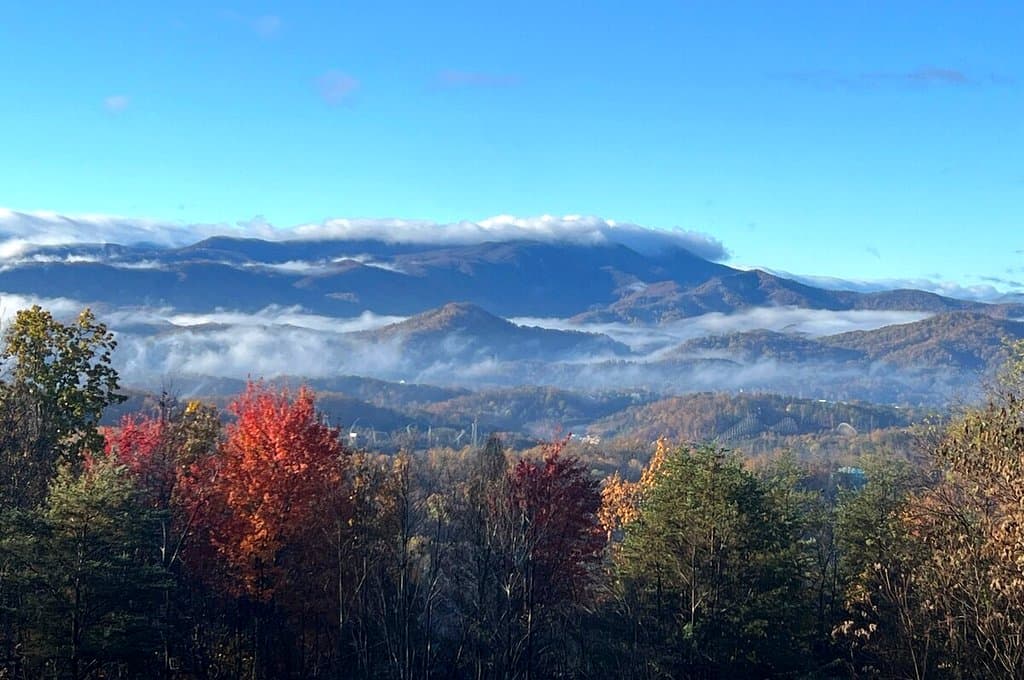
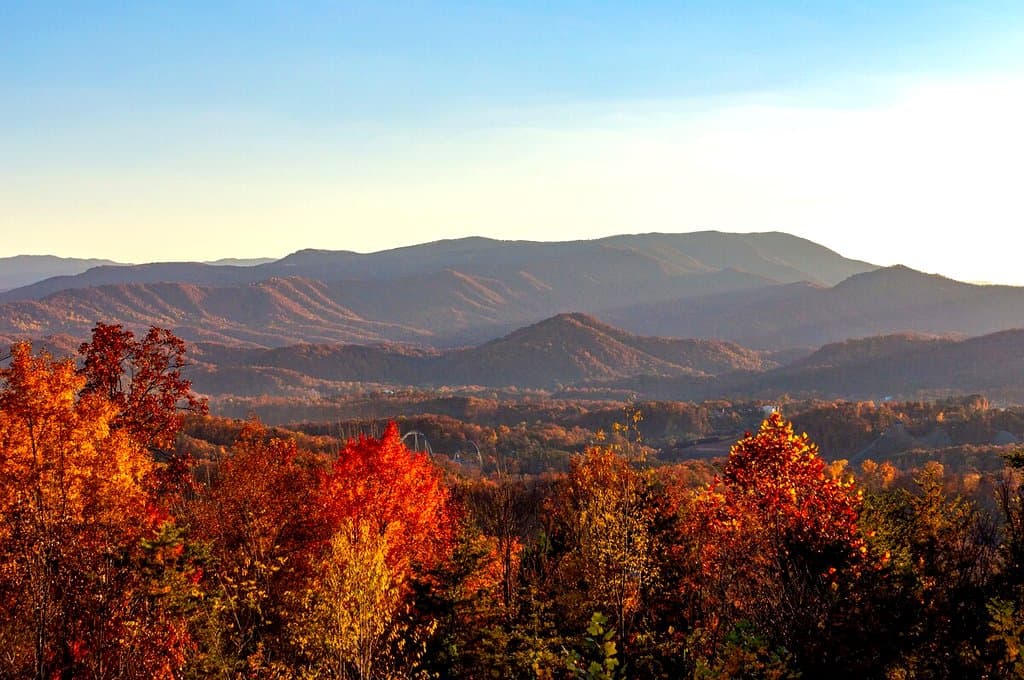
Stand on a south-facing deck around 7:15 on an October morning and you can hear the mountains before you see them. Fog sits in the low ground like spilled milk, a crow argues with something in the poplars, and the ridgeline behind Dollywood slowly turns from gray to blue to gold. Twenty minutes later you could be standing in line for a cinnamon bread at the park entrance, or you could still be on that deck with coffee, which is the whole point of this place. So, what are fun things to do in the Great Smoky Mountains? More than any single trip can hold, which is exactly why most first-timers over-schedule and come home tired.
I host one cabin on a secluded acre less than a mile from Dollywood, and I get asked this question in messages almost every week. Not the brochure version. The real version: what is actually worth the drive, what time to leave, where the crowds bunch up, and what you can skip without regret. This is that answer, organized the way a local would actually plan a week.
Key Takeaways
- The national park is free to enter, but a parking tag is required for stops longer than 15 minutes. Buy it before you go.
- Cades Cove and Newfound Gap Road are the two heavyweight experiences. Both reward an early start and punish a 10 a.m. departure.
- Pigeon Forge is the action side (Dollywood, shows, go-karts). Gatlinburg is the walkable side. The park is the quiet side. Mix all three.
- Off-peak weekdays and mornings before 9 are the single biggest quality-of-trip upgrade available to you.
- Where you sleep decides how much of the day you spend in traffic. Proximity beats square footage.
The Park Itself: What Actually Makes People Gasp
Great Smoky Mountains National Park is the most visited national park in the United States, and the National Park Service keeps it free to enter. There is no entrance gate. What there is, since the parking tag program began, is a required tag for any vehicle parked longer than 15 minutes. Daily, weekly, and annual options exist, and you can buy them online or at visitor centers. Skip that step and you will be that person walking back to the trailhead lot with a citation on the windshield.
Cades Cove
An 11-mile one-way loop through a broad valley ringed by mountains, with preserved cabins, two churches, a working grist mill, and a genuinely high chance of seeing black bears, deer, and wild turkeys. The loop takes about an hour with no traffic and three hours on a summer Saturday. Leave the cabin by 6:30 a.m. if you want the fog-over-the-meadow version everyone photographs. The drive out from Pigeon Forge runs through Townsend and takes roughly an hour.
Newfound Gap Road and Kuwohi
US-441 climbs from Gatlinburg to the Tennessee/North Carolina line at Newfound Gap, gaining enough elevation that you effectively drive from Georgia to Maine in ecological terms. From there, a seven-mile spur leads to Kuwohi, the highest point in the park, where a paved half-mile ramp climbs to an observation tower. It is steep. It is worth it. The road to the summit closes seasonally in winter, so check conditions.
Waterfalls Worth the Boots
Laurel Falls is the famous one, paved and popular and often shoulder-to-shoulder. Grotto Falls on the Trillium Gap Trail lets you walk behind the water. Rainbow Falls is a harder climb with a real payoff. Abrams Falls in Cades Cove is short on elevation and long on volume.
What Is the Funnest Thing to Do in Pigeon Forge?
If I have to pick one, it is Dollywood, and I say that as someone who lives four minutes from the gate. The theme park does three things unusually well: the roller coasters are genuinely good (Lightning Rod, Wild Eagle, and the Big Bear Mountain family coaster), the craftspeople in Craftsman's Valley are working artisans rather than costumed extras, and the seasonal festivals change the park enough that a repeat visit does not feel repeated. Harvest Festival in autumn and the Smoky Mountain Christmas lights are the two that regulars plan around.
Splash Country, the water park next door, operates on a separate seasonal schedule in warmer months. Both sit 0.8 miles from my cabin, about four minutes by car, which is the difference between a full day and a half day when a kid melts down at 2 p.m. and someone needs a nap.
Beyond Dollywood, the Parkway stacks attractions like cordwood. The Island has a 200-foot observation wheel and a musical fountain show. The Titanic Museum is a genuinely well-done artifact exhibit, not a gimmick. Dinner shows range from the Dolly Parton Stampede to comedy magic, and the go-kart tracks (The Track, Xtreme Racing Center) run late into the evening. For rainy days, the Hollywood Wax Museum, WonderWorks, and the arcade complexes absorb hours.
The honest caveat: the Parkway is a five-mile commercial corridor and traffic between roughly 4 p.m. and 8 p.m. in peak season moves at a crawl. Learn the parallel routes. Teaster Lane and Veterans Boulevard bypass the worst of it, and locals treat them as the default rather than the shortcut.
What Activities Can You Do at the Great Smoky Mountains?
The list is longer than most visitors realize because the park and the surrounding towns operate as one ecosystem. Here is how I break it down when guests ask what are fun things to do in the Great Smoky Mountains on a first trip.
On the Water
Tubing the Little Pigeon River in summer is a Pigeon Forge institution and costs very little. Whitewater rafting on the Pigeon River near Hartford runs Class III in the upper section during dam release days. Fly fishing in the park requires a Tennessee or North Carolina license and rewards anyone willing to walk upstream past the first pullout.
In the Air and On the Ropes
Zipline canopy tours operate in Sevierville, Pigeon Forge, and Gatlinburg. The Gatlinburg SkyLift Park has a 680-foot pedestrian suspension bridge with a glass floor panel in the middle, which sorts the crowd into two groups very quickly. Anakeesta, also in Gatlinburg, combines a chondola ride, treetop walks, and a mountain coaster in one ticket.
On Foot
The park has over 800 miles of trail. For a first-timer, Andrews Bald is the best effort-to-reward ratio in the whole park: 3.6 miles round trip from the Kuwohi lot, ending on a grassy summit with a view that does not look like Tennessee. Alum Cave Trail toward Mount LeConte is the classic hard hike. Gatlinburg Trail and Oconaluftee River Trail are two of the very few that allow dogs and bicycles.
Slow and Local
The Great Smoky Arts and Crafts Community on Glades Road in Gatlinburg is an eight-mile loop of working studios, potters, broom makers, leather workers. Apple Barn in Sevierville does cider donuts. The Old Mill district in Pigeon Forge grinds grain on a water wheel that has been turning since the 1830s. None of it is fast, all of it is memorable.
A cabin four minutes from Dollywood and twenty from the park entrance means you stop planning around traffic and start planning around what you actually want to see. Two bedrooms, two baths, and one secluded acre with no neighbors on three sides.
Book Your StayThe Mistake That Wrecks Most First Trips: Booking a Cabin an Hour From Everything
Here is the pain nobody warns you about. You find a beautiful cabin online. The photos show a wall of windows, a hot tub, a view that stretches forever. The price is great. What the listing does not say, or says in very small type, is that the cabin sits at the top of a switchback gravel road twenty-five minutes above the nearest highway, and that every single thing you want to do is forty-five to seventy minutes away in traffic.
The math gets ugly fast. Dollywood in the morning, back to the cabin for a break, dinner in Gatlinburg, and you have burned three hours of vacation sitting in a vehicle. Add a nervous driver, a rental SUV with no snow tires in January, and the drop-offs on some of these mountain roads, and the "view" cabin becomes the thing you argue about on day two. I have read this exact story in a hundred reviews of other properties.
The fix is not complicated. Look for a place that is genuinely close to the corridor but not on it. Proximity to Dollywood and the Spur matters more than elevation. Check the actual drive time in a maps app at 5 p.m. on a Saturday, not the listing's estimate. Ask about the road: is it paved, is it steep, does it require four-wheel drive in winter. Ask whether the cabin sits in a dense resort community where you can hear the neighbor's hot tub, or on its own land.
That is the combination I chased when I set up my place. One cabin, one secluded acre, no neighbors on three sides, and Dollywood 0.8 miles down the road. The deck faces south toward Dollywood, and during the seasons when Dollywood runs its scheduled fireworks and drone shows, you can sometimes catch them from the rail. Those shows are seasonal and scheduled, not a nightly guarantee, so treat them as a bonus rather than an itinerary item. If you are still weighing towns, my take on when to avoid Gatlinburg entirely covers the weeks that turn a scenic drive into a parking lot.
Seasonal Timing: When the Fun Things Get Even Better
Every season here has a personality and a trade-off.
Spring brings wildflowers, which is not a throwaway line. The park is one of the most biodiverse temperate regions in North America, and the Spring Wildflower Pilgrimage in April draws botanists from around the country. Waterfalls run hard from snowmelt and rain. Crowds are moderate. Upper elevations can still get snow into April.
Summer is green, warm, and busy. Tubing, water parks, and long daylight hours make it the family default. Afternoon thunderstorms roll through most days in July and August. Start hikes early both for heat and for parking.
Autumn is the main event and everyone knows it. Color moves down the mountain from the high elevations in early October to the valley floors by early November. Mid-October weekends produce the heaviest traffic of the year on Newfound Gap Road and in Cades Cove. If you are targeting peak color, my breakdown of the best week for fall colors gets into elevation timing in detail.
Winter is the underrated season. Bare trees mean views you cannot get in July. Cades Cove is quiet. Gatlinburg and Pigeon Forge run millions of Christmas lights from November through February. Some park roads close with ice, so check the NPS road status page each morning.
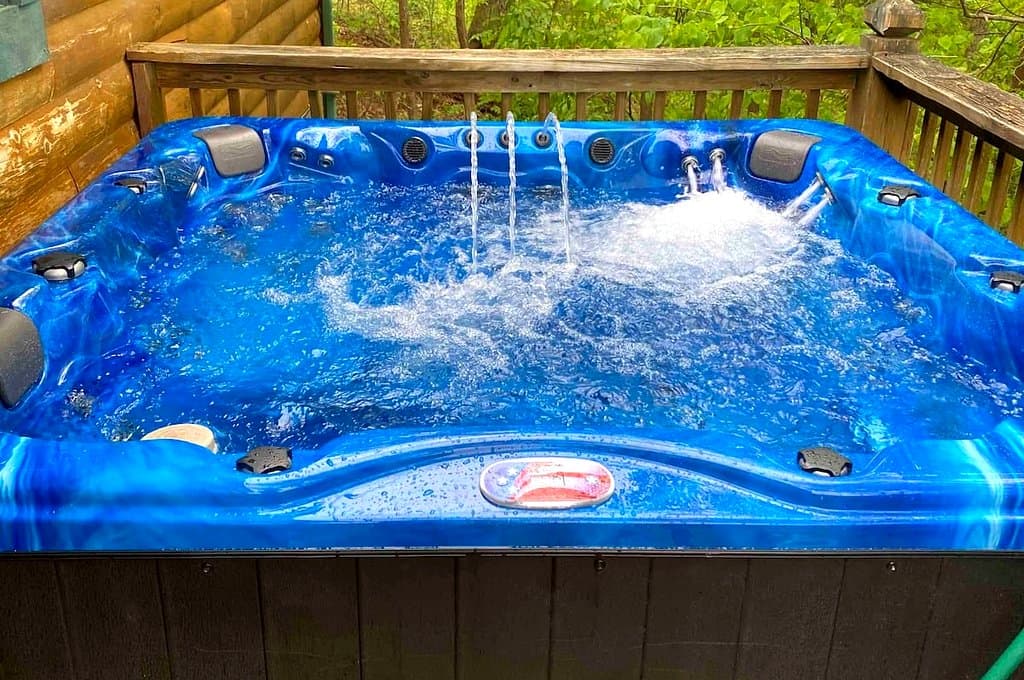
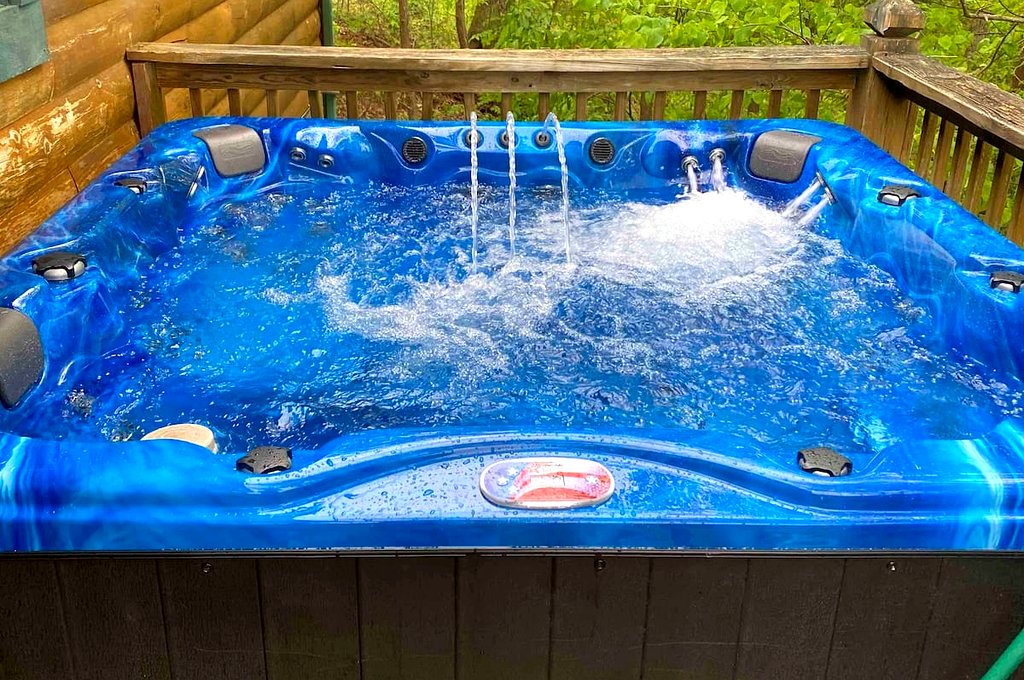 56-Jet Luxury SpaBluetooth, subwoofer, LED waterfall.
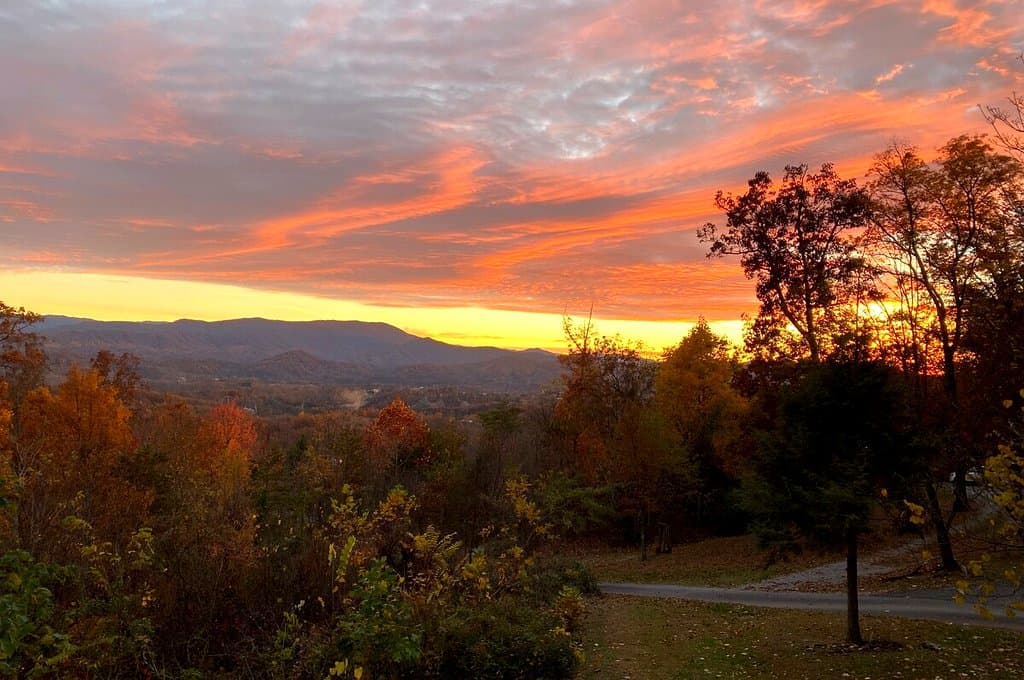
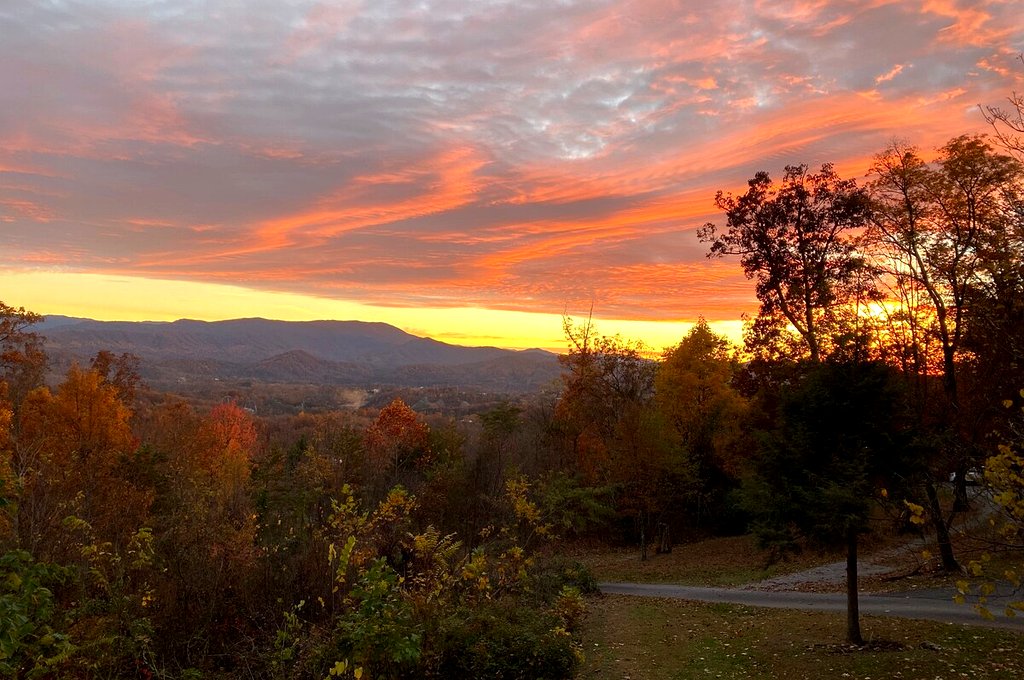 Mountain-View EveningsWatch the evening light change over the mountain ridges.
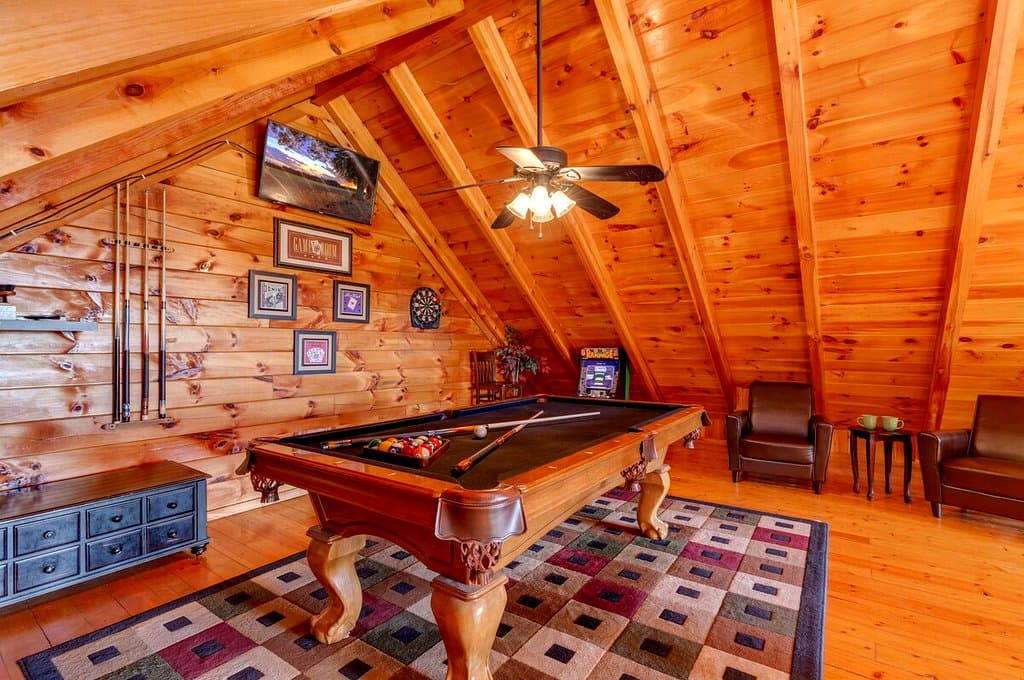
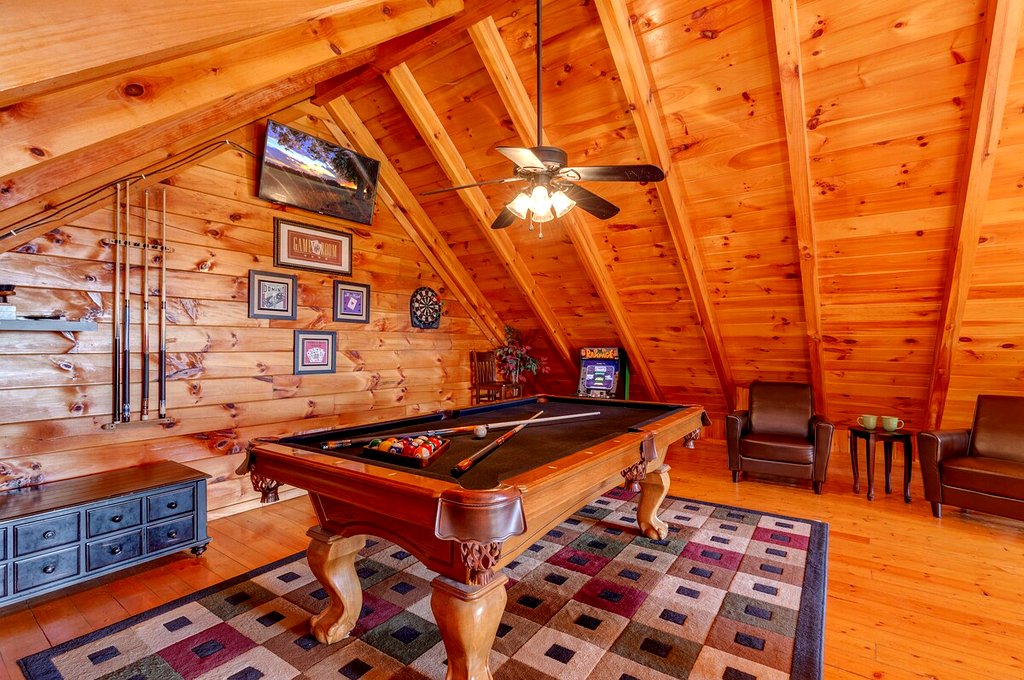 Game RoomPool table, arcade, darts, Xbox.
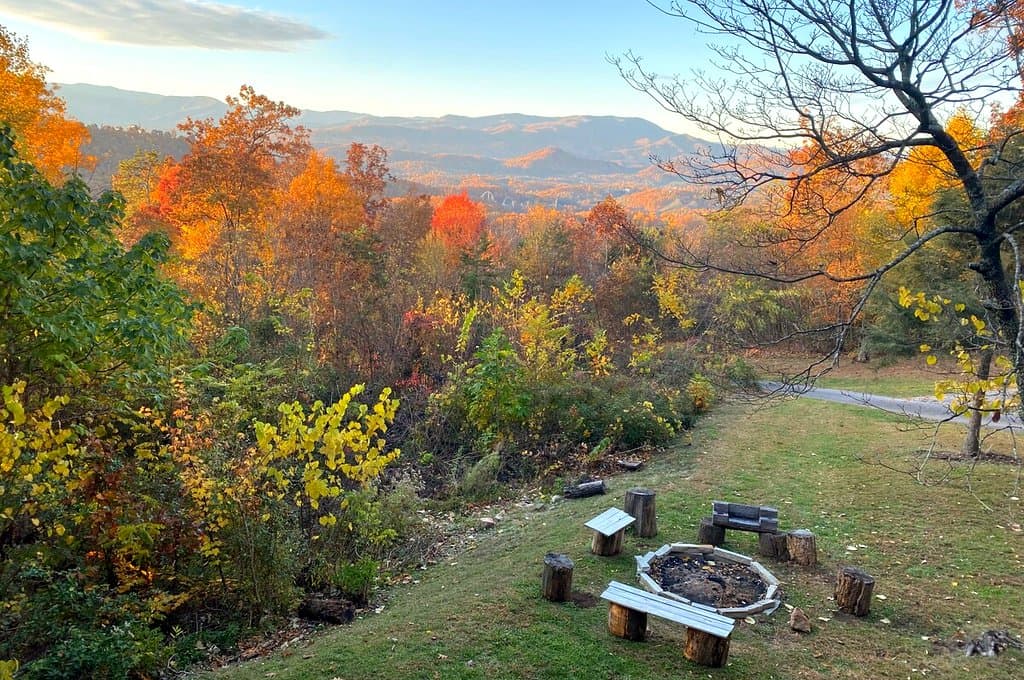
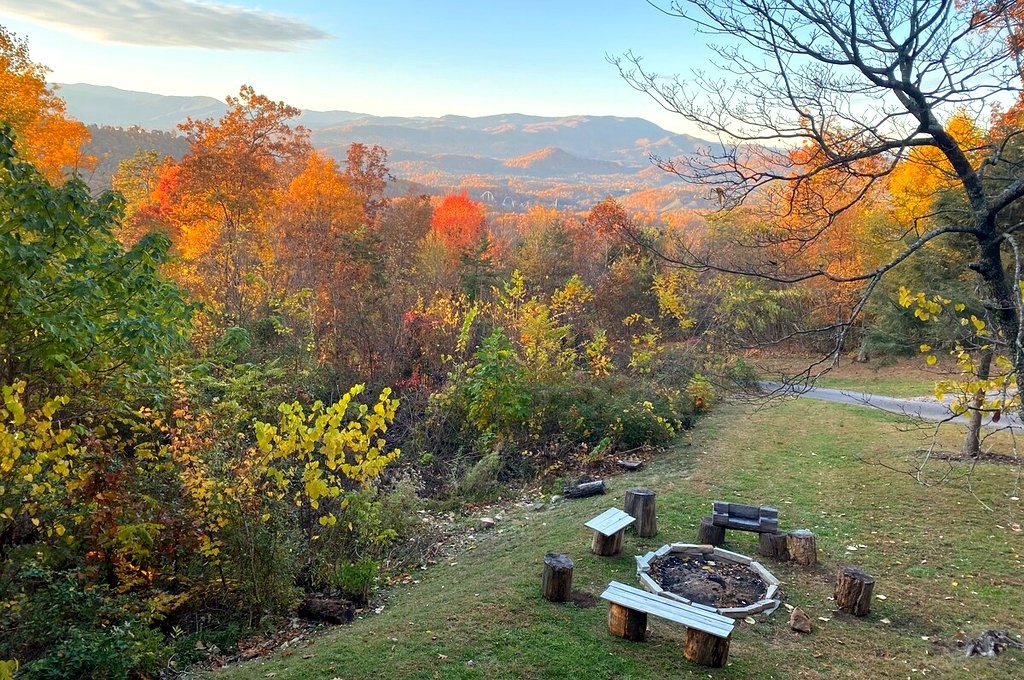 Mountain-View Fire PitS'mores with a ridgeline backdrop.
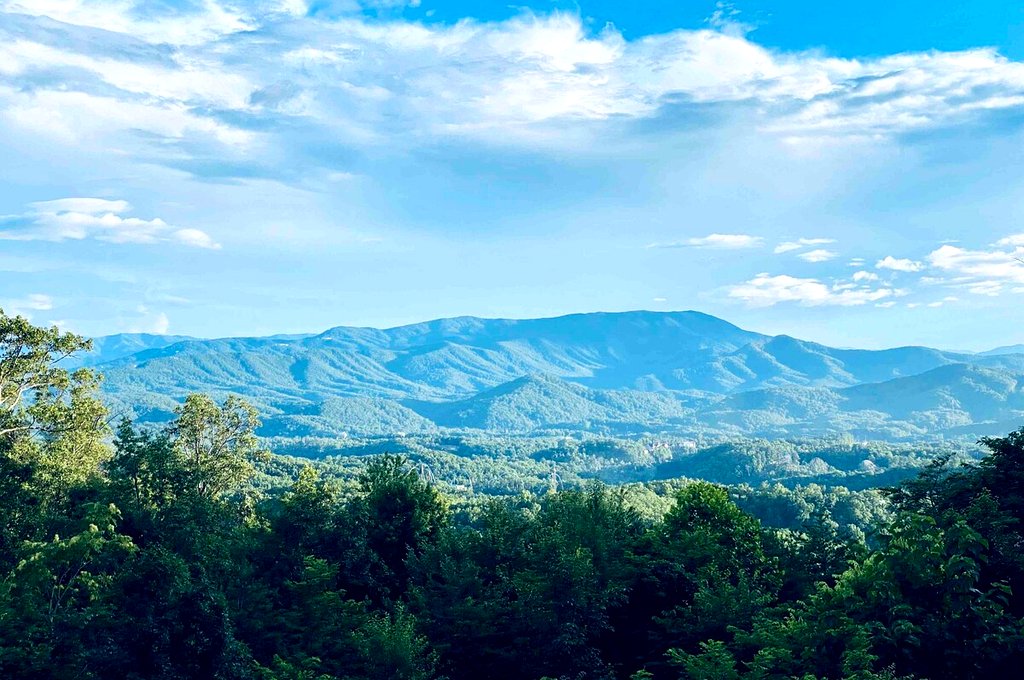 One Private AcreNo neighbors on three sides, 800 forest acres around you.
Building a Trip That Does Not Exhaust You
The most common planning error I see is treating the Smokies like a checklist. Four days is enough for a real trip if you pace it. A workable rhythm looks like this: one full park day, one theme park or town day, one slow day, and one flexible day for weather.
Anchor the park day early. Leave before 7 a.m., do Cades Cove or Newfound Gap, and be back by mid-afternoon. Anchor the Dollywood day around the park's own schedule, arriving at opening and taking a mid-afternoon break if you are staying close enough to make that practical. Leave one day completely unplanned. The best moments here tend to arrive when you have not scheduled them: a pull-off you did not know about, a fiddle player outside a Glades Road studio, a bear crossing the road ahead of you at a respectful distance.
For groups, size matters more than people expect. Six adults in a cabin built for six is comfortable. Six adults in a cabin marketed for twelve means someone is on an air mattress. If you are traveling with kids, my notes on what actually works for families in Pigeon Forge save some trial and error.
One more practical note: cell coverage inside the park is spotty to nonexistent. Download offline maps before you leave the cabin. Back at my place the T-Mobile 5G home internet runs around 321 Mbps, which is plenty for uploading photos, streaming, or handling a work call before you head out for the day.
Frequently Asked Questions
What is the funnest thing to do in Pigeon Forge?
Dollywood, for most visitors, because it combines legitimate thrill rides with craft demonstrations, live music, and seasonal festivals that change several times a year. If theme parks are not your thing, the runner-up is a tubing float on the Little Pigeon River in summer or a dinner show in the evening. The Island's observation wheel is the best low-effort view in town and takes under twenty minutes.
What activities can you do at the Great Smoky Mountains?
Hiking on over 800 miles of trail, scenic driving on routes like Cades Cove Loop and Roaring Fork, waterfall chasing, fly fishing, wildlife watching, horseback riding at park stables, camping, and picnicking at spots like Metcalf Bottoms. Outside the park boundary you add ziplines, whitewater rafting on the Pigeon River, mountain coasters, and the arts and crafts studios on Glades Road. The park is free to enter, though a parking tag is required for stops over 15 minutes.
What is the main attraction in Great Smoky Mountains National Park?
Cades Cove draws the most visitors of any single destination inside the park, thanks to the combination of wildlife, historic structures, and an accessible loop road. Kuwohi is the second heavyweight, offering the highest viewpoint in the park from a short paved climb. The blue haze that gives the mountains their name comes from volatile organic compounds released by the dense forest, and you can read more about the range on Wikipedia's Great Smoky Mountains entry.
What are the top 10 things to do in Gatlinburg and Pigeon Forge?
Dollywood, the Gatlinburg SkyBridge, Anakeesta, Ober Mountain, the Titanic Museum, the Island at Pigeon Forge, Ripley's Aquarium of the Smokies, the Old Mill district, a dinner show, and the Great Smoky Arts and Crafts Community loop. Most of these sit within a twenty-minute drive of each other outside peak traffic hours. Pick three or four rather than all ten, and you will enjoy each one considerably more.
How many days do you need to see the Smokies properly?
Four nights is the sweet spot for a first visit: one park day, one theme park day, one town day, and one flexible day. Three nights works if you are focused. My longer answer on how many days you actually need walks through sample itineraries. My cabin runs a three-night minimum by default, which happens to match what a satisfying trip requires.
Are dogs allowed on Smoky Mountain trails?
Only two trails in the national park permit dogs: the Gatlinburg Trail and the Oconaluftee River Trail. Dogs are welcome in campgrounds, picnic areas, and along roads on a leash. Outside the park, plenty of Pigeon Forge patios and the Glades Road studios are dog-friendly. My cabin allows up to two dogs and has an outdoor dog area, though it is unfenced, so leashes stay on.
Where to Point Yourself First
If this is your first trip, do this: buy the parking tag online tonight, block one morning for Cades Cove before sunrise, give Dollywood a full day, and leave the rest loose. The mountains reward people who slow down. The towns reward people who show up early. Everything else is preference.
And book your base with drive time in mind, not just photos. The difference between a cabin four minutes from Dollywood and one forty minutes up a gravel switchback is roughly one full day of your vacation, handed back to you.
If you want mountain quiet without spending your trip in the car, a secluded acre less than a mile from Dollywood with a south-facing deck is about as close as this area gets. Two kings, two baths, room for six, and dogs welcome.
Start Planning Your Trip