
 Thistle Britches
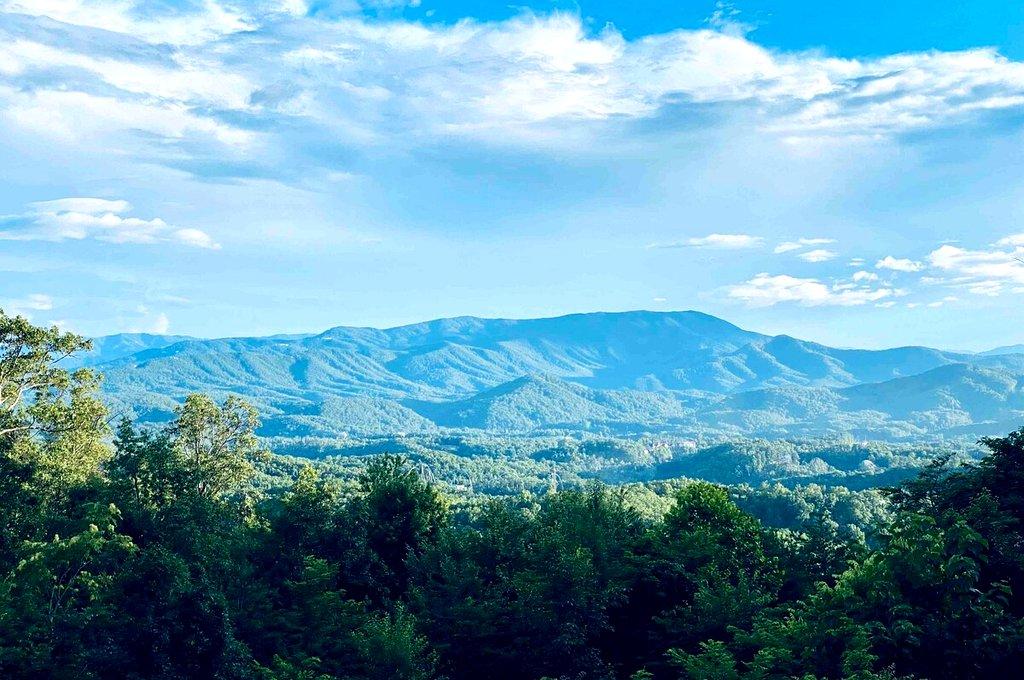
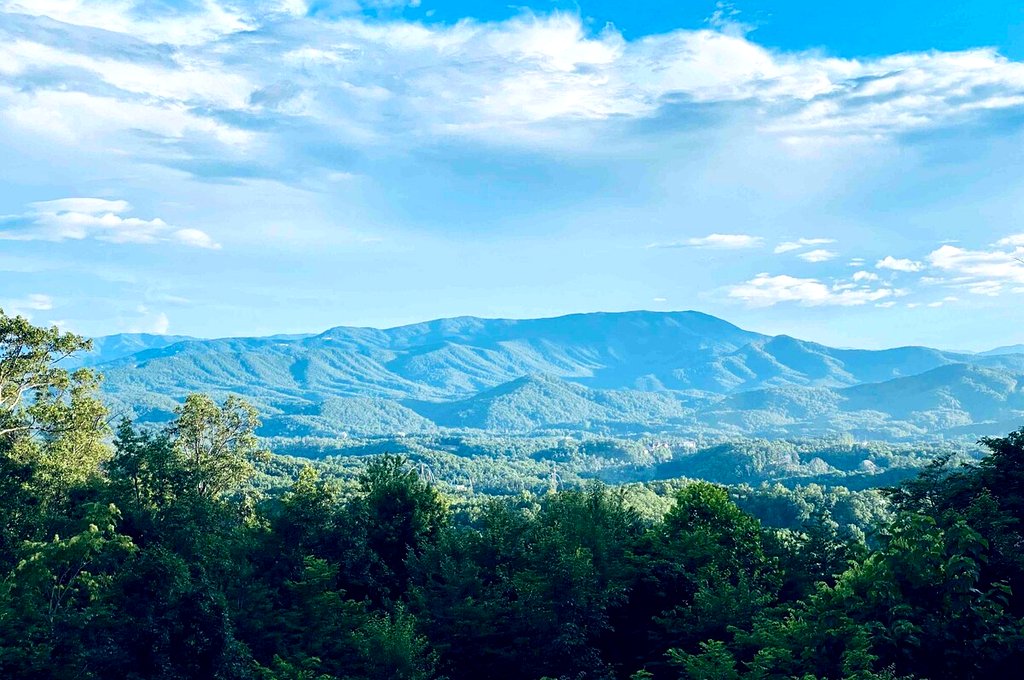
Step outside on an August morning here and the air has weight to it. The ridge behind the cabin holds a low band of haze until about nine, the cicadas start up before the coffee finishes, and by the time you load the car for the park the dash thermometer is already climbing. That soft blue fog is the whole reason these mountains got their name, and August is when it shows up most reliably. So what is the weather like in the Great Smoky Mountains National Park in August? Warm and humid at the low elevations, surprisingly pleasant up high, and almost always wetter than visitors expect.
I host guests about four minutes from the Dollywood gates, and August is the month I field the most weather questions. People want to know if they will melt on a trail, whether an afternoon thunderstorm ruins a day, and what to pack for a park that can span a twenty degree swing between the valley floor and the high ridges. The honest answer involves elevation, timing, and a little local pattern recognition.
Key Takeaways
- August in the lower park and in Pigeon Forge runs hot and humid, with typical afternoon highs in the upper 80s and overnight lows in the mid to upper 60s.
- Elevation changes everything. Newfound Gap and Clingmans Dome commonly sit 10 to 20 degrees cooler than the valley, so pack a light layer even on a scorching day.
- Afternoon thunderstorms are the norm, not the exception. They usually build after 2 p.m. and clear within an hour or two.
- July is generally the hottest month locally, and the summer months plus March compete for the wettest, with the high country getting far more rain than the valley.
- Start hikes early, plan water activities for midday heat, and keep an indoor or covered backup for the late afternoon.
What Is the Weather Like in the Great Smoky Mountains National Park in August, Hour by Hour
August here has a rhythm you can almost set a watch by. Mornings start muggy but tolerable, often in the upper 60s down in the foothills with mist sitting in the hollows. That fog is not a storm signal. It is moisture released by the forest itself, and the park's own naturalists point to the volume of vegetation as the source of that famous blue haze.
By late morning the valley temperature climbs fast. Pigeon Forge and the Gatlinburg entrance typically sit in the mid to upper 80s during the hottest stretch of the afternoon, and the humidity makes it feel warmer. Sun on exposed pavement along the Parkway intensifies it. Shade in the park feels noticeably better because the canopy over trails like Laurel Falls or the Little River corridor blocks most direct sun.
Then comes the afternoon pattern. Heat and moisture build over the ridges and spawn pop-up thunderstorms, usually between 2 and 6 p.m. They can be loud, they can dump hard, and they usually move through within an hour. Streams in the park can rise quickly during these, which matters if you plan to tube or wade.
Evenings cool off more than people expect. Once the sun drops behind the ridgeline the temperature slides into the 70s, and by late night the valley often settles into the mid 60s. That is why a covered deck earns its keep in August. You can sit outside comfortably at nine at night when the daytime heat is long gone. The National Park Service weather page for Great Smoky Mountains is worth bookmarking because it tracks conditions by elevation rather than by town.
Elevation Is the Real Forecast
The park rises from roughly 875 feet at its lowest point to 6,643 feet at Clingmans Dome. Temperature generally drops a few degrees for every thousand feet you gain. That means an 88 degree afternoon at the Sugarlands Visitor Center can be in the upper 60s at the high overlooks. Guests who drive up to Newfound Gap in shorts and a tank top in August routinely come back saying they wished they had brought a hoodie.
How Hot Is Pigeon Forge in August?
Pigeon Forge in August is hot but not extreme by Southern standards. Afternoon highs generally land in the mid to upper 80s, with occasional pushes into the low 90s during a stubborn ridge of high pressure. Overnight lows typically fall into the mid 60s. The humidity is the part that catches people from drier climates off guard, because 87 degrees with heavy moisture in the air feels closer to the mid 90s on your skin.
What makes it manageable is the terrain. Valleys funnel cooler air down overnight, and the mountains block some late afternoon sun earlier than flat country would. Water also helps. The Little Pigeon River runs cold enough year round that wading in it in August is genuinely refreshing, not just symbolic.
Practically speaking, here is how we tell guests to structure a hot August day:
- Hit the trail or Cades Cove loop before 9 a.m. while it is still in the 70s and wildlife is active.
- Use midday for water. Tubing on the Little Pigeon, Dollywood's Splash Country, or a swimming hole off Little River Road.
- Take the late afternoon off during storm hours. Nap, grill, or hit an indoor attraction.
- Save the evening for shows, downtown, or the drive up to an overlook when temps drop.
What Is the Rainiest Month in the Smoky Mountains?
The park is one of the wettest places in the eastern United States, and the answer depends on where you stand. In the lower elevations, March and July usually top the charts. At the high elevations the totals are dramatically higher year round, with the spruce-fir forest along the crest receiving a rainfall load closer to a temperate rainforest than to a typical Tennessee valley.
August is not the single rainiest month, but it is consistently wet. The rain arrives differently than a spring front. Instead of all-day gray drizzle, August brings fast, concentrated convective storms. You can watch one build over a ridge, get soaked for twenty minutes, and then have blue sky and steam rising off the pavement.
That pattern changes how you plan. A ten day or fourteen day Smoky Mountains weather forecast will show a thunderstorm icon on nearly every August day, which panics first-time visitors. Do not cancel plans over it. That icon usually represents a 40 percent chance of a brief afternoon cell somewhere in a wide forecast zone, not a washout. Check the hourly view instead of the daily summary.
A few rain-specific notes worth knowing. Creek crossings on trails like Porters Creek or the backcountry sections of the Deep Creek area can rise fast during storms. Lightning on exposed ridges is a genuine hazard, so the summit of a bald is not where you want to be at 4 p.m. in August. And the roads get slick in the first ten minutes of rain after a dry spell, especially the switchbacks on the Spur between Pigeon Forge and Gatlinburg.
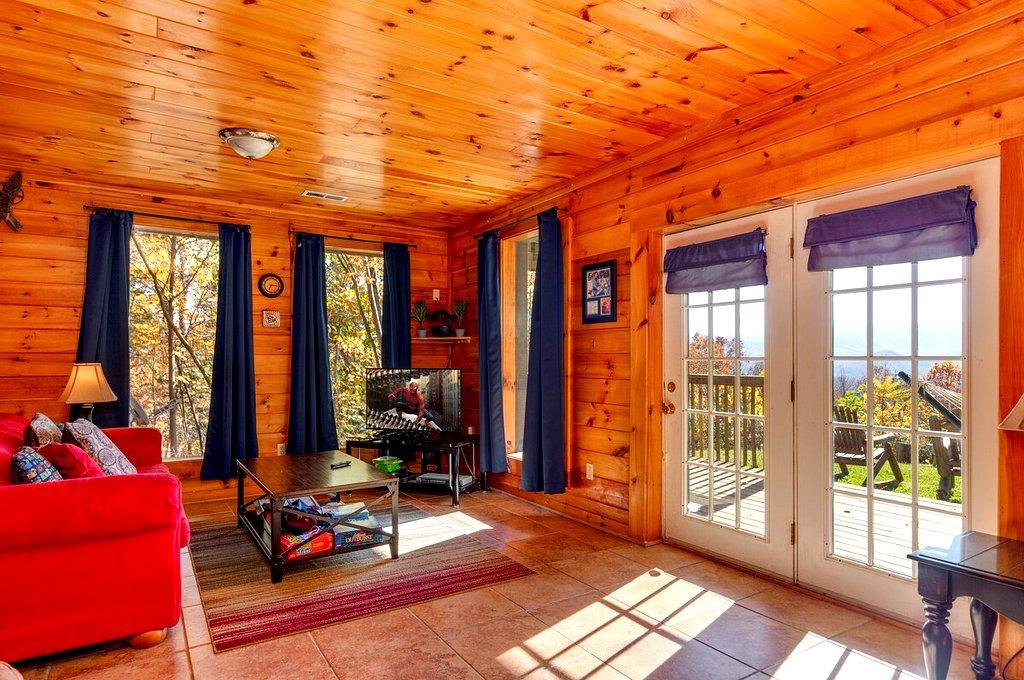
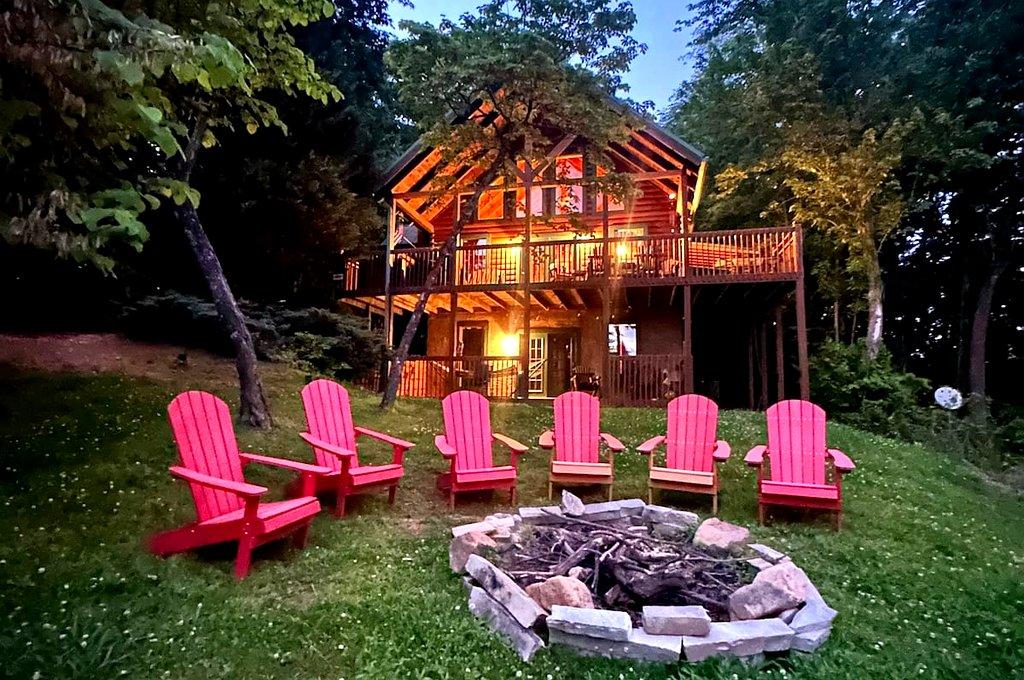
August fills up fast around here because families squeeze in one last trip before school. Our 2-bedroom cabin sleeps up to 6 on one secluded acre with no neighbors on three sides, and the south-facing deck looks out toward Dollywood, 0.8 miles down the road.
Book Your StayThe August Mistake That Wrecks Most First Trips
Here is the pattern I see every single August. A family books a cabin, loads the itinerary with Dollywood on Monday, a long hike on Tuesday, Gatlinburg on Wednesday, and a full day in the park on Thursday. They try to do all of it between 10 a.m. and 6 p.m., which is exactly the window when it is hottest, most crowded, and most likely to storm. By day three someone is sunburned, someone else is cranky, and the group spends the afternoon sitting in traffic on the Parkway with the AC maxed out.
The fix is not doing less. It is shifting the clock. August rewards early starts and late finishes with a long, lazy middle. That middle block is where the cabin itself becomes part of the trip instead of just a place to sleep. If your rental is a tight condo in a crowded development with a postage stamp balcony, there is nowhere to retreat to. You end up back in the car looking for air conditioning.
What to look for when you book for August: real separation from neighbors so afternoon downtime is actually quiet, covered or shaded outdoor space you can use while it rains, enough bathrooms that a group of six is not queuing after a sweaty hike, and internet strong enough to stream or work during a storm. Ours runs 321 Mbps T-Mobile 5G home internet, which handles a movie in the living room while someone else takes a call.
Space matters more in August than in October. In fall everyone is out driving the leaf routes all day. In August you will be inside or on the deck for three or four hours of every afternoon. Two bedrooms with two king beds plus fold-out queens gives a group of six somewhere to spread out, and two bathrooms keeps the morning from stacking up. If you are still deciding how long to stay, our breakdown of whether three days in Pigeon Forge is enough covers how an August itinerary actually paces out.
Cooling Off: Water, Shade, and Elevation
Three strategies beat August heat here, and locals use all three in the same day.
Water. The Little Pigeon River through the park stays cold because it is fed by high elevation runoff and shaded by old canopy. The Townsend Wye and the swimming holes along Little River Road are classic local spots. Deep Creek near Bryson City on the North Carolina side combines tubing with three waterfalls on an easy loop. Dollywood's Splash Country sits 0.8 miles from the cabin, about four minutes by car, which makes a half-day water trip genuinely practical instead of a production.
Shade. Pick trails that follow water and stay under canopy. Porters Creek, the Middle Prong Trail out of Tremont, and the lower section of Alum Cave all stay noticeably cooler than exposed ridge routes. A trail along a creek can feel ten degrees cooler than a parking lot at the same elevation.
Elevation. The drive up to Clingmans Dome or Newfound Gap is the fastest air conditioning in the region. On a 90 degree valley day the high country can be in the 60s with a breeze. Bring a jacket, especially for sunset. Our guide to what not to miss in the Smoky Mountains has more on which overlooks are worth the drive time.
Frequently Asked Questions
What is the weather like in the Great Smoky Mountains National Park in August?
August brings warm, humid conditions in the lower park with afternoon highs typically in the mid to upper 80s and overnight lows in the mid to upper 60s. Higher elevations run 10 to 20 degrees cooler, so Newfound Gap and Clingmans Dome often sit in the 60s while the valley bakes. Expect brief afternoon thunderstorms most days, usually building after 2 p.m. and clearing within an hour or two.
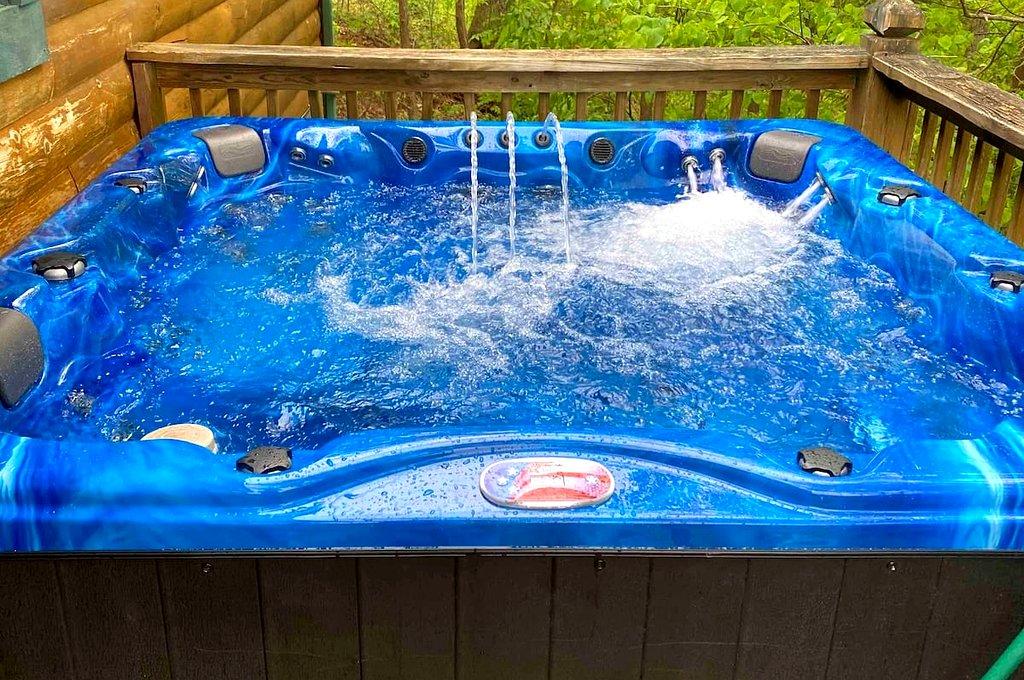
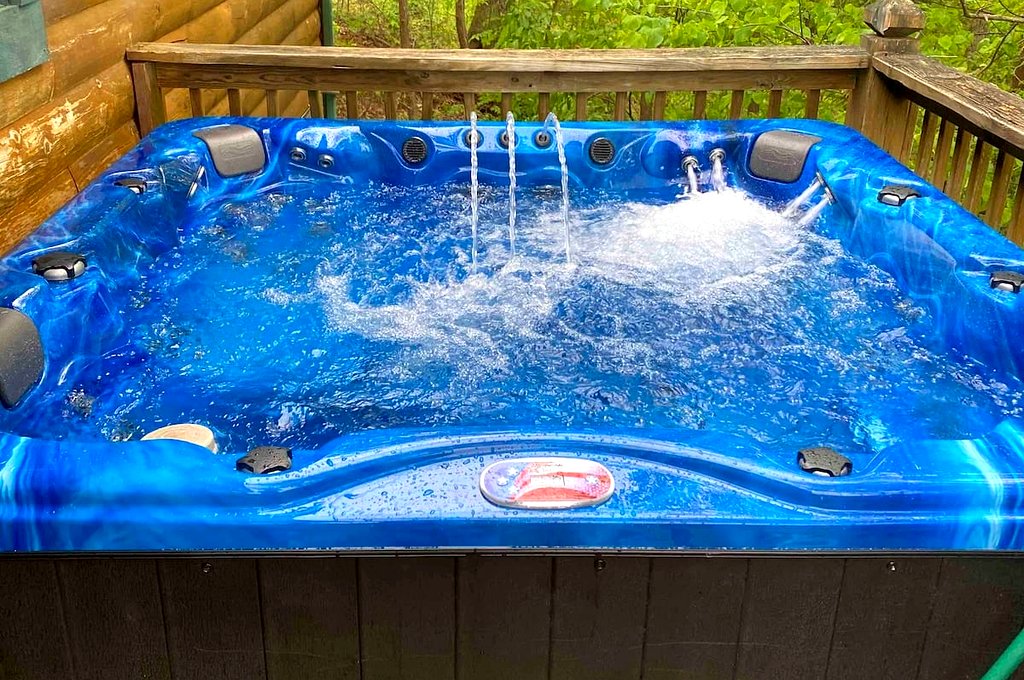 56-Jet Luxury SpaBluetooth, subwoofer, LED waterfall.
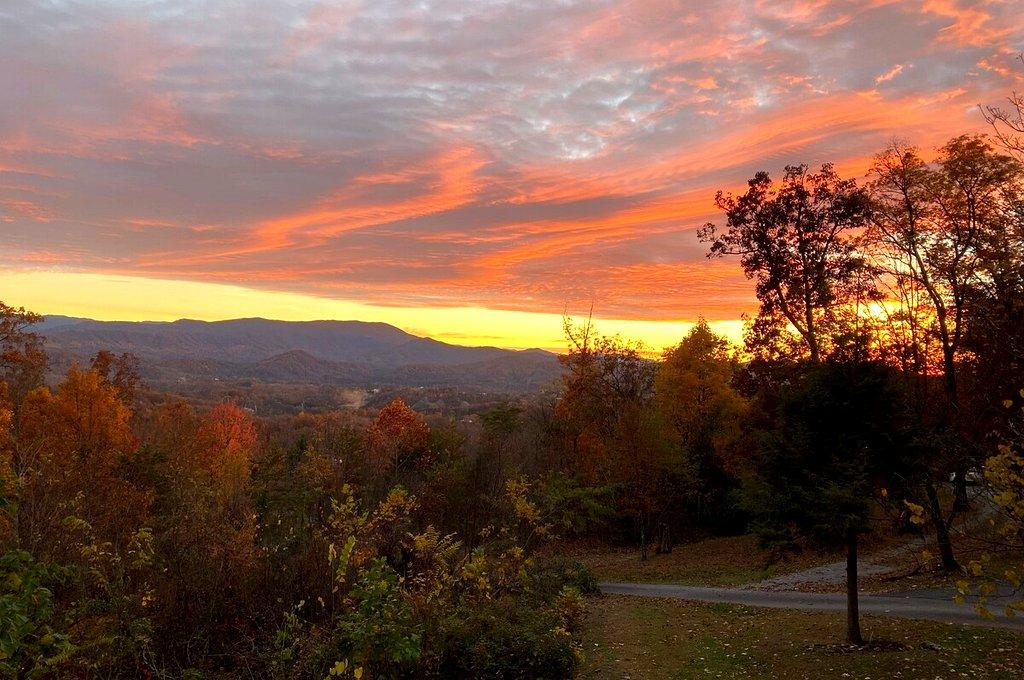
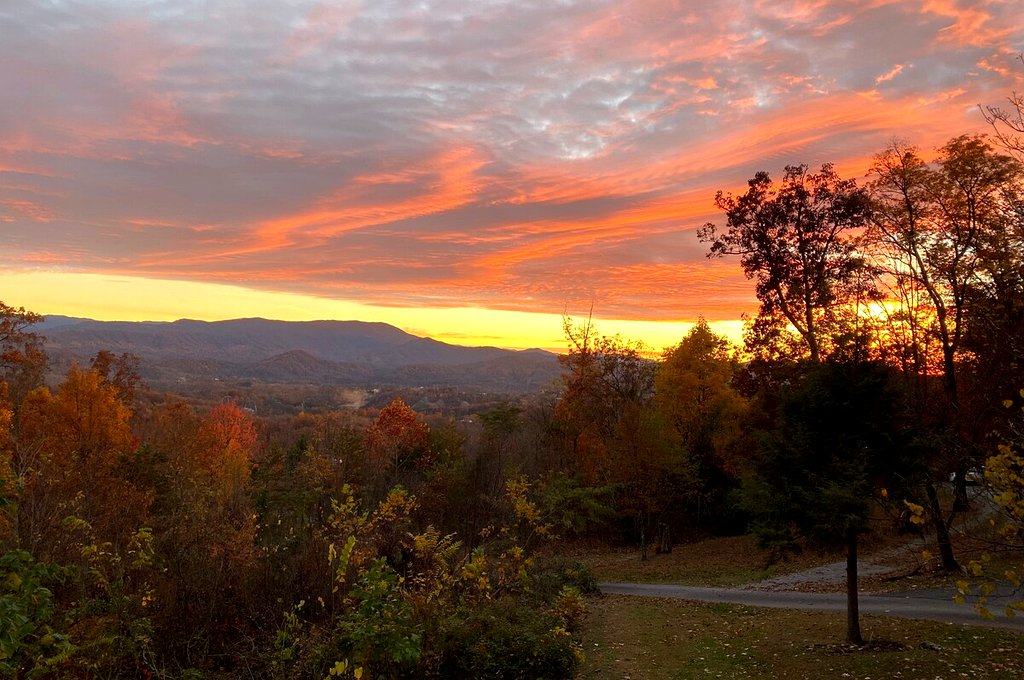 Mountain-View EveningsWatch the evening light change over the mountain ridges.
 Game RoomPool table, arcade, darts, Xbox.
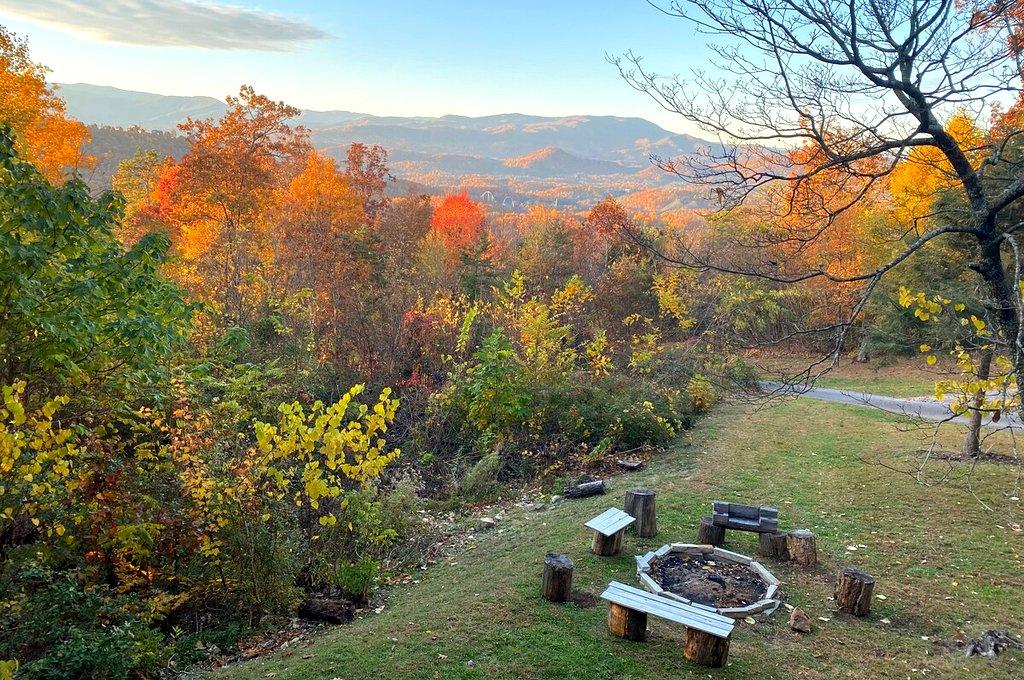
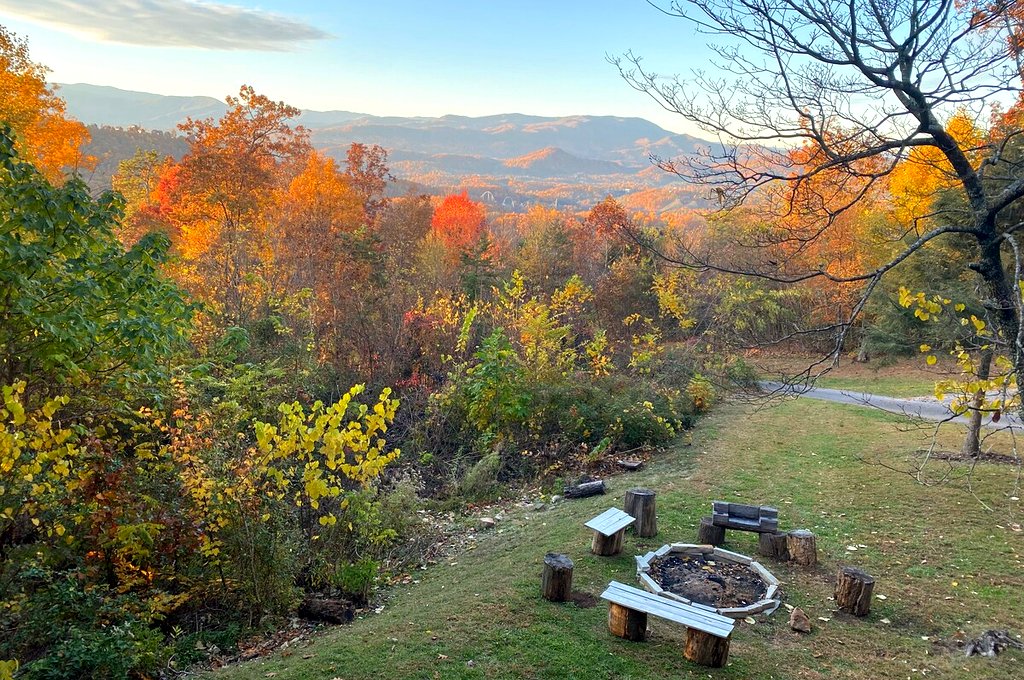 Mountain-View Fire PitS'mores with a ridgeline backdrop.
 One Private AcreNo neighbors on three sides, 800 forest acres around you.
What is the hottest month in Pigeon Forge, Tennessee?
July is generally the hottest month in Pigeon Forge, with August running a very close second. The difference between the two is usually a degree or two in average high, which you will not feel. What you will notice is that late August nights start cooling off slightly ahead of July, which makes evenings on a deck more comfortable.
Do I need to worry about flash flooding in August?
Flash flooding is uncommon but possible, especially in narrow creek drainages after a heavy convective storm. The practical rule is to avoid unbridged creek crossings when storms are in the forecast and to never try to cross a rising stream. The park closes certain roads and trails temporarily after major rain events, so check the park's current conditions page the morning you head out.
Are bears more active in August?
Bears stay active throughout summer and ramp up foraging as fall approaches. August sightings are common in Cades Cove and along roadsides early in the morning and near dusk. Store food properly, keep a safe distance, and never leave a cooler out on a deck overnight.
How does August compare to October for a Smokies trip?
August is hotter, greener, wetter, and less crowded in the park itself than peak October. October brings cooler, drier air and foliage, but also the heaviest traffic of the year on the Parkway and in Cades Cove. If you are weighing seasons, our post on when to visit the Smokies for fall colors lays out the tradeoffs in detail.
Packing and Planning for an August Visit
Pack for two climates in the same day. Lightweight, quick-dry clothing for the valley, plus a light fleece or windbreaker for the high country and for sunset at an overlook. A rain shell beats an umbrella on a trail. Trail shoes with real grip matter because roots and rocks turn greasy in the first minutes of an afternoon storm.
Bring more water than you think you need. Humidity drives fluid loss faster than people realize, and most trailheads have no water source. Electrolyte packets are a small thing that make a long hike in August far more pleasant.
Build the day around the weather instead of fighting it. Early morning for the park, midday for water, late afternoon for rest, evening for town or an overlook. Guests who adopt that rhythm come back saying August was their favorite trip. Guests who fight it come back exhausted. If you are thinking about scheduling, note that East Tennessee runs on Eastern Time, which trips up visitors crossing from the Central zone. We cover that in our note on whether there is a time difference in Pigeon Forge.
One more August note. Dollywood runs seasonal evening entertainment including fireworks and drone shows on a published schedule, not every single night, so check the park calendar before you build a night around it. When the shows do run, the south-facing deck gives you a view in that direction without leaving the property.
If you want August heat without August crowding, a secluded acre with no neighbors on three sides, two bedrooms, two bathrooms, a propane grill, and a south-facing deck four minutes from Dollywood is the setup that makes the afternoon downtime worth having. Minimum stay is three nights, and summer dates book early.
Start Planning Your Trip