

 Thistle Britches
Drive up Newfound Gap Road on the second Saturday of October and you can watch an entire season happen in forty minutes. At the Sugarlands Visitor Center the maples are still mostly green with a few orange edges. By the time you pull into the Chimney Tops picnic area the yellow birch have gone full gold. Climb to the 5,046-foot overlook at Newfound Gap and the high-elevation beech and mountain ash have already dropped half their leaves onto the pavement. That vertical mile is the entire answer to what is the best time to see fall colors in Gatlinburg, Tennessee, compressed into one morning of driving.
Most visitors pick a weekend, cross their fingers, and hope the internet was right. The better approach is to pick your elevation instead of your date. Great Smoky Mountains National Park spans roughly 875 feet at the lowest valleys to 6,643 feet at Clingmans Dome, which means color is always peaking somewhere between late September and early November. From our deck off Veterans Boulevard, about four minutes from Dollywood, we watch the same ridgelines turn every year, and the pattern is more predictable than the forecast apps suggest.
Key Takeaways
- Above 4,500 feet, color peaks late September into the first week of October. Think Clingmans Dome, Newfound Gap, and the Appalachian Trail corridor.
- Mid-elevation color (3,000 to 4,500 feet) peaks roughly October 10 through October 25. This is the sweet spot for most visitors.
- Valley color in Gatlinburg and the Pigeon Forge area peaks late October into the first ten days of November.
- The third weekend of October is the most crowded. Shift one week earlier or two weeks later for the same color with far less traffic.
- Weekday mornings before 9 a.m. beat every weekend, every single time.
What Is the Best Time to See the Leaves Change in Gatlinburg, Tennessee?
If someone forces you to name a single week, name October 15 through October 22. That window hits the broadest band of the mountains at once, from the Roaring Fork Motor Nature Trail up through the mid-slope hardwood forests. Sugar maples go scarlet, hickories go butter yellow, sourwood goes deep burgundy, and the whole mosaic holds for roughly ten days if the weather cooperates.
Weather is the variable nobody controls. A warm, wet September pushes everything later by a week or more. A cold snap in late September with clear days and crisp nights accelerates sugar production in the leaves and makes reds noticeably deeper. A wind-driven thunderstorm can strip a ridge bare in a single afternoon. That is why locals talk about color in ranges, not dates.
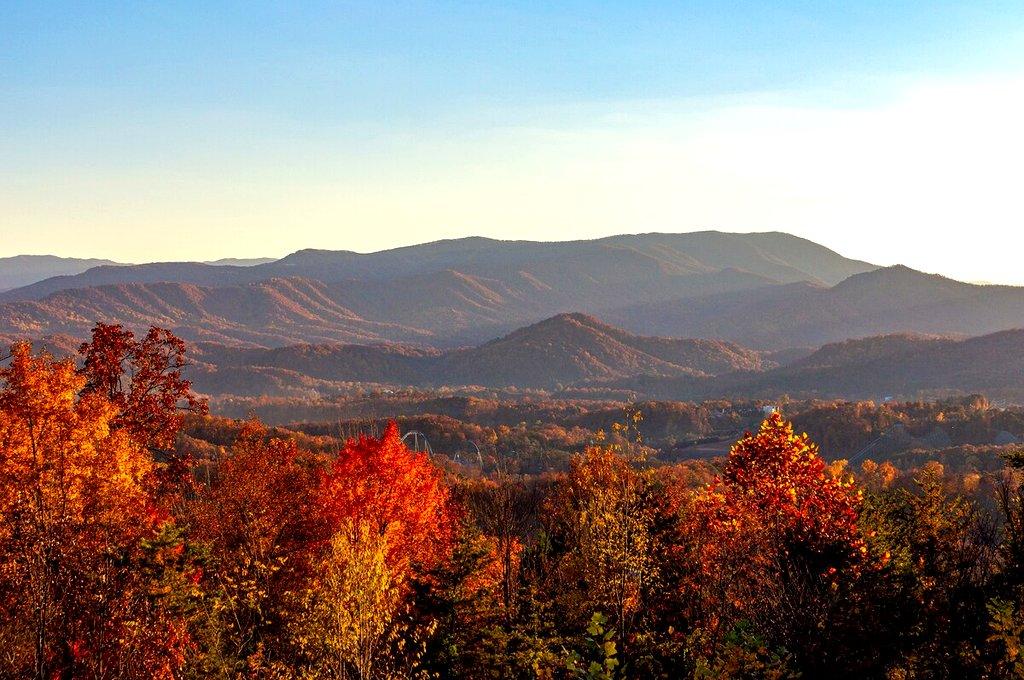
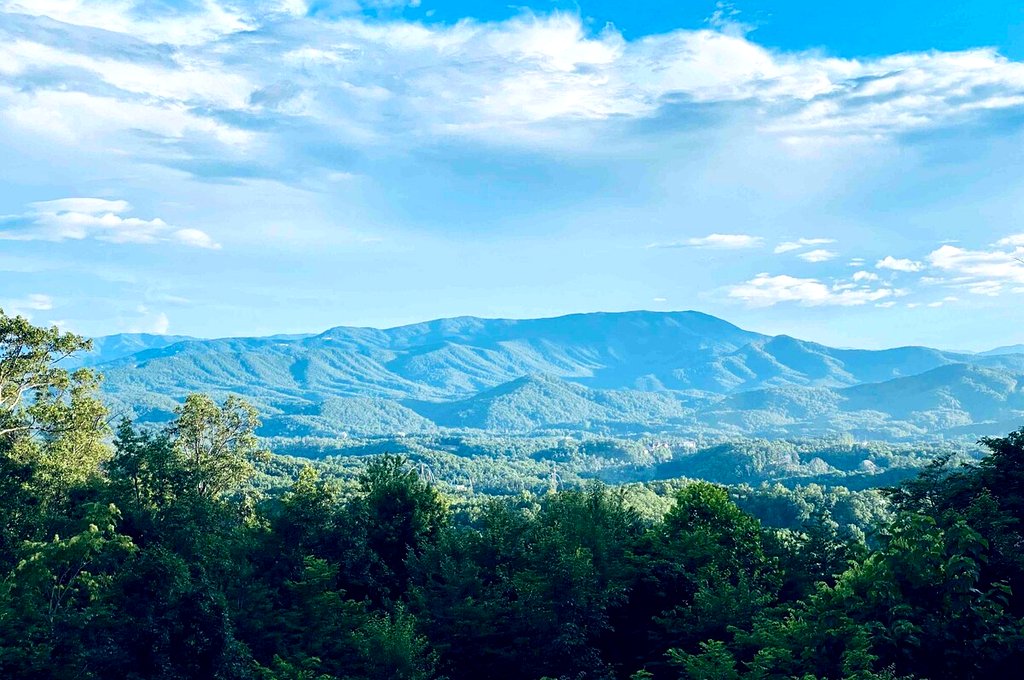
Actual mountain view from Thistle Britches with autumn foliage.
The elevation ladder, week by week
Late September: the highest elevations begin. American beech, yellow birch, and mountain ash near Clingmans Dome and along the Appalachian Trail turn first. Pack a jacket, because it runs noticeably colder up there than in town.
Early October: color drops to around 4,000 feet. The upper stretches of Newfound Gap Road start showing serious yellow and orange. Morning fog in the valleys below makes for the kind of layered ridge photos people frame.
Mid October: the main event. Mid-slope maples, oaks, and sourwood ignite. Cades Cove, the Roaring Fork loop, and the Little River Road corridor all come alive at roughly the same time.
Late October into early November: valley floors and foothills. Gatlinburg's main strip, the Spur between Gatlinburg and Pigeon Forge, and the oaks around Dollywood hold color latest. If you are wondering whether the best foliage views in Tennessee are worth a November trip, the answer is frequently yes, especially for the deep rust-red oaks that outlast everything else.
The Mistake That Wrecks Most Fall Color Trips
Here is the pattern we see every October. A family books a cabin for the third weekend of the month because that is what a listicle told them. They arrive Friday evening, sit in stop-and-go traffic on the Parkway for fifty minutes, and reach the cabin exhausted. Saturday morning they drive toward Cades Cove, hit the line at the loop road entrance, and spend two hours covering eleven miles behind a bumper-to-bumper parade of brake lights. By Sunday they have seen beautiful leaves through a windshield and very little else.
The leaves were not the problem. The schedule was. Peak foliage weekends in Sevier County overlap with Dollywood's Harvest Festival, wedding season, and every bus tour in the Southeast. Traffic on the Spur and through downtown Gatlinburg can turn a fifteen-minute hop into an hour. Parking in the national park fills by 9 a.m. at the popular trailheads, and park parking tags are now required for anything over fifteen minutes.
The fix is structural, not tactical. Base yourself somewhere you actually want to be when the roads are clogged, so a traffic jam becomes a reason to stay in rather than a ruined day. That means a place with real separation from the strip, a deck with a view worth sitting on, and enough space that six people are not stepping over each other.
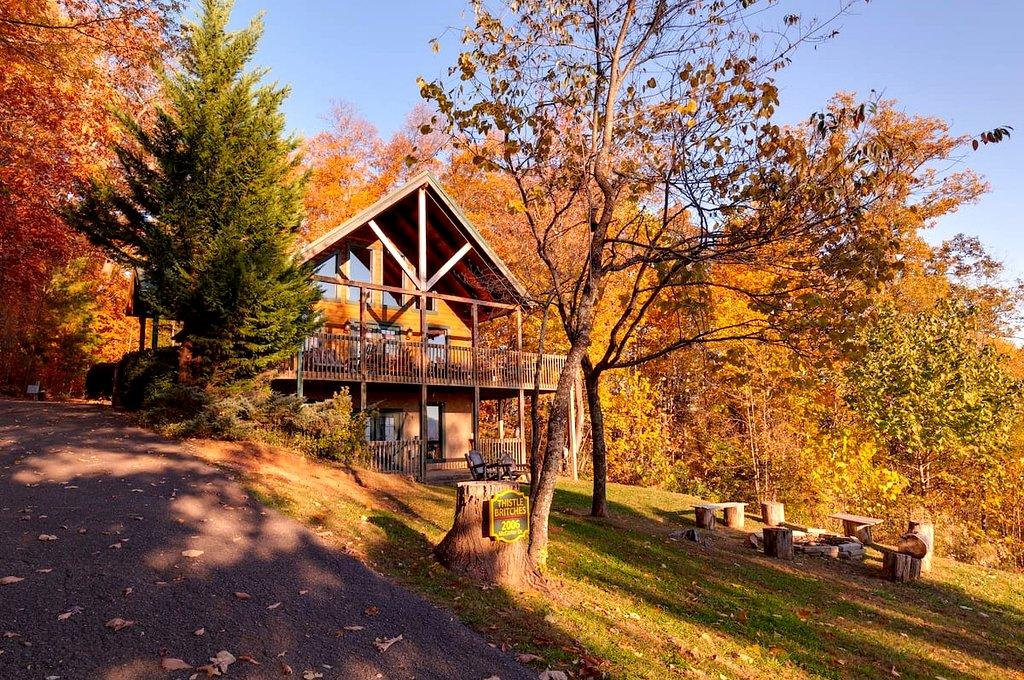
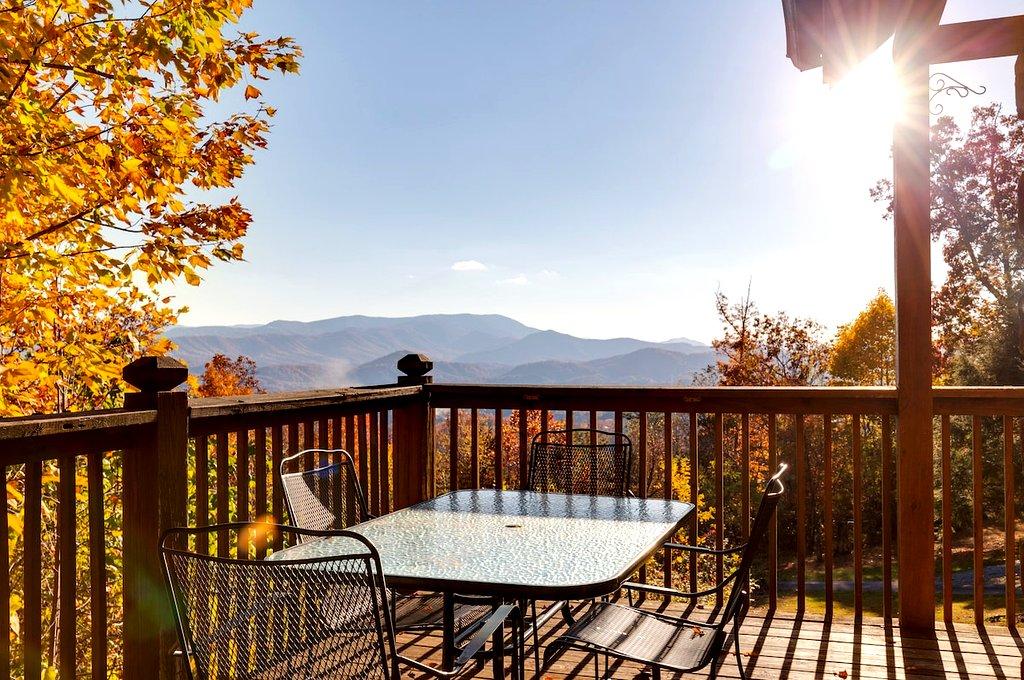
What to look for: a secluded lot rather than a tight cabin cluster, a south-facing deck that catches sun and mountain light most of the day, and internet strong enough that a rainy afternoon does not collapse into boredom. Our place sits on one secluded acre with no neighbors on three sides, 321 Mbps T-Mobile 5G home internet, and a deck that faces south toward Dollywood. When the Parkway backs up, nobody minds, because the porch coffee view is the reason they came.
Equally important: plan fewer things. A good fall itinerary in the Smokies has one anchor activity per day and nothing else. Read through a realistic breakdown of how many days you actually need before you build a schedule that only works on paper.
Peak color weeks book out months ahead, and the quiet ones go nearly as fast. If you want a south-facing deck with mountain views four minutes from Dollywood, check your dates now.
Book Your Stay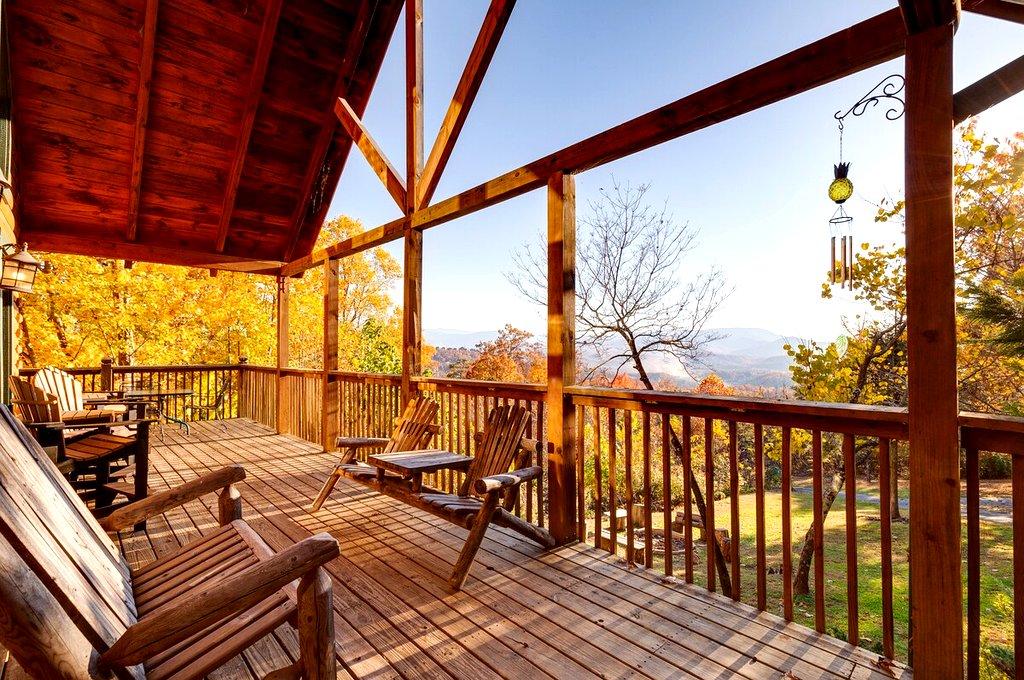
Where to Actually Stand: Drives, Trails, and Overlooks
Newfound Gap Road (US-441) is the backbone. It runs 33 miles from Gatlinburg to Cherokee and climbs more than 3,000 feet, which makes it the single most efficient way to sample multiple elevations in one trip. Drive it early, ideally leaving Gatlinburg by 7 a.m., and you will beat both the crowds and the harsh midday light.
Clingmans Dome Road branches off near the gap and climbs to the highest point in Tennessee. The observation tower gives you a 360-degree look at ridges rolling out in every direction. Note that the road closes seasonally, typically from December 1 through the end of March, so fall is your last clean shot at it. Check conditions on the National Park Service road status page before you go, because weather closures happen without much warning.
Roaring Fork Motor Nature Trail is the opposite experience: a narrow, one-way, 5.5-mile loop through old-growth forest, past historic cabins and tumbling creeks. It feels intimate rather than panoramic. No buses, no trailers, no RVs allowed. Mid to late October is its moment.
Hikes worth the legs
- Andrews Bald (3.6 miles round trip from Clingmans Dome): a grassy high-elevation meadow with open views. Best in early October when the high country is turning.
- Alum Cave Trail to Inspiration Point (2.6 miles round trip): big payoff for moderate effort, with sheer color on both sides of the valley.
- Porters Creek Trail in Greenbrier: flat, quiet, creekside, and almost always less crowded than anything near the main road.
- Gatlinburg Trail (3.8 miles round trip): one of only two park trails that allows dogs, which matters if you brought one along.
For non-hikers, the Gatlinburg Scenic Overlook on the bypass and the pull-offs along Little River Road toward Townsend deliver serious views with zero elevation gain. Foothills Parkway West, the stretch running toward Walland, is the local favorite for sunset, with long open views over the valley floor.
Frequently Asked Questions
What is the best time to see the leaves change in Gatlinburg, Tennessee?
Mid to late October is the reliable answer for the elevations most visitors reach, with the week of October 15 to 22 being the widest-spread peak. If you want high-elevation color near Clingmans Dome, aim for the last week of September through the first week of October instead. Valley and foothill color around Gatlinburg and Pigeon Forge typically holds into the first ten days of November.
 56-Jet Luxury SpaBluetooth, subwoofer, LED waterfall.
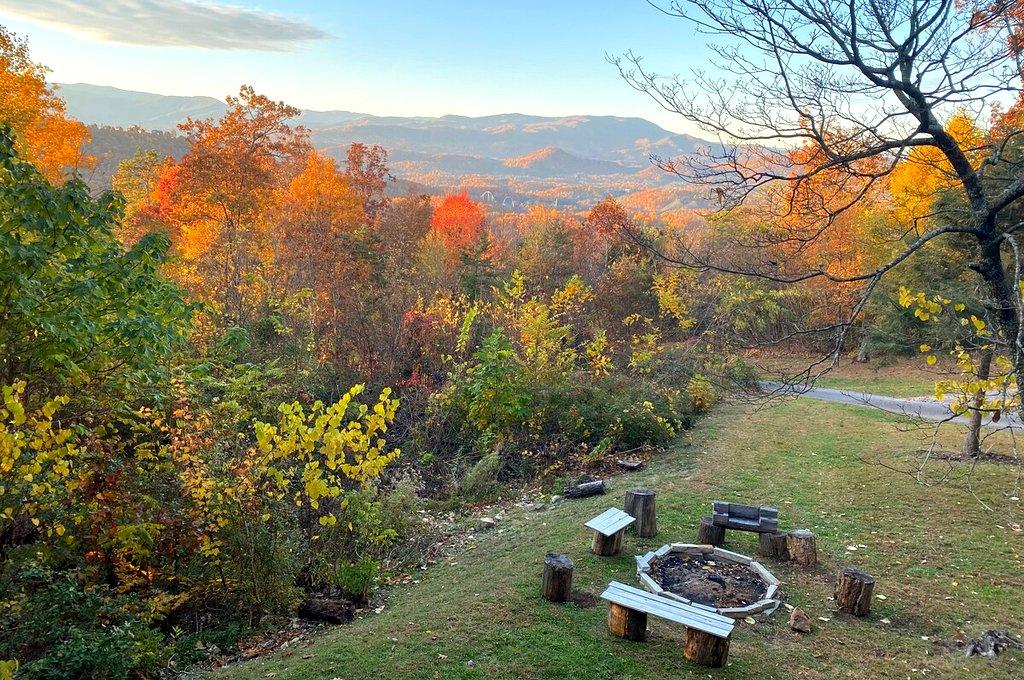
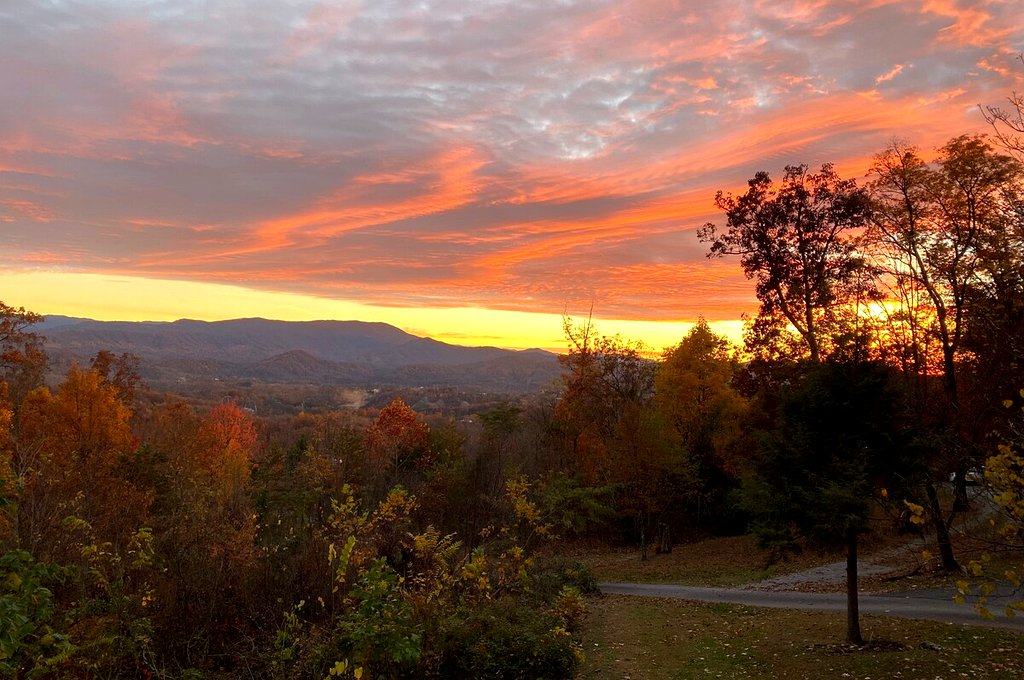 Mountain-View EveningsWatch the evening light change over the mountain ridges.
 Game RoomPool table, arcade, darts, Xbox.
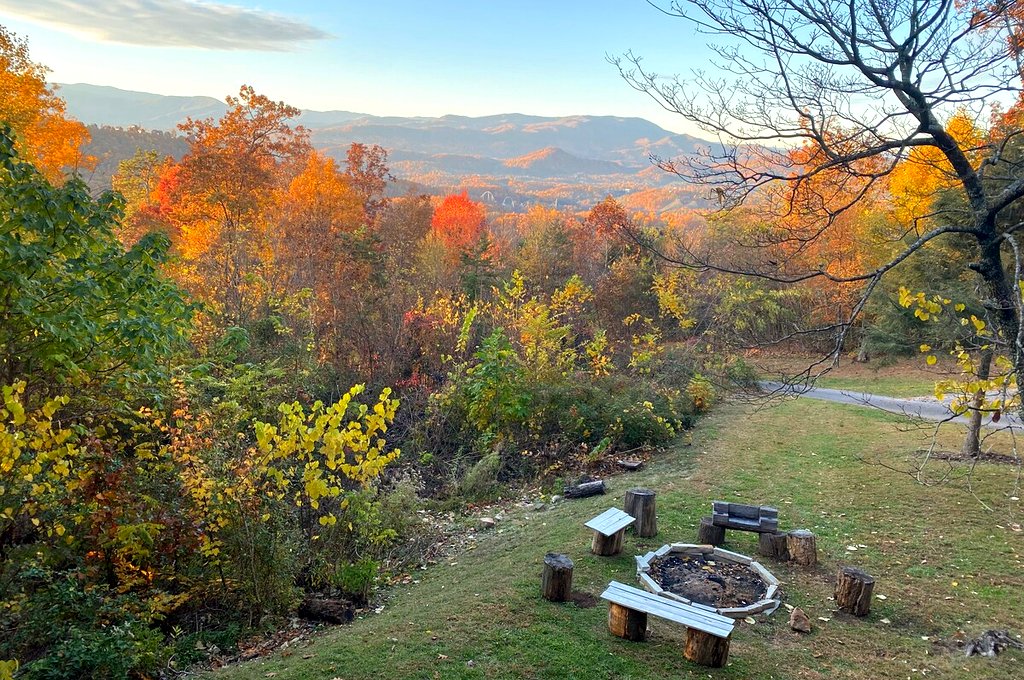 Mountain-View Fire PitS'mores with a ridgeline backdrop.
 One Private AcreNo neighbors on three sides, 800 forest acres around you.
What are some hidden gems to visit in Gatlinburg, TN?
Greenbrier, on the east side of town off US-321, is the one locals guard. It is quieter than the main park entrance, the creek is gorgeous, and Porters Creek Trail stays peaceful even in October. Other favorites include the Noah Bud Ogle self-guiding nature trail on the way to Roaring Fork, the Sugarlands Valley all-access trail for an easy paved walk through colored woods, and the Arts and Crafts Community loop on Glades Road, an eight-mile stretch of working studios that most visitors never find. Our broader list of Smokies essentials covers more of these quieter stops.
How many days do you need in Pigeon Forge and Gatlinburg?
Four nights is the honest sweet spot for a fall trip. One day for the national park drive and a hike, one day for Dollywood if you are going, one day for Gatlinburg's downtown and the Arts and Crafts Community, and one genuine rest day. Three nights works if you cut one of those, which is also our default minimum stay. Trying to compress the park, a theme park, and downtown into two days in October traffic turns a vacation into a logistics exercise.
Can you provide a foliage map of Tennessee?
The Tennessee Department of Tourist Development publishes a weekly fall color report through the season, and the National Park Service posts observed conditions for Great Smoky Mountains National Park. Both are more useful than national prediction maps, which smooth over the elevation variation that defines the Smokies. Treat predictive maps as a rough guide and the weekly reports as your real planning tool. You can also read background on the park's forest diversity at the park's Wikipedia entry, which explains why more than 100 native tree species produce such a layered color display.
Is November too late for fall colors in Gatlinburg?
Not for the lower elevations. Oaks and hickories in the valleys often hold rust, bronze, and deep gold through the first week or two of November, and the thinned-out crowds make it one of the better times to visit. The high country will be bare by then, so plan your driving around the foothills and the lower stretches of the park instead of Clingmans Dome.
Making Peak Season Feel Unhurried
The guests who have the best fall trips all do roughly the same thing. They get up early, do their one big outdoor thing before 11 a.m., eat lunch somewhere off the main drag, and spend the afternoon back at the cabin with the deck doors open. That rhythm turns October traffic into someone else's problem.
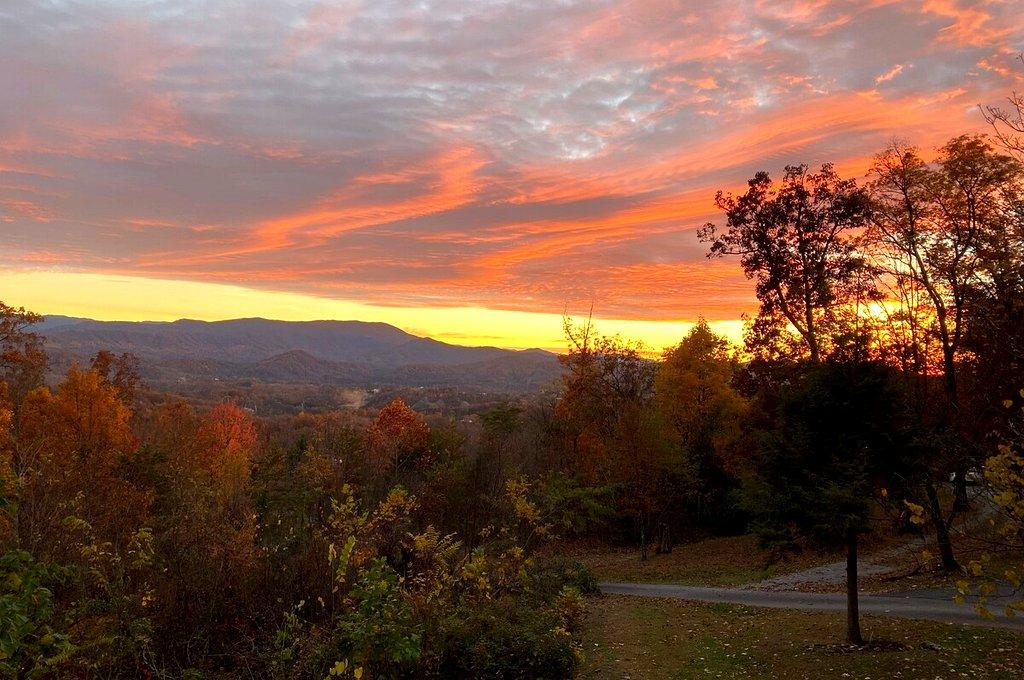
Fall evenings in the foothills cool off fast, which is part of the appeal. Fire up the propane grill, let the kids run in the yard, and watch the light go pink on the ridges. Dollywood's fireworks and drone shows are seasonal and scheduled, so check the park calendar if that matters to your plans.
Dogs handle fall better than summer here, with cool mornings and dry trails. We allow up to two, though the outdoor dog area is unfenced, so leashes stay on. The Gatlinburg Trail and the Oconaluftee River Trail on the North Carolina side are the two park trails that welcome them.
With 2 bedrooms, 2 bathrooms, 2 king beds, and 3 queen fold-out couches, there is room for up to six people to spread out after a long day of switchbacks and overlooks. The 321 Mbps connection means a rainy afternoon becomes a movie afternoon instead of a wasted one. And at 0.8 miles from Dollywood and Splash Country, you are close enough to the action to pop over for an hour without committing your whole day to the drive.
If you want peak Smoky Mountain color without spending your vacation stuck on the Parkway, a secluded acre four minutes from Dollywood changes the whole trip. October dates move fast, and the quieter early-November weeks are the real insider play.
Start Planning Your Trip